Quick Facts
Short answer: Fine hand-knotted Persian carpets can hold and grow value, but only the right pieces — origin, knot density and condition decide everything.
Best investment categories: Fine silk Qum, master-signed Tabriz and Isfahan, and genuine antiques over 80 years old.
Entry point: Investment-grade fine Qum silk starts from AED 8,000+ at Al Malakia; room-sized masterpieces can reach AED 200,000+.
What does NOT appreciate: Machine-made rugs, printed "Persian-style" pieces, and damaged or over-restored carpets.
Provenance matters: We source directly from weavers in Qum, Tabriz, Isfahan, Kashan and Nain — no intermediaries, so provenance is transparent.
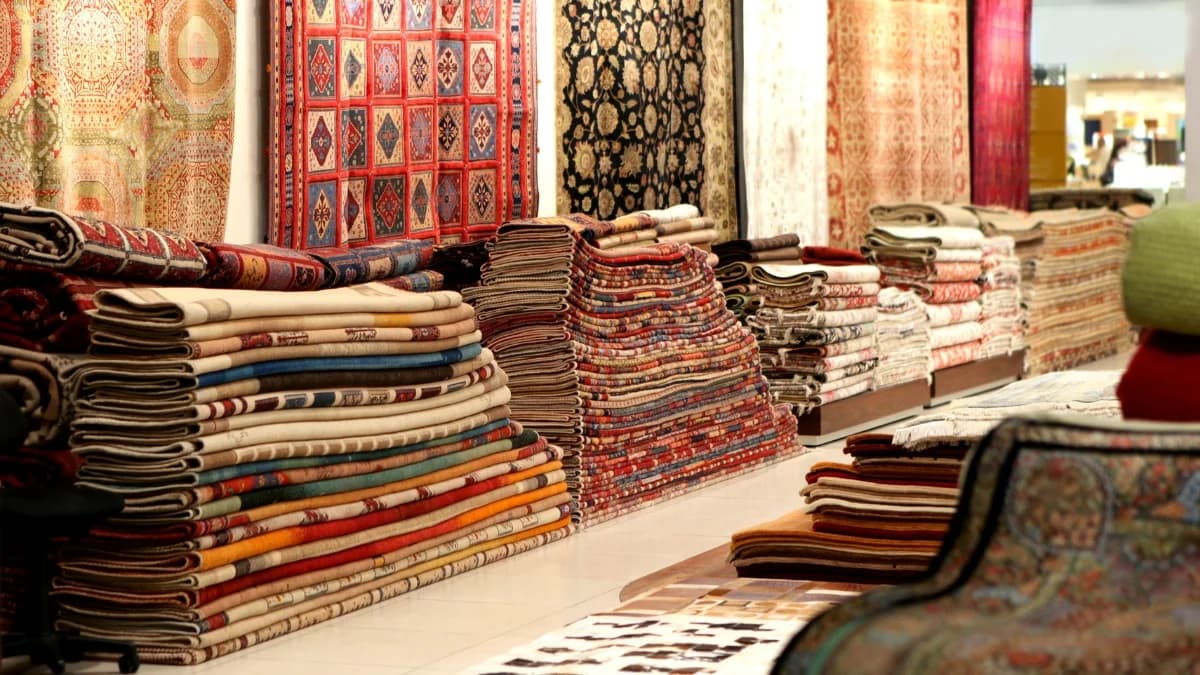
Where to see them: Shop 45–48, Central Souq Block 3 (Blue Souk), King Faisal Road, Sharjah — 500+ pieces in stock.
Every few weeks a customer walks into our Sharjah showroom and asks the same honest question: "If I spend serious money on a Persian carpet, will it be worth more in ten or twenty years — or am I just buying a beautiful floor covering?" It is a fair question, and one that deserves a straight answer rather than sales talk.
The short version is this: some Persian carpets are genuinely strong long-term assets, while most are simply lovely things to own. The difference between the two is not luck — it is knot density, origin, material, condition and provenance. This guide explains exactly which carpets appreciate in 2026, which do not, what realistic returns look like, and how a buyer in the UAE can invest wisely rather than hopefully.
What "investment" actually means for a carpet
A carpet is not a stock or a bond. It pays no dividend, it cannot be sold in five minutes, and its value is judgement-based rather than quoted on a screen. So when we talk about a Persian carpet as an investment, we mean three more grounded things:
- Store of value: a fine piece tends to hold its purchasing power across decades, much like gold or fine art, while a machine-made rug depreciates to near zero.
- Appreciation potential: the best hand-knotted carpets — particularly fine silk and antiques — have historically risen in value as the supply of genuine handwork shrinks.
- Usable wealth: unlike a painting in storage, a carpet is enjoyed every single day while it holds value underfoot.
Read that way, the right Persian carpet is one of the few assets you can live on, walk on, and pass to your children — all at once.
It is also worth being clear about timeframe. Carpets reward patience, not impatience. The buyer who acquires a fine silk Qum and tries to sell it eighteen months later will likely be disappointed, while the family that keeps the same piece for twenty years, cares for it properly and eventually sells into a collector market is in a very different position. If you are thinking in months rather than decades, a carpet is the wrong asset; if you are thinking in generations, it is one of the finest you can own.
Which Persian carpets actually appreciate
This is the heart of the matter. Not all Persian carpets are investments, and pretending otherwise would be dishonest. From decades of trading, the categories that reliably hold and grow value are clear.
1. Fine silk Qum
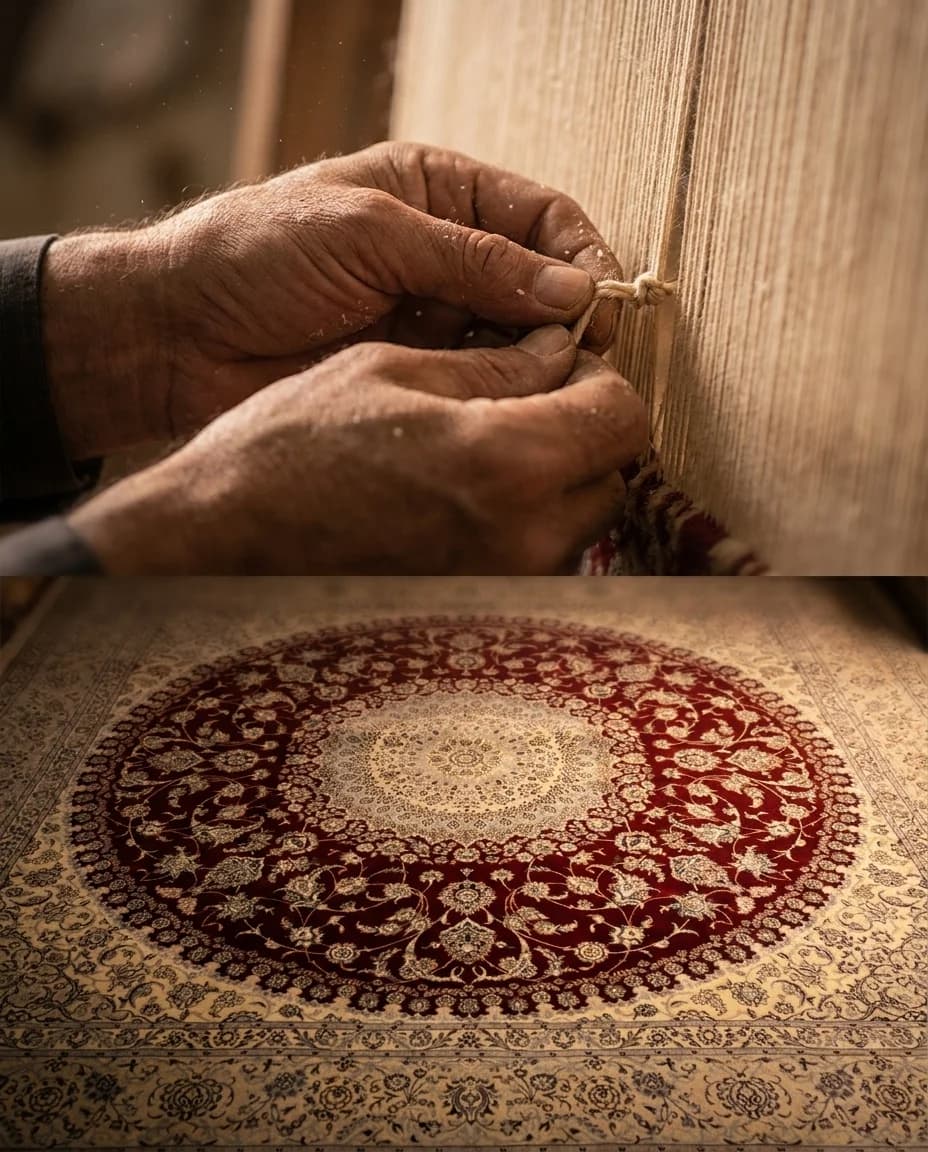
Qum is the spiritual home of fine silk weaving. A genuine all-silk Qum with 600–1,000 knots per square inch, woven by a recognised workshop, is the closest thing the carpet world has to a blue-chip asset. Supply is genuinely limited, the work takes years, and demand from the Gulf, Europe and East Asia is steady. Fine Qum silk starts from AED 8,000+ in our showroom and rises sharply with size and signature.
2. Master-signed Tabriz and Isfahan
Tabriz and Isfahan produce some of the most technically perfect wool-and-silk carpets in the world. When a piece carries the woven signature of a respected master weaver, it crosses from "beautiful rug" into "collectible." These signatures are documented, traceable, and prized by collectors — which is precisely why provenance verification matters so much. A Tabriz from a named workshop, woven in fine kork wool with silk highlights, can hold its value remarkably well even as fashions in colour and pattern shift, because the buyer is paying for craftsmanship and attribution rather than a passing trend.
3. Genuine antiques (80+ years old)
A truly antique Persian carpet in good condition is irreplaceable: the wool, the natural dyes and the hand of a weaver from a vanished era cannot be reproduced. Antiques behave differently from new pieces, and we explore that contrast in detail in our guide on Antique vs New Persian Carpets: Which Holds Value?
Which carpets do NOT appreciate
An honest investment guide has to be just as clear about what to avoid. The following will almost never grow in value, and most lose it quickly:
- Machine-made rugs: woven by power loom in hours, not months. Decorative, affordable, and worth a fraction of their purchase price the day after you buy them.
- Printed "Persian-style" pieces: the pattern is printed onto fabric, not knotted. These have no resale value as carpets.
- Low-knot commercial wool rugs: genuine handwork, but mass-produced for volume. Lovely to use, not an investment.
- Damaged or heavily over-restored carpets: condition is decisive; a beautiful design cannot rescue a structurally compromised piece.
If your goal is value retention, the single most useful skill is knowing exactly what you are buying. Our guide on how to verify a Persian carpet's authenticity walks through the checks any buyer can do before committing.
The factors that drive a carpet's value
Value is not a mystery — it is the product of several measurable factors. We break all of these down in the 10 factors that determine a carpet's price, but the four that matter most for investment are:
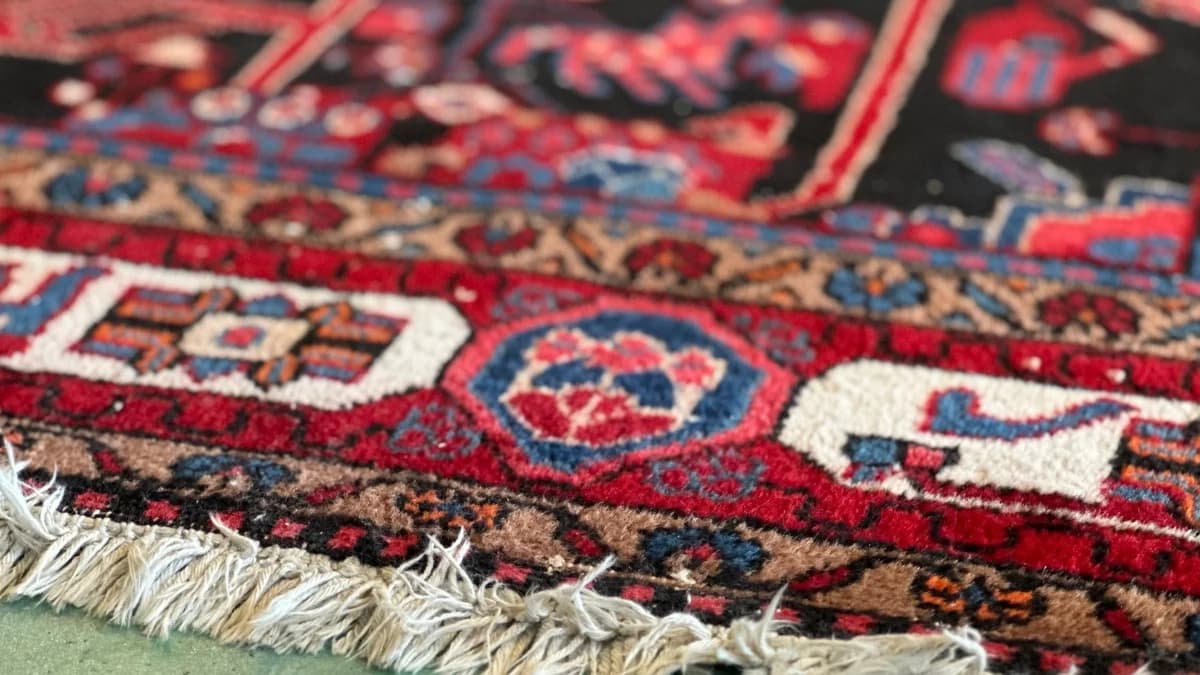
- Knot density: measured in knots per square inch (KPSI). Higher density means finer detail, more labour, and stronger value retention.
- Material: all-silk and fine kork wool outperform standard commercial wool. Silk Qum sits at the top of the market.
- Origin and workshop: a verified Qum, Tabriz, Isfahan, Kashan or Nain commands a premium over an unattributed piece of similar appearance.
- Condition and provenance: original, undamaged, with clear documentation of where it came from. This is why buying from a transparent dealer matters more than chasing a bargain.
A realistic look at returns
Let us be honest about expectations. Persian carpets are not a get-rich scheme, and anyone promising guaranteed annual percentages is overselling. What the best pieces offer is slow, steady appreciation combined with full enjoyment — a profile closer to fine art or gold than to equities.
The table below compares typical investment behaviour across the main categories we stock. Figures are general market ranges, not promises, and assume genuine hand-knotted pieces kept in good condition.
| Category | Typical entry price (AED) | Liquidity | Long-term value behaviour |
|---|---|---|---|
| Machine-made / printed | 200–1,500 | Low | Depreciates quickly |
| Afghan hand-knotted wool | From 800 | Moderate | Holds modestly; great value to use |
| Fine Persian wool (Tabriz, Kashan) | 3,000–25,000 | Moderate | Holds well; appreciates if signed |
| Fine silk Qum | 8,000+ | Moderate–good | Strong appreciation potential |
| Genuine antiques (80+ yrs) | 15,000–200,000+ | Good among collectors | Scarcity-driven appreciation |
The pattern is consistent: the further you move toward genuine, fine, well-documented handwork, the better the long-term picture. For a fuller breakdown of what specific pieces cost in the local market, see our overview of Persian carpet prices in the UAE 2026.
Why 2026 is a particularly interesting year
Several long-running trends are converging in ways that favour the patient buyer of genuine handwork.
Shrinking supply of master weaving
The number of weavers capable of producing top-tier fine silk continues to fall as younger generations move to other work. Genuine 600+ KPSI silk takes years to complete; it cannot be rushed. As living masters become rarer, their existing work becomes harder to replace — the classic foundation of long-term appreciation.
A discerning Gulf market
UAE buyers are increasingly knowledgeable, asking about KPSI, origin and signatures rather than only colour. A market that values provenance rewards genuine pieces and pushes machine-made imitations to the margins. That is healthy for anyone holding the real thing.
Carpets as tangible assets
In an era of digital, abstract investments, many of our clients in Dubai and Sharjah specifically want something physical, beautiful and enduring to anchor a portfolio. A fine carpet answers that desire while furnishing a majlis or living room at the same time.
How to invest wisely in the UAE
If you decide a Persian carpet belongs in your plans, a few disciplined habits protect your money.
- Buy from a transparent source. Provenance is half the value. A dealer who sources directly from named regions and can explain a piece's origin, age and material is worth far more than a cheaper unknown. Learn more about Al Malakia and how we source.
- Prioritise quality over size. A small, fine silk Qum will usually outperform a large, coarse wool rug as an asset, even at a similar price.
- Insist on documentation. Origin, approximate age, material and knot density should all be stated clearly. We provide this on every significant piece.
- Care for the carpet. Condition is decisive. Rotate it, keep it out of constant direct sun, and have fine pieces professionally cleaned — never machine-washed.
- Buy what you love. Because you will live with it daily, genuine affection is part of the return. The best investment carpet is one you would happily keep forever.
When you are ready to look in person, you are welcome to browse our collection in the showroom or simply contact us to discuss what fits your space and budget.
The honest bottom line
So — are Persian carpets a good investment in 2026? The right ones, bought wisely, yes. A genuine fine silk Qum, a master-signed Tabriz or Isfahan, or a true antique in good condition can hold and grow value over decades while you enjoy it every single day. A machine-made or printed rug will not. The difference is entirely in the knowing — which is exactly why buying from a dealer who explains, documents and stands behind every piece matters more than the price tag itself.
Why Visit Al Malakia Persian Carpets?
- Direct sourcing: Purchased from weavers in Qum, Tabriz, Isfahan, Kashan, and Nain — no intermediaries, transparent provenance.
- Scale of stock: 500+ hand-knotted pieces in the showroom, across sizes from 60×90 cm to 4×6 m.
- Free Dubai transfer: Complimentary door-to-door pick-up from Dubai hotels and homes.
- Family expertise: Founded in 2008 by Eid Al Salam, a second-generation Persian carpet merchant.
- Blue Souk location: Shop 45–48, Central Souq Block 3, King Faisal Road, Sharjah. Open Saturday–Thursday 10:00–22:00, Friday 14:00–22:00.
Contact us or WhatsApp +971 50 537 2997 to arrange your visit or request a consultation.