Quick Facts
"Antique" defined: In the carpet trade, a rug is genuinely antique once it is roughly 80–100 years old; pieces 30–80 years are "semi-antique" or "vintage."
What holds value: Rarity, weave fineness, natural dyes and condition matter far more than age alone — a worn antique can be worth less than a pristine new master piece.
New can appreciate too: A fine new Qum silk or signed Tabriz bought at the right price often outperforms a tired, restored antique over time.
Price spread: At Al Malakia, entry-level Afghan pieces start from AED 800, fine Qum silk from AED 8,000+, and room-sized master pieces reach AED 200,000+.
Our sourcing: We buy directly from weavers in Qum, Tabriz, Isfahan, Kashan and Nain — no intermediaries, so the provenance you pay for is real.
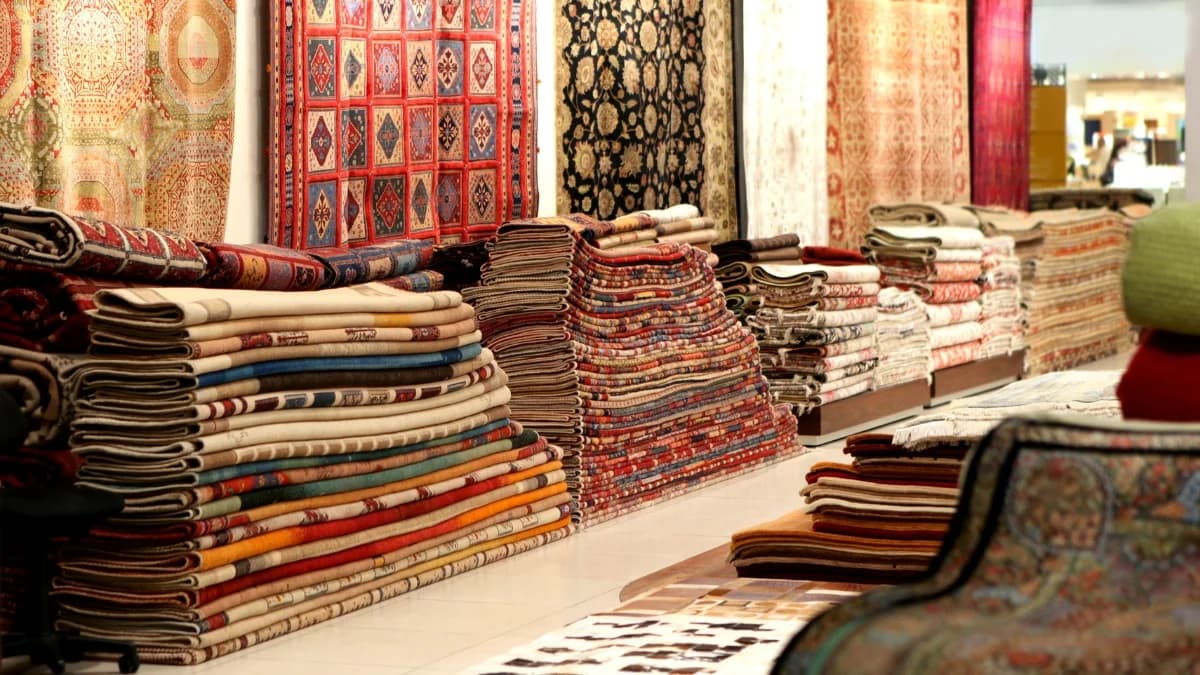
Where to see both: Shop 45–48, Central Souq Block 3 (Blue Souk), King Faisal Road, Sharjah — 500+ hand-knotted pieces in stock.
It is one of the most common questions we hear on the showroom floor in Sharjah: "Should I buy an antique Persian carpet because it will hold its value, or is a fine new one the smarter purchase?" It is a fair question, and the honest answer is more nuanced than the popular assumption that "older always means more valuable." Age is one factor among several — and on its own it is often the least reliable predictor of what a carpet will be worth in ten or twenty years.
This guide breaks down exactly what "antique" means in the carpet world, how antique and new pieces really differ in value retention, and which choice makes more sense for a buyer in the UAE. We will look at condition, rarity, materials, climate, and resale — and we will be straight with you about the trade-offs of each, because choosing well matters far more than choosing old.
What "antique" actually means in the carpet trade
The word "antique" gets used loosely, but in the hand-knotted carpet trade it has a working definition. A rug is generally considered genuinely antique once it is around 80 to 100 years old. Pieces between roughly 30 and 80 years are called semi-antique or vintage, and anything woven within the last generation is simply new (or "contemporary").
This matters because a lot of carpets marketed as "antique" in Dubai and beyond are in fact semi-antique or simply old — and old is not the same as antique, nor automatically more valuable. Age is also frequently exaggerated, which is why provenance and an honest seller matter so much. If you want to understand how dealers actually establish a piece's age and origin, our guide on how to How to Verify a Persian Carpet's Authenticity walks through the tell-tale signs.
The myth: older always means more valuable
It is intuitive to assume an older carpet must be worth more, the way an antique clock or a vintage car often is. With carpets, reality is more complicated. A carpet is a textile that was made to be walked on, and time is not always kind to it. An antique that has spent decades under heavy foot traffic, exposed to sunlight, moths, or damp, can be worn thin, faded, or repaired so heavily that very little of the original weave remains.
By contrast, a brand-new fine piece — say a tightly knotted Qum silk or a signed Isfahan — arrives in flawless condition, with crisp pile, full colour, and decades of life ahead of it. We have seen genuinely antique rugs that look tired and grey beside a new master piece woven last year, and we have seen rare antiques that no money could replace. So the real comparison is never "old versus new." It is "a great example in excellent condition versus a mediocre example in poor condition" — and that can fall either way. Age is genuinely one of The 10 Factors That Determine a Carpet's Price, but it is only one.
The four factors that really drive value retention
Whether you are weighing an antique or a new piece, the same handful of fundamentals decide whether it holds — or even grows — in value over time.
1. Rarity and design
A rare design, an unusual size, a discontinued workshop, or a famous weaving city all push value up. A common commercial pattern, antique or not, stays common. Rarity is the single strongest long-term driver — and it applies equally to a sought-after antique village rug and to a one-off new master piece.
2. Knot density and craftsmanship
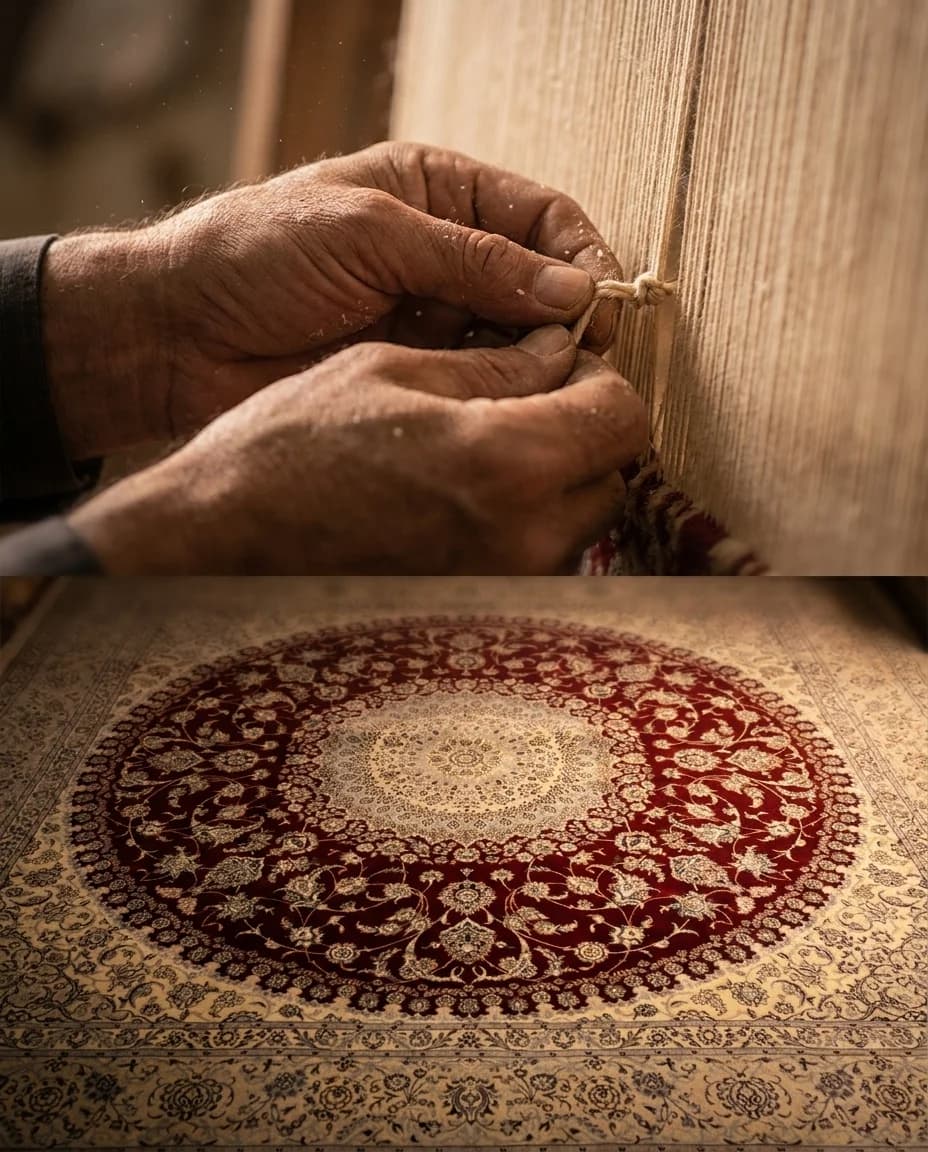
Fineness — the number of hand-tied knots per square centimetre — reflects the labour and skill in a piece. A finely knotted Nain or Qum holds value because it cannot be cheaply reproduced. A coarse rug, however old, was always an everyday object and will trade accordingly.
3. Natural dyes versus synthetic
Pre-1900 carpets used natural, vegetable and insect dyes that age into a soft, luminous patina collectors prize. Many mid-20th-century pieces used early synthetic dyes that can fade harshly or run. A good new piece woven with quality natural dyes may actually age more beautifully than a synthetically dyed "antique."
4. Condition and originality
This is where antiques most often lose ground. Heavy repairs, reduced size (cut down to hide damage), reweaving, and chemical "washing" to fake age all erode value. An untouched, original carpet — new or old — almost always outperforms a heavily restored one. Learning to read these signs is central to How to Spot a Fake Persian Carpet.
Antique vs new: an honest side-by-side
Here is how the two genuinely compare across the things buyers care about most. Neither column is the "winner" — the right choice depends on your budget, taste, and how you plan to use the carpet.
| Factor | Antique (80+ years) | Fine new piece |
|---|---|---|
| Condition | Variable — often worn, faded or restored | Pristine, full pile, decades of life ahead |
| Dyes | Natural dyes with prized patina (if untouched) | Natural or synthetic — quality varies by workshop |
| Rarity | Can be very rare; some designs irreplaceable | Depends on workshop; signed master pieces are rare |
| Value retention | Strong if rare and original; weak if worn/repaired | Strong if fine and bought near fair price |
| Risk | Higher — fakes, faked age, hidden repairs | Lower — provenance and condition are verifiable |
| Entry price | Wide; fine antiques command large premiums | From AED 800 (Afghan) to AED 8,000+ (Qum silk) |
Does a new carpet really appreciate?
Yes — and this surprises many buyers. A fine new carpet purchased at a fair price from a transparent source can appreciate for several reasons. First, the cost of skilled hand-weaving rises every year as fewer young weavers enter the craft, so replacement cost climbs. Second, a new piece bought close to wholesale has built-in headroom that an over-priced antique does not. Third, a pristine new carpet woven today is the "untouched antique" of fifty years from now.
The catch is the buying price. A new carpet bought at an inflated tourist-shop markup may take years just to recover its cost. This is exactly why direct sourcing matters: because we buy straight from weavers in Qum, Tabriz, Isfahan, Kashan and Nain with no intermediaries, the price you pay is closer to true value from day one. If you are weighing the long view, our deeper analysis on whether Are Persian Carpets a Good Investment in 2026? is essential reading.
What this means for a home in the UAE
Practical considerations matter as much as theory, and the Gulf climate adds a few of its own. In a Dubai or Sharjah apartment or villa, carpets live under powerful air conditioning, occasional high humidity, and strong sunlight through large windows. These conditions are demanding on a fragile antique. A worn pre-war piece with weak foundations may not stand up well to daily use in a busy family majlis, whereas a robust new carpet is built for exactly that life.
For a high-traffic majlis or a family living room, we frequently recommend a fine new or semi-antique piece in a hard-wearing wool. For a formal sitting room, a display wall, or a considered collection, a genuine antique in good original condition can be magnificent — and a real heirloom. Many of our clients across Dubai and Abu Dhabi end up owning both: a workhorse new piece for everyday rooms and one special antique for the showpiece space.
How to buy either one without overpaying
Whichever direction you lean, a few disciplines protect your money:
- Insist on provenance. A reputable seller will tell you the region, approximate age, material and any repairs — honestly. Vagueness is a warning sign.
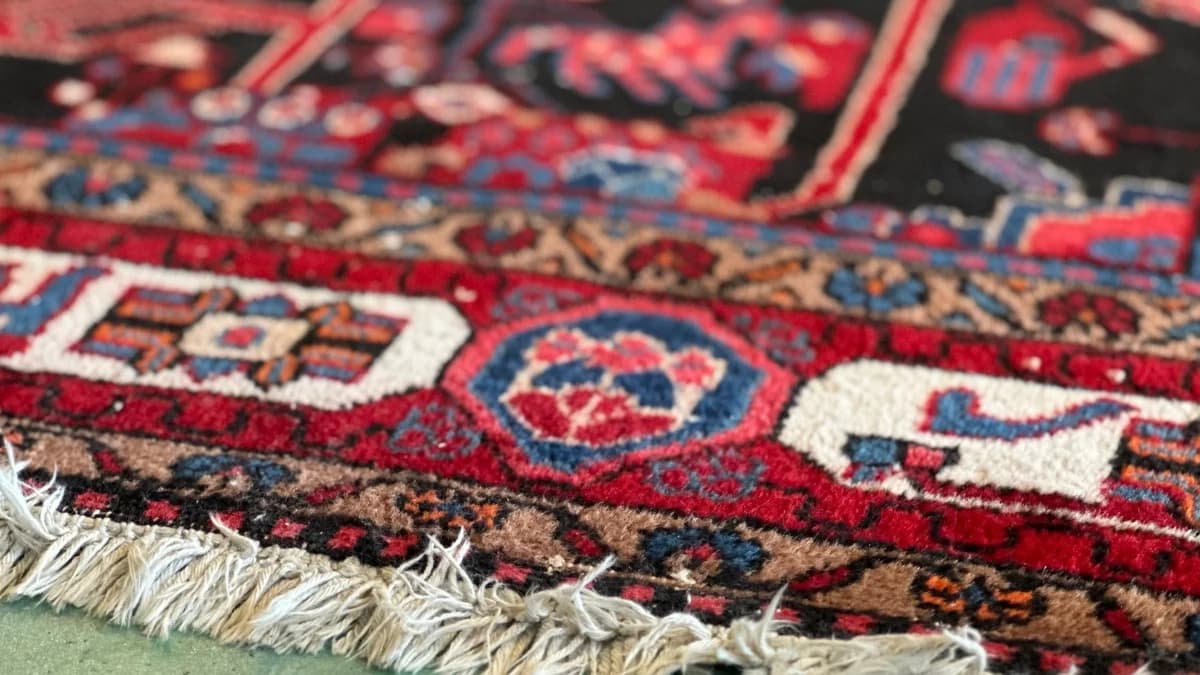
- Check the back. The reverse reveals knot density, dye consistency and any reweaving far more honestly than the front.
- Be sceptical of "antique" labels. Genuine antiques are not common at bargain prices. If the age and price seem too good, the age is probably wrong.
- Buy condition over age. A clean, original piece — new or old — almost always holds value better than a damaged, restored "antique."
- Compare in person. Photographs flatten pile, hide repairs and distort colour. See the piece, in daylight, before you commit.
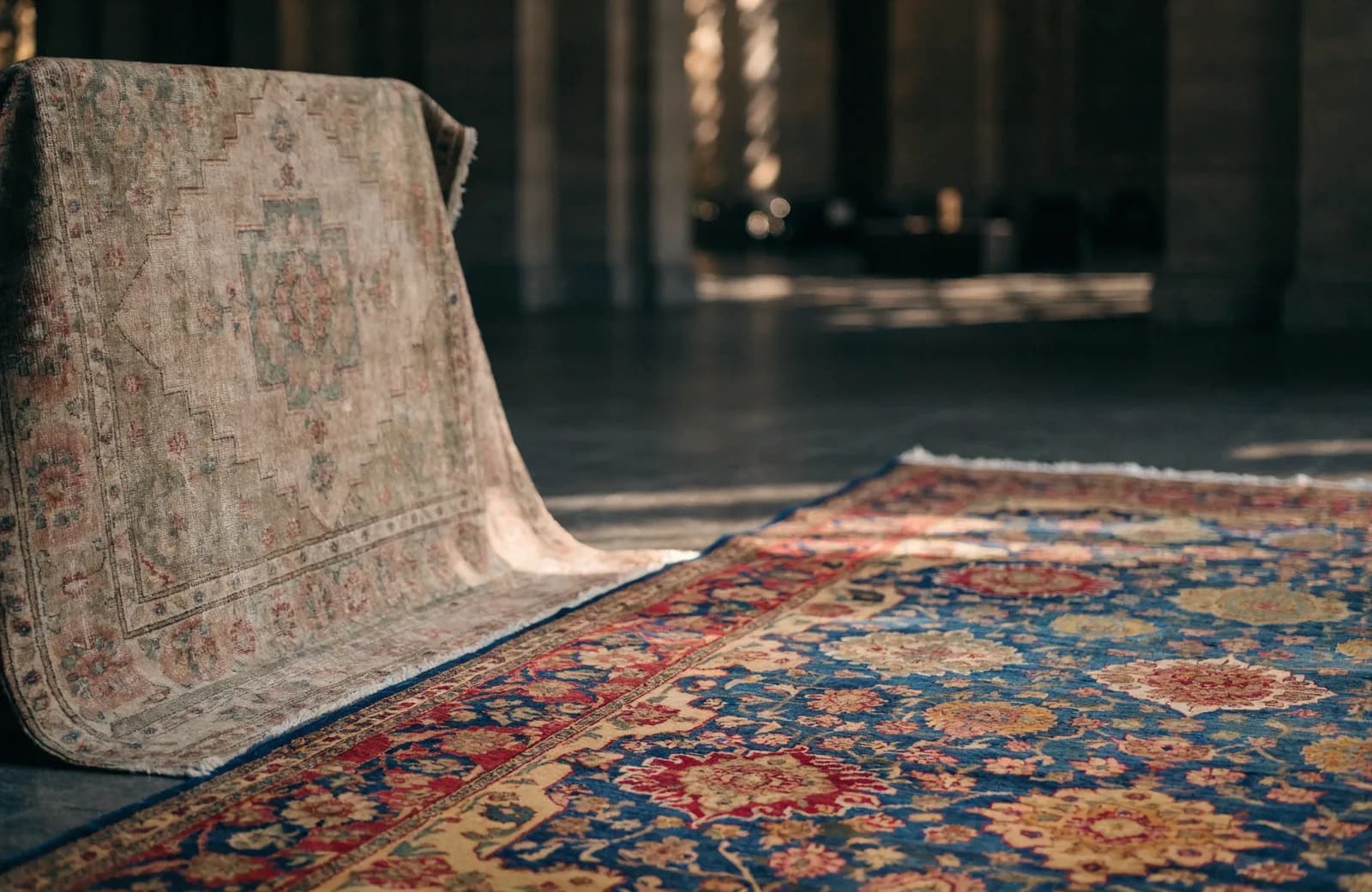
This is also where a free, no-pressure showroom visit pays for itself. You can lay an antique beside a new piece of similar size and design and see, in your own hands, exactly what your money is buying. Browse our collection first, then come and compare. If you have questions before visiting, simply contact us.
So which actually holds value?
The honest verdict: condition, rarity and a fair purchase price decide value retention — not age by itself. A rare, original antique in excellent condition is a wonderful store of value and a true heirloom. But a worn or heavily restored antique can be a poor investment, while a fine new piece bought near fair value can quietly appreciate for decades. The smartest buyers stop asking "old or new?" and start asking "is this a great example, in honest condition, at a fair price?"
That philosophy is exactly how we built Al Malakia. To learn more about our family and how we source, read about Al Malakia — and when you are ready, come and judge for yourself.
Why Visit Al Malakia Persian Carpets?
- Direct sourcing: Purchased from weavers in Qum, Tabriz, Isfahan, Kashan, and Nain — no intermediaries, transparent provenance.
- Scale of stock: 500+ hand-knotted pieces in the showroom, across sizes from 60×90 cm to 4×6 m.
- Free Dubai transfer: Complimentary door-to-door pick-up from Dubai hotels and homes.
- Family expertise: Founded in 2008 by Eid Al Salam, a second-generation Persian carpet merchant.
- Blue Souk location: Shop 45–48, Central Souq Block 3, King Faisal Road, Sharjah. Open Saturday–Thursday 10:00–22:00, Friday 14:00–22:00.
Contact us or WhatsApp +971 50 537 2997 to arrange your visit or request a consultation.