Knot density range: 16 knots/cm² (village rugs) to 250+ knots/cm² (Qum silk)
Price range in UAE showrooms: AED 800 (small tribal) to AED 120,000+ (fine Qum or Isfahan)
Al Malakia founded: 2008, family-sourced directly from weavers in Iran
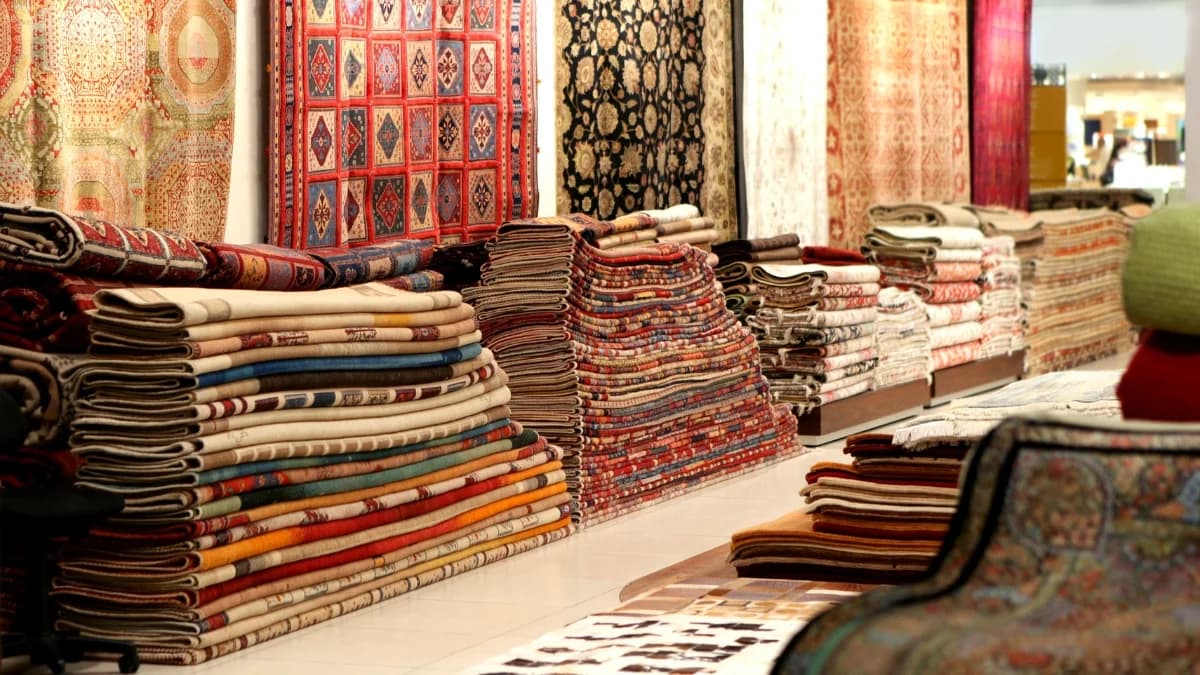
Stock on display: 500+ hand-knotted Persian and Afghan carpets, Shop 45–48, Blue Souk, Sharjah
Key origins stocked: Qum (silk), Tabriz, Isfahan, Kashan, Nain
Free transfer available: Door-to-door from Dubai hotels; Abu Dhabi and Al Ain customers can choose from photos and video on WhatsApp, with free delivery anywhere in the UAE
A hand-knotted carpet woven in Kashan from New Zealand wool at 120 knots per cm² will command a fundamentally different price from a machine-made imitation sold at a similar size. Yet walk into almost any carpet showroom without preparation and the price tags can seem arbitrary. They are not. Every figure reflects a precise set of measurable and verifiable factors — and once you understand them, you can evaluate any carpet on the market with confidence. This guide breaks down all ten of the core Persian carpet value factors, drawing on over fifteen years of direct sourcing experience at Al Malakia Persian Carpets in Sharjah.
1. Knot Density: The Most Cited — and Most Misunderstood — Metric
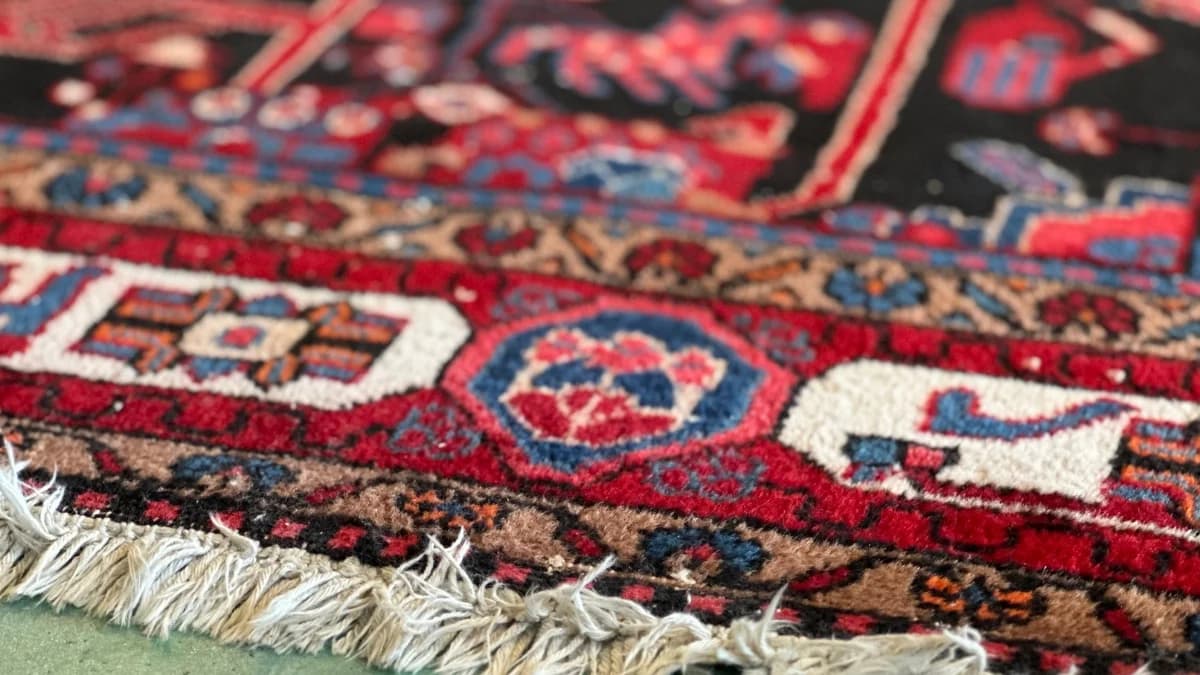
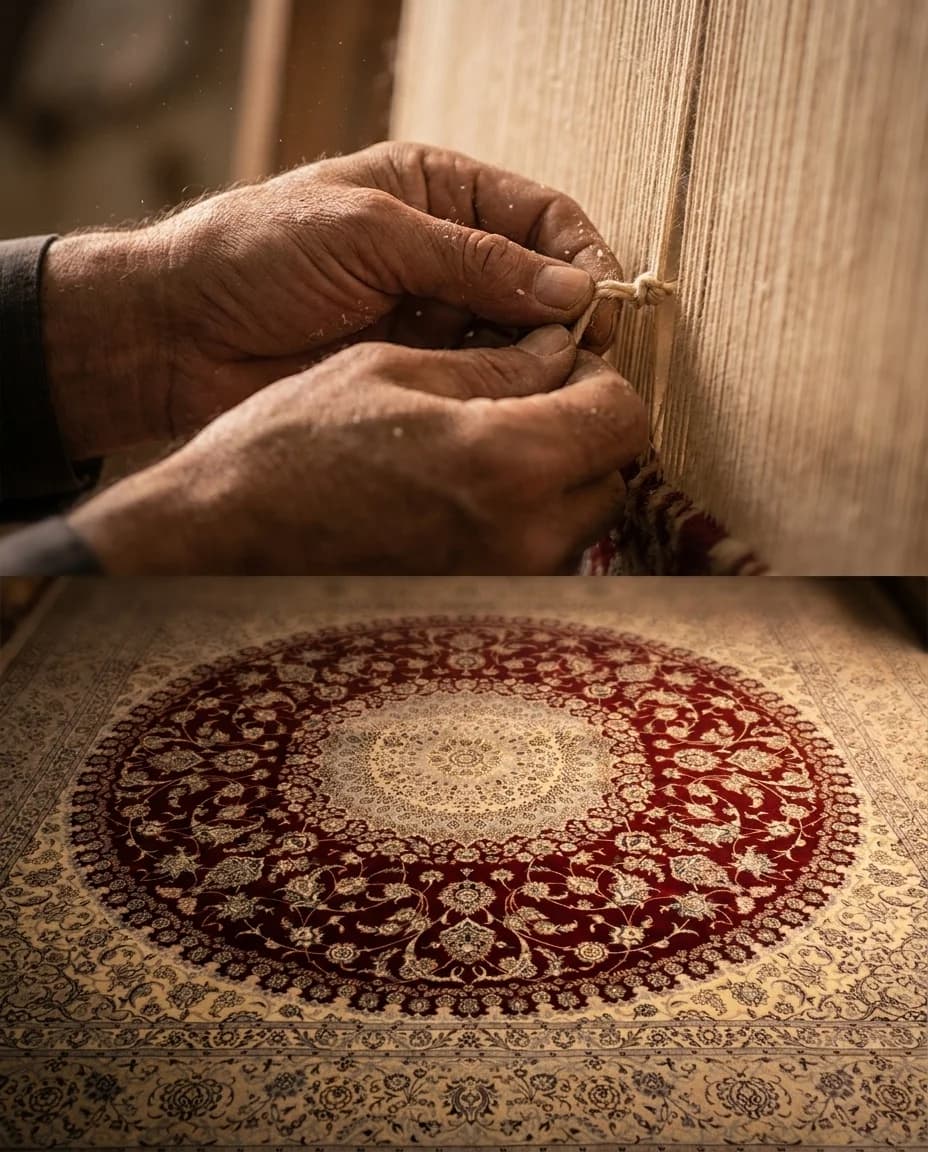
Knot density is measured in knots per square centimetre (KPSC) or knots per square inch (KPSI). A tribal Gabbeh might average 10–20 KPSC; a city-woven Isfahan sits at 60–100 KPSC; a fine Qum silk can exceed 200–250 KPSC. Higher density generally allows finer pattern resolution and requires more labour hours, both of which raise cost. However, density alone does not determine quality — a tightly knotted carpet in poor-quality wool is still a poor-quality carpet. Always evaluate density alongside material and pattern complexity.
2. Material: Silk, Wool, or Cotton — and Which Grade
The fibre used for pile and foundation is the single largest material cost driver:
- Silk pile (Qum, fine Kashan): The most expensive option. Natural silk reflects light differently from every angle, enabling extremely fine detail. Al Malakia's Qum silk collection is sourced directly from workshops in Qum province.
- Wool pile: Kork wool (the soft underbelly fleece of young sheep) is the premium grade, used in classic Tabriz and Isfahan pieces. Standard wool costs significantly less.
- Wool-on-silk foundation: A hybrid structure — wool pile on a silk warp and weft — offering fine density at a lower price than full silk.
- Cotton foundation: Used in most city carpets; more stable than wool foundations but adds no significant premium.
3. Origin City and Weaving Tradition
Where a carpet was woven carries substantial weight in valuation. Different cities have codified traditions that affect design rigour, wool selection, and quality control:
| Origin | Typical pile material | Knot density (KPSC) | Relative price tier |
|---|---|---|---|
| Qum | Silk | 100–250+ | Premium–Luxury |
| Isfahan | Kork wool / silk | 60–120 | High |
| Tabriz | Wool, silk, wool-on-silk | 40–100 | Mid–High |
| Kashan | Kork wool | 60–100 | High |
| Nain | Wool with silk highlights | 60–150 | High |
| Tribal / Village | Coarser wool | 10–30 | Entry–Mid |
For a detailed look at how origin affects UAE retail prices, see our hub guide: Persian Carpet Prices in the UAE 2026 — What Determines Value.
4. Size: Not Purely Linear
Larger carpets cost more — but not always in direct proportion to area. A 3 × 2 m carpet is rarely exactly three times the price of a 1 × 2 m piece from the same workshop, because the difficulty of maintaining pattern symmetry and tension across a larger loom increases exponentially. Very large room-sized pieces (4 × 6 m and above) command a disproportionate premium for this reason.
5. Age and Provenance: Antique, Semi-Antique, or New
The international carpet market broadly classifies rugs as:
- Antique: Over 100 years old. Value depends heavily on condition, provenance documentation, and rarity of design.
- Semi-antique: 50–100 years old. Often prized for naturally oxidised dyes and softened handle.
- New production: Woven within the past 30 years. Price is driven by the factors above rather than age.
At Al Malakia, the majority of the 500+ pieces on display are new production carpets sourced directly from weaving families — meaning you receive a documented, traceable piece without paying an antique premium unless you are specifically seeking aged stock.
6. Dye Type: Natural vs Synthetic
Natural dyes — derived from madder root, pomegranate rind, indigo, and walnut husk — are more labour-intensive to produce and tend to develop a desirable patina over decades. Natural dyeing is a hallmark of premium workshop production. Synthetic (chrome) dyes became widespread after the 1930s; they are stable and vivid but do not age in the same way. A carpet using certified natural dyes can command a 20–40% premium over a comparable piece in synthetic dyes.
7. Pattern Complexity and Design Rarity
A medallion-and-corner design with a 17-colour palette and curvilinear floral detail requires far more design planning and weaver skill than a simple geometric tribal pattern. Some designs — the Shah Abbasi palmette, the Herati fish pattern, certain Qum pictorial formats — carry additional collector value by virtue of their historical associations and the skill required to execute them at fine density.
8. Weaver Reputation and Workshop Attribution
Just as a painting's value is influenced by the artist's name, a carpet attributed to a known master weaver or a renowned family workshop commands a premium. In Tabriz, certain family names have traded for generations; in Qum, specific workshops are known for their particular silk lustre and dye palette. At Al Malakia, our direct sourcing relationships — built since our founding in 2008 — allow us to provide this attribution information to buyers at the point of purchase.
9. Condition and Restoration Quality
For older carpets, condition is critical to value. Factors assessed include:
- Pile height evenness (wear patterns reduce value)
- Foundation integrity (broken warps or wefts indicate structural risk)
- Quality of any restoration work (professional re-knotting is largely invisible; amateur repairs are not)
- Fringe originality (replaced fringes indicate heavy wear at the ends)
A carpet in excellent, unrestored condition will consistently outperform an equivalent piece with even minor repairs when resold.
10. Market and Currency Dynamics
Persian carpet prices are influenced by macro-level factors that operate outside the carpet itself: the USD/IRR exchange rate, Iranian export regulations, global demand from the US, European, and Gulf markets, and shipping costs. During periods of Iranian currency weakness, the AED-denominated price of new production pieces can become highly competitive — which is one reason direct importers like Al Malakia are able to offer better value than multi-tier retail chains. For current market pricing context, refer to our in-depth article on what determines Persian carpet value in the UAE in 2026.
Why Visit Al Malakia Persian Carpets?
Al Malakia has operated from Shop 45–48, Central Souq Block 3 (Blue Souk), King Faisal Road, Sharjah since 2008. As a second-generation family business with direct sourcing relationships in Iran, we stock over 500 hand-knotted pieces across all the origins and price tiers discussed in this article. There are no intermediaries, no inflated margins, and no machine-made pieces on our floor.
- From Dubai: We offer a free door-to-door transfer service from Dubai hotels. Learn more about visiting from Dubai.
- From Abu Dhabi: Customers in Abu Dhabi and Al Ain can choose from photos and video we send on WhatsApp, and we deliver free anywhere in the UAE. See details for Abu Dhabi visitors.
- Opening hours: Saturday–Thursday 10:00–22:00 | Friday 14:00–22:00
- WhatsApp: +971 50 537 2997
Browse our Persian carpet collection online or visit the showroom to see all 500+ pieces in person.
Frequently Asked Questions
How do I verify knot density before buying?
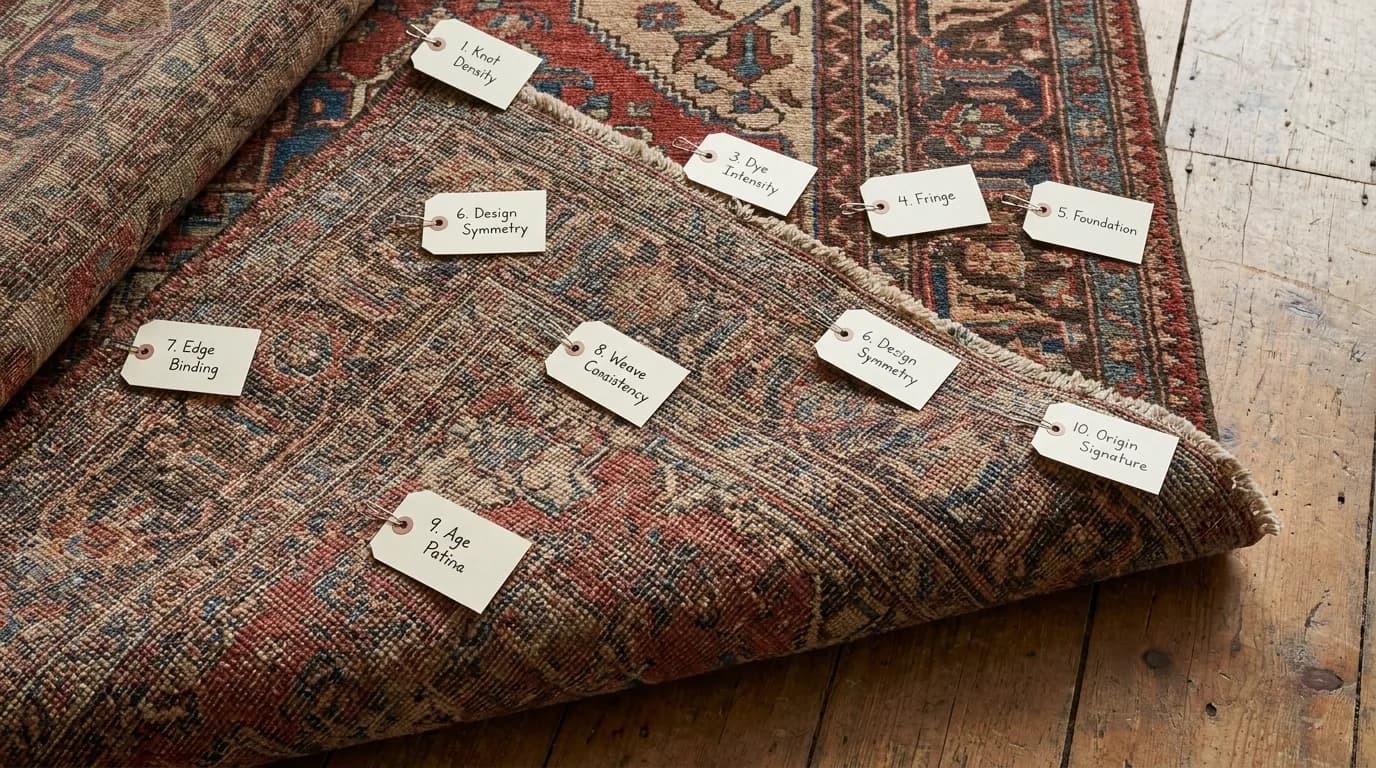
Turn the carpet over and examine the back. On a hand-knotted carpet, individual knots are visible as a series of small bumps in a regular grid. Count the number of knots along a 1 cm horizontal line and a 1 cm vertical line, then multiply. For example, 10 knots across × 10 knots down = 100 KPSC. A reputable showroom should welcome this inspection and be able to confirm the count independently.
Is a higher knot count always better value?
Not automatically. Knot count determines the potential for pattern detail but must be matched by quality materials and skilled weaving to translate into lasting value. A 200 KPSC carpet in poor-grade wool will deteriorate faster than a 60 KPSC carpet in premium kork wool. Evaluate all ten factors together rather than relying on any single metric.
Do Persian carpets from Iran increase in value over time?
Quality hand-knotted carpets have historically held or appreciated in value over decades, particularly pieces in natural dyes, premium materials, and city-workshop traditions such as Qum, Isfahan, and Kashan. However, this is not guaranteed for every piece. Condition, storage, and market trends all play a role. Carpets should be purchased primarily because you value them for use and enjoyment — any appreciation in value is a secondary benefit.
What is the difference between a Persian carpet and an Afghan carpet?
The term "Persian carpet" refers specifically to hand-knotted rugs originating from Iran (Persia), encompassing city workshops and tribal weavers. Afghan carpets come from Afghanistan and share some design traditions — particularly geometric patterns — but use different wool grades, dye practices, and knot structures (commonly the symmetrical or Turkish knot versus the asymmetrical Persian knot). Both traditions are represented in Al Malakia's showroom. UNESCO recognises traditional Persian carpet craftsmanship as an Intangible Cultural Heritage.
How does buying directly from an importer affect price?
A typical carpet passes through several hands between a weaving family in Iran and a retail showroom: exporter, regional distributor, and retailer, each adding margin. Al Malakia sources directly from weavers and weaving families, removing at least two of those layers. This generally means the same piece is available at Al Malakia for 20–40% less than an equivalent carpet at a multi-tier retail chain, while still leaving the business a sustainable margin. Contact us for any questions about specific pieces or pricing.
Can I negotiate the price of a Persian carpet?
In traditional carpet commerce across the Gulf and Iran, negotiation is a normal and expected part of the transaction. At Al Malakia, prices reflect direct-source costs and are already set without inflated "negotiation margin" built in — but we are always happy to discuss value, explain how a price has been arrived at, and find the right piece for your budget. Transparency about pricing is a core part of how a family business maintains long-term customer relationships.
Understanding these ten factors will serve you in any carpet showroom, auction room, or private sale. If you would like to put this knowledge to practical use with 500+ pieces to examine in person, visit Al Malakia Persian Carpets at Shop 45–48, Central Souq Block 3, Blue Souk, King Faisal Road, Sharjah — or send a message on WhatsApp to +971 50 537 2997 before you travel. We are open Saturday to Thursday from 10:00 to 22:00 and Friday from 14:00 onwards.