Price range at Al Malakia: AED 1,500 – AED 1,500,000+
Knot density range: 16 knots per cm² (entry Tabriz wool) to 100+ knots per cm² (Qum pure silk)
Weaving time: 3 months (small wool piece) to 7+ years (large fine silk carpet)
Key origins stocked: Qum, Tabriz, Isfahan, Kashan, Nain (Iran); Mazar-i-Sharif and Herat (Afghanistan)
Showroom location: Shop 45–48, Central Souq Block 3 (Blue Souk), King Faisal Road, Sharjah, UAE
Free transfer service: Door-to-door from Dubai hotels; Abu Dhabi and Al Ain customers can choose from photos and video on WhatsApp, with free delivery anywhere in the UAE
A hand-knotted Persian carpet from Kashan with 40 knots per cm² and a wool pile sells for around AED 8,000–18,000 for a 2×3 m size. A Qum pure-silk carpet of the same dimensions, woven at 100 knots per cm², can reach AED 400,000 or beyond. Both are authentic Persian carpets. The difference lies in a handful of measurable, learnable factors — none of which require a specialist's eye to understand once they are explained clearly. At Al Malakia Persian Carpets, founded in Sharjah in 2008, we source directly from weaving families in Iran, which means we see these variables at the production stage, not just on the showroom floor.
1. Knot Density: The Single Most Important Number
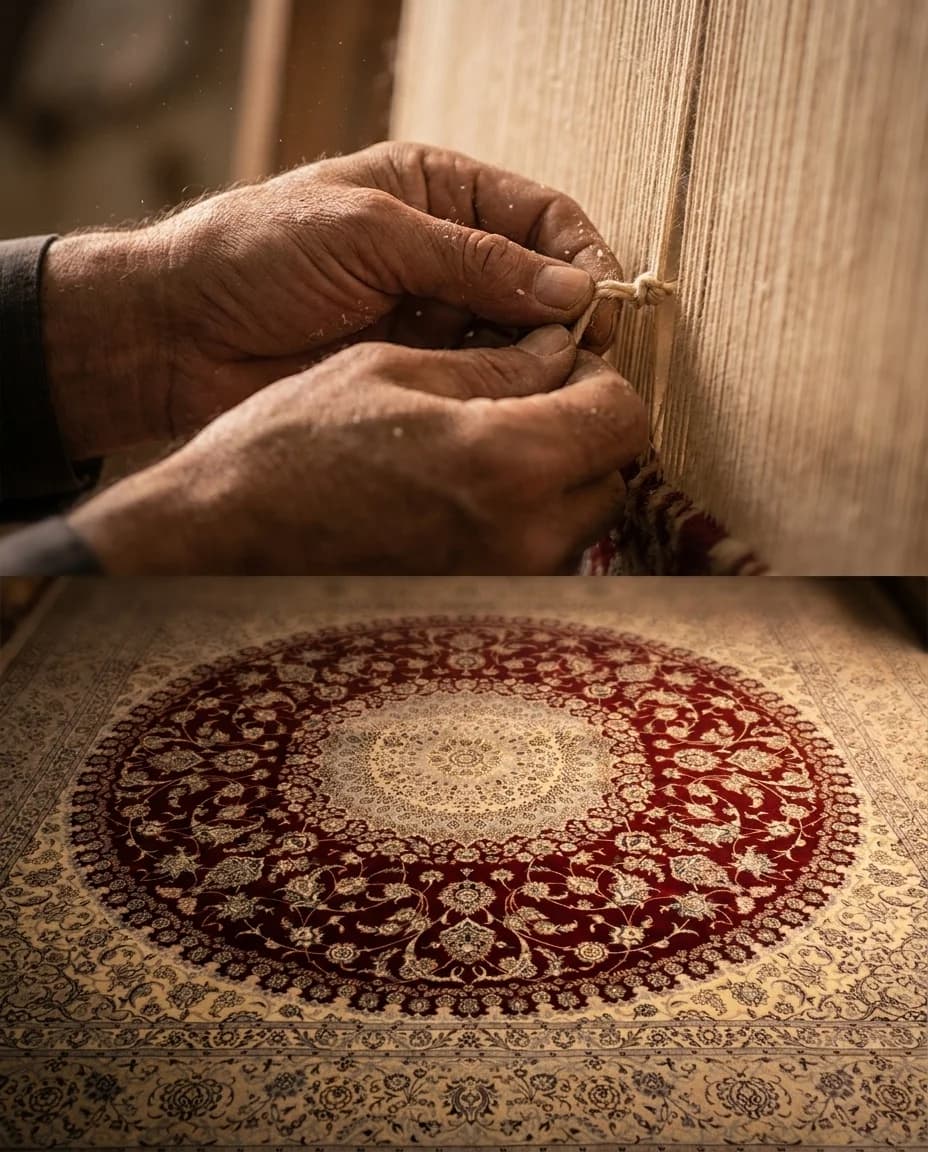
Every hand-knotted carpet is built knot by knot. The density of those knots — measured as knots per square centimetre (KPSC) or knots per square inch (KPSI) — determines how fine the detail, how sharp the pattern, and how long the carpet will last under foot traffic.
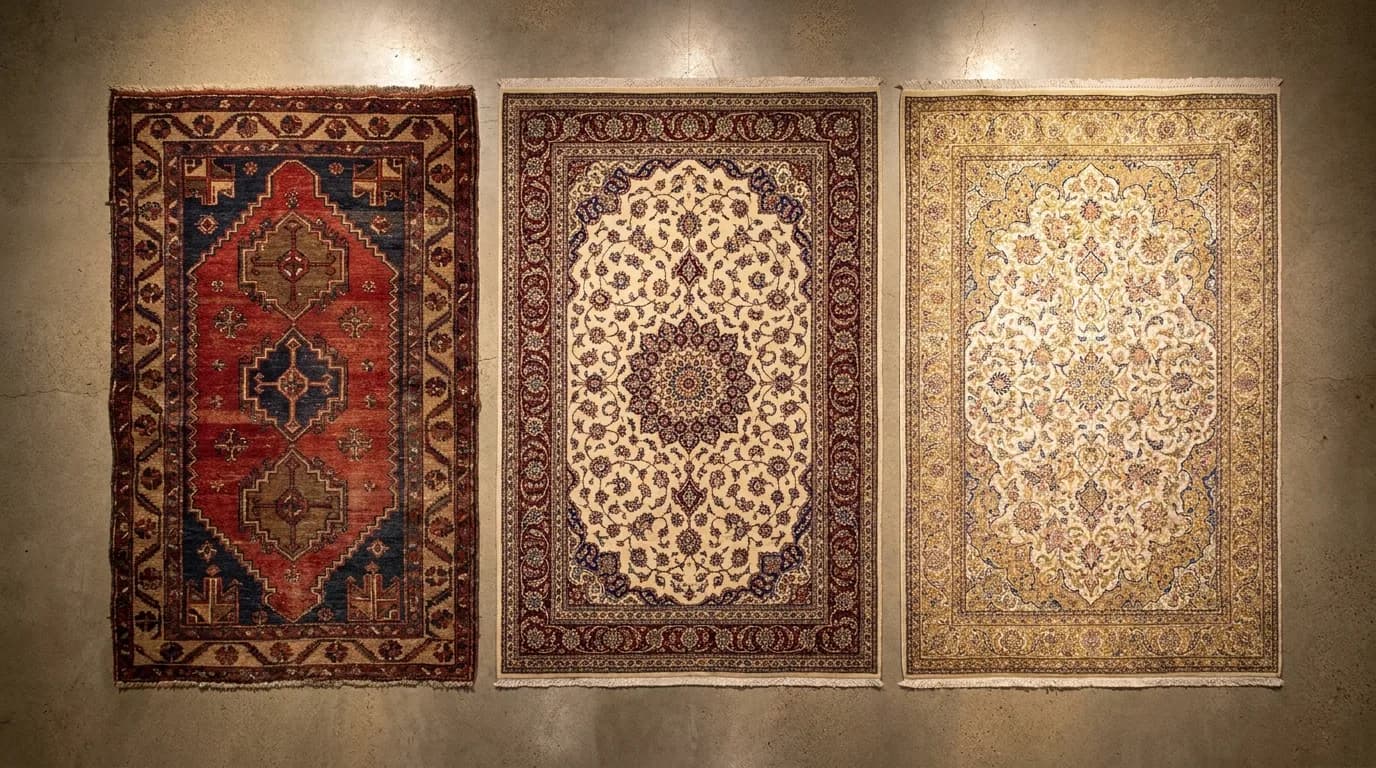
- 16–25 KPSC: Tribal and village carpets; bold geometric patterns; durable for high-traffic rooms.
- 30–50 KPSC: City carpets from Kashan, Isfahan, Tabriz; curvilinear floral designs with clear definition.
- 60–80 KPSC: Fine Nain and Tabriz pieces; medallion designs with intricate border detail.
- 100+ KPSC: Qum silk masterworks; photographic-level detail; investment-grade pieces.
Doubling the knot density more than doubles the production time, because each row of knots must be packed more tightly and the pile trimmed more carefully. A weaver completing 10,000 knots per day on a dense Qum silk carpet needs roughly three times as many working days as one completing a coarser wool piece of the same size.
2. Material: Wool, Silk Foundation, and Pure Silk
The fibre used in both the pile (the visible surface) and the foundation (the warp and weft threads that hold everything together) is a major price driver.
| Material Combination | Typical Origin | Relative Price (same size, same density) |
|---|---|---|
| Wool pile on cotton foundation | Kashan, Tabriz, Isfahan | Baseline |
| Wool pile on silk foundation | Tabriz, Nain | 1.3–1.8× baseline |
| Silk pile highlights on wool | Tabriz, Isfahan | 1.5–2.5× baseline |
| Pure silk pile on silk foundation | Qum | 5–20× baseline |
Qum (also spelled Qom) is the city in Iran most associated with fine silk carpet weaving. The silk thread used there is thinner than human hair, allowing weavers to pack 100 or more knots into a single square centimetre. The resulting surface has a directional sheen — rotate a Qum silk carpet 180° and the colour appears to shift, a property called lustre play, which is impossible to replicate in wool.
3. Origin City and Weaving Tradition
Persian carpet weaving is not uniform across Iran. Each city developed its own design vocabulary, dye palette, and structural conventions over centuries. These differences affect price in two ways: technical (certain cities produce finer work) and reputational (certain names carry collector demand).
- Qum: Purest silk weaving tradition; highest per-unit prices; small to medium formats dominate.
- Tabriz: Versatile — produced in wool, silk highlights, and full silk; large formats available; strong secondary market.
- Isfahan: Known for balance of design and durability; premium wool quality from Khorasan sheep.
- Kashan: Medallion and floral classics; consistent quality control; accessible price entry points for fine city carpets.
- Nain: Very fine knotting in pale palettes; often uses silk highlights; sought by collectors of understated pieces.
4. Size and Its Non-Linear Effect on Price
Larger carpets do not cost proportionally more — they cost disproportionately more. A 4×6 m carpet is not simply four times the price of a 2×3 m carpet, even from the same city and weaver. The reasons are practical: larger looms are rarer, require more weavers working simultaneously on the same design, and take longer to maintain consistent tension across the width. A palace-size Isfahan at 6×9 m can represent seven or more years of continuous work by a team of five weavers.
5. Dye Source: Synthetic vs. Vegetable
Before synthetic aniline dyes arrived in Persia in the late 19th century, all carpet dyes were plant- or insect-derived: pomegranate rind for yellow, indigo for blue, madder root for red, oak gall for black. Vegetable-dyed carpets develop a patina over decades — colours mellow and harmonise rather than fade unevenly. Synthetically dyed carpets can be vivid initially but are more prone to uneven fading, particularly in direct sunlight common in UAE homes.
At Al Malakia, every piece in our Persian carpet collection is inspected for dye type before purchase from the weavers — it is one of the first questions our buyers ask.
6. Age and Provenance
Antique Persian carpets (generally defined as 100+ years old) and semi-antique pieces (50–99 years) attract a separate pricing logic driven by rarity, collector demand, and documented provenance. A 19th-century Kashan Mohtasham carpet — named after the master weaver Haj Mullah Hassan Mohtasham — has sold at international auction for sums exceeding USD 33 million, making it among the Persian carpet most expensive pieces ever recorded. Age alone, however, does not guarantee value; condition, completeness of pile, and authenticity documentation matter equally.
For a comprehensive breakdown of how these factors interact across current UAE market prices, see our full guide: Persian Carpet Prices in the UAE 2026 — What Determines Value.
7. Weaver Reputation and Workshop vs. Village Production
Named master weavers and established workshops command significant premiums. In Tabriz, for example, carpets signed by a recognised master weaver can sell for three to five times the price of an anonymous piece with identical technical specifications. This is not vanity pricing — documented mastery creates a traceable secondary market and guarantees a level of quality control that anonymous production cannot match.
8. The Role of the Supply Chain
How a carpet travels from loom to showroom affects its price substantially. Carpets passing through multiple intermediaries — regional dealers, export agents, import distributors — accumulate margins at each stage. Al Malakia was established in 2008 specifically to compress this chain: we purchase directly from weaving families and workshops in Iran, which allows us to offer pieces at prices that reflect production cost rather than accumulated dealer margins. If you are travelling from Dubai, we arrange free door-to-door transfer from Dubai hotels; customers in Abu Dhabi and Al Ain can choose from photos and video we send on WhatsApp, with free delivery anywhere in the UAE.
Why Visit Al Malakia Persian Carpets in Sharjah?
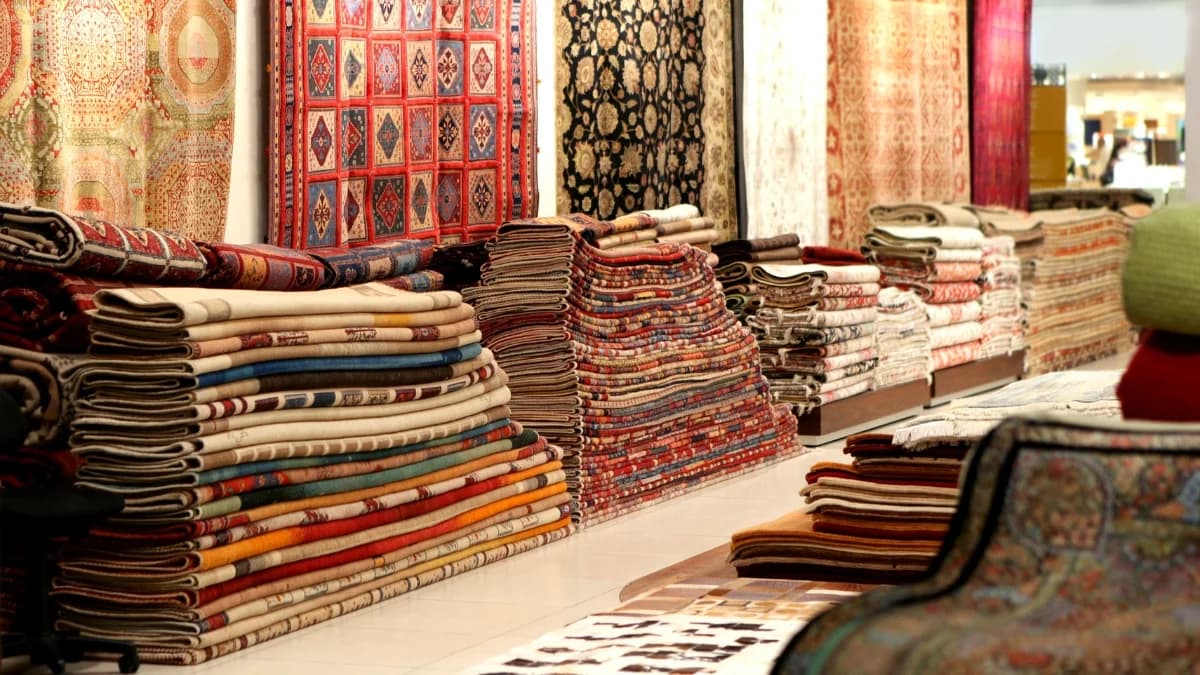
Al Malakia has operated from the Blue Souk (Central Souq), Sharjah, since 2008 — a family business now in its second generation, sourcing directly from weaving communities in Qum, Tabriz, Isfahan, Kashan, and Nain. Our showroom at Shop 45–48, Block 3 holds more than 500 hand-knotted pieces across every price point discussed in this article, from AED 1,500 entry-level wool pieces to investment-grade Qum silks. We do not employ commission-based sales staff — every conversation is with a family member or long-term specialist. Free transfer is available from Dubai hotels, and customers in Abu Dhabi and Al Ain can choose from photos and video on WhatsApp, with free delivery anywhere in the UAE. WhatsApp us on +971 50 537 2997 or call +971 6 573 1399 to arrange a visit or ask a specific question before you travel.
Frequently Asked Questions
What makes a Persian carpet the most expensive in the world?
The record prices for Persian carpets combine several factors simultaneously: Qum or antique Isfahan/Kashan origin; pure silk construction at 100+ KPSC; large format; vegetable dyes; documented provenance tracing to a named master weaver or historical collection; and perfect condition. Remove any one of these factors and the price drops significantly. The most expensive carpets sold at auction tend to be 17th- or 18th-century Safavid-era pieces with royal provenance — a combination virtually impossible to replicate today.
Is a higher knot count always better?
Higher knot density allows finer detail and generally indicates more skilled and time-intensive work. However, a tribal Gabbeh at 16 KPSC with natural dyes and strong geometric design serves a different purpose than a 100-KPSC Qum silk piece. "Better" depends on intended use: high-traffic hallways suit robust wool carpets with lower knot counts; a reception room or collector's display benefits from fine city carpets at 40 KPSC and above. Knot count should be considered alongside material, dye, and origin — not in isolation.
How can I tell if a Persian carpet is hand-knotted or machine-made?
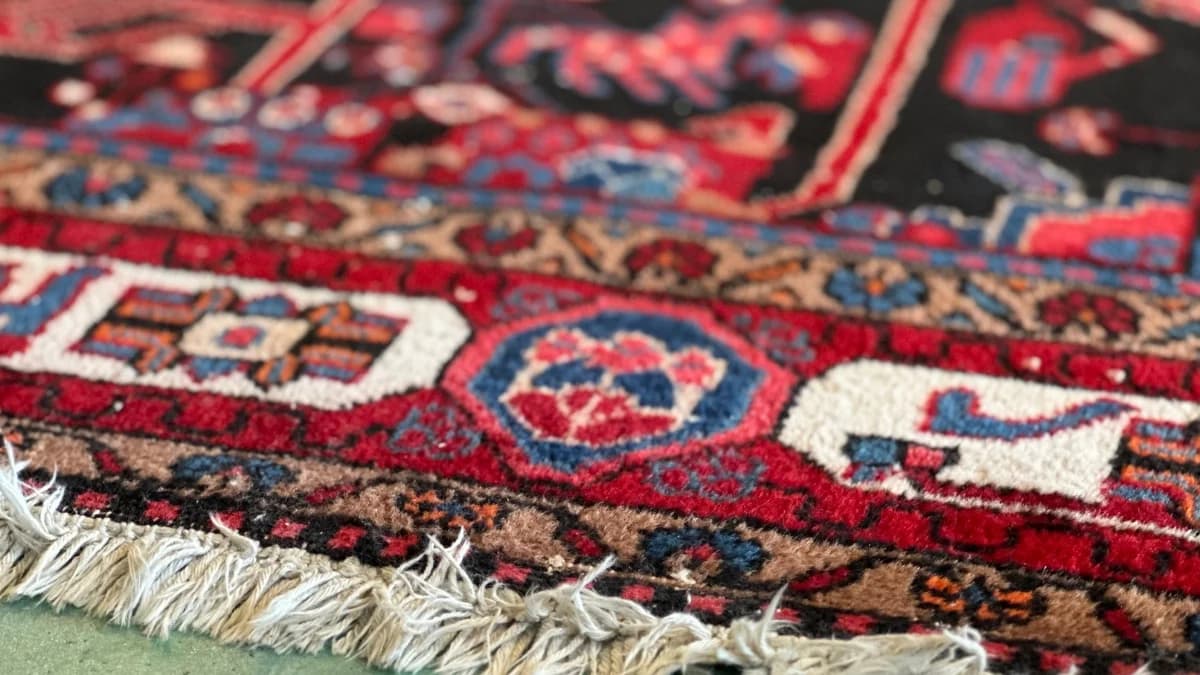
Turn the carpet over and examine the back. In a hand-knotted carpet, the pattern on the reverse mirrors the front almost exactly, and individual knots are visible as small bumps arranged in rows. Minor irregularities in knot alignment are normal and indicate human work. A machine-made carpet has a perfectly uniform back with a canvas or fabric backing glued or stitched on — the pile is looped or tufted rather than individually knotted. The fringe on a hand-knotted carpet is an extension of the warp threads; on a machine-made carpet, fringe is usually sewn on separately.
Do Persian carpets increase in value over time?
Fine hand-knotted Persian carpets — particularly Qum silk, named-workshop Tabriz, and antique pieces — have historically appreciated in value when properly maintained. This is not guaranteed; condition, provenance documentation, and market demand all play a role. Entry-level wool carpets are better understood as durable furnishings with long service lives rather than financial investments. For a detailed look at current UAE resale and investment dynamics, see our guide on what determines Persian carpet value in the UAE in 2026.
What is the difference between a Persian carpet and an Oriental carpet?
"Oriental carpet" is a broad category covering hand-knotted carpets from Iran, Afghanistan, Turkey, Central Asia, India, and China. "Persian carpet" refers specifically to carpets woven in Iran (historically Persia). All Persian carpets are Oriental carpets, but not all Oriental carpets are Persian. At Al Malakia, we stock both Persian carpets (from Qum, Tabriz, Isfahan, Kashan, Nain) and Afghan carpets (from Mazar-i-Sharif and Herat), and we are transparent about the origin of every piece.
How do I care for a Persian carpet in a UAE home?
Rotate the carpet 180° every 12–18 months to ensure even wear and fading. Vacuum with a low-suction setting, always in the direction of the pile — never against it. Keep out of direct sunlight where possible, as UV exposure degrades both natural and synthetic dyes over time. For spills, blot immediately with a clean dry cloth; avoid rubbing. Professional washing every 3–5 years, by a specialist who understands hand-knotted construction, extends the life of both pile and foundation significantly. Contact Al Malakia for recommendations on specialist carpet care services in the UAE.
Understanding what separates a AED 1,500 carpet from a AED 1,500,000 one is not a matter of taste — it is a matter of measurable craft. Knot density, fibre type, city of origin, dye source, weaver reputation, and supply chain transparency all combine to produce a final price that, once explained, makes complete sense. If you would like to see these differences in person across more than 500 pieces, visit us at Shop 45–48, Central Souq Block 3, Blue Souk, Sharjah — Saturday to Thursday 10:00–22:00, Friday 14:00–22:00 — or send us a message on WhatsApp at +971 50 537 2997 before you travel.