Price range (wool, entry-level): AED 800–3,500 for a 2×3 m Tabriz or Kashan wool carpet
Price range (silk, Qum): AED 12,000–100,000+ depending on knot density and size
Knot density: 100–160 knots per sq cm in fine Qum silk; 40–80 knots per sq cm in wool Tabriz
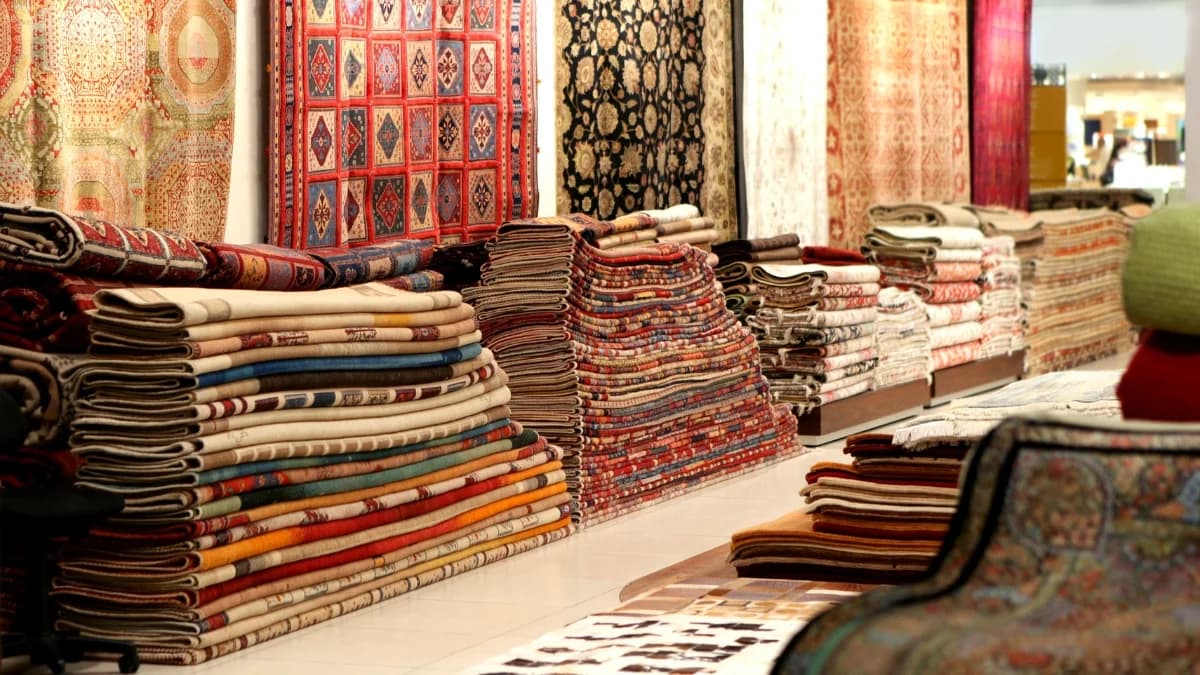
Showroom stock: 500+ hand-knotted Persian and Afghan carpets at Al Malakia, Blue Souk, Sharjah
Origins stocked: Qum, Tabriz, Isfahan, Kashan, Nain
Free transfer: Door-to-door from Dubai hotels; Abu Dhabi and Al Ain customers can choose from photos and video on WhatsApp, with free delivery anywhere in the UAE
A hand-knotted Persian carpet from Qum can carry a price tag of AED 80,000 — and it is worth every fils. A wool Kashan measuring 2×3 m, on the other hand, might cost AED 1,800. The gap between those two numbers is not arbitrary. It reflects knot density, material, weaving city, age, and the number of hours a single artisan spent on the loom. Understanding those variables is the only honest way to answer whether Persian carpets are expensive. This post breaks down what you actually pay for, category by category, so you can make an informed decision before you visit a showroom — or before you dismiss a price without context.
The Short Answer: It Depends on What You Are Buying
The phrase "Persian carpet expensive" is searched thousands of times a month, usually by people who have seen a price and felt uncertain. The reality is that hand-knotted Persian carpets span an enormous price range. A small decorative piece from Tabriz in wool can start at a few hundred dirhams. A large, fine-silk Qum with a medallion design can exceed AED 200,000. Both are genuine Persian carpets. The difference is entirely in the specifications.
Thinking of a Persian carpet as a single product category is like thinking of a car as a single product category. A city hatchback and a hand-built sports car are both cars, but no one is surprised that their prices differ by a factor of twenty. The same logic applies here.
The Five Factors That Set the Price
Before any price table makes sense, these are the five variables that drive cost in every hand-knotted Persian carpet:
- Material: Silk costs significantly more than wool in both raw material and weaving time. Wool-on-cotton is the most accessible entry point; silk-on-silk is the most expensive.
- Knot density: Measured in knots per square centimetre (KPSC). The higher the density, the finer the design and the longer the weaving time. A Qum silk at 150 KPSC takes far longer to complete than a Tabriz wool at 50 KPSC.
- City of origin: Weaving centres such as Qum, Nain, and Isfahan are renowned for their technical precision and command higher prices than regional tribal pieces.
- Size: Larger carpets require more material and more time. Price does not always scale linearly — a very large, fine-silk carpet can be exponentially more expensive than a small one.
- Age and condition: Antique and semi-antique carpets carry a premium if they are in good condition. Newer carpets from the same city can sometimes be more accessible.
For a deeper look at how these variables interact in the UAE market specifically, see our full guide on Persian carpet prices in the UAE for 2026.
Price Breakdown by Type and Origin
The table below reflects typical retail ranges for genuine hand-knotted Persian carpets in the UAE. Prices are approximate and vary by condition, exact knot count, design complexity, and size. All figures are in AED.
| Type / Origin | Material | Approx. Knots/sq cm | Price Range (2×3 m) |
|---|---|---|---|
| Tabriz | Wool on cotton | 40–60 | AED 1,200–4,500 |
| Tabriz | Wool-on-silk | 60–80 | AED 4,000–12,000 |
| Kashan | Wool on cotton | 50–70 | AED 1,500–5,500 |
| Isfahan | Wool on silk | 60–90 | AED 5,000–18,000 |
| Nain | Wool & silk on cotton | 80–120 | AED 6,000–25,000 |
| Qum (Kum) | Silk on silk | 100–160 | AED 18,000–100,000+ |
| Afghan (Ziegler / Chobi) | Wool on wool | 25–45 | AED 900–3,800 |
These ranges reflect carpets available at our Persian carpet collection at Al Malakia, where over 500 pieces are held in stock at any time in our Sharjah showroom.
Why Qum Silk Carpets Cost So Much
Qum (also written Kum or Qom) is a city south of Tehran that has produced some of the world's most technically refined silk carpets since the early twentieth century. The traditional skills of carpet weaving in Iran are recognised by UNESCO as intangible cultural heritage, and Qum silk weaving sits at the top of that tradition.
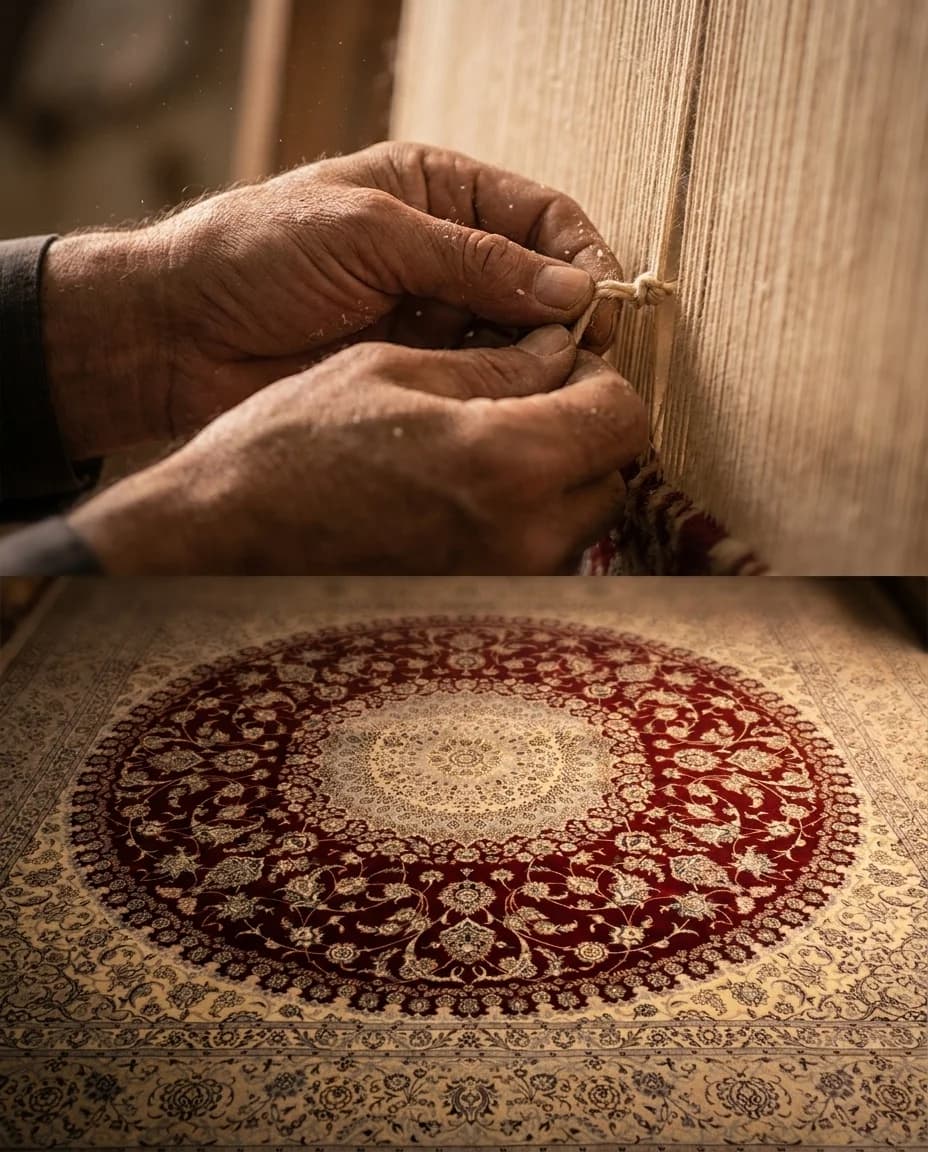
A single square metre of fine Qum silk at 150 KPSC contains approximately 1,500,000 individual knots. Each knot is tied by hand. A skilled weaver completes roughly 8,000–10,000 knots per day. That means a 2×3 m Qum silk carpet at that density requires around 900 working days of weaving — nearly three years of full-time work for one artisan. That context reframes the price entirely.
Where Wool Carpets Offer Genuine Value
Not every buyer needs silk. A well-made Tabriz or Kashan wool carpet on a cotton foundation is genuinely durable, visually complex, and can last a hundred years with reasonable care. These are not compromise purchases — they are the backbone of Persian carpet tradition and the category that most households in Iran and the Gulf have used for generations.
Entry-level wool carpets from Tabriz or Kashan in the AED 1,500–4,500 range represent outstanding value for money when compared with machine-made alternatives that wear out within a decade. The hand-knotted construction means the pile can be professionally washed, repaired, and re-used, effectively amortising the cost over a lifetime.
Afghan Carpets: The Accessible Entry Point
Afghan hand-knotted carpets — particularly Ziegler (also called Chobi) and Turkoman styles — offer genuine artisanal craftsmanship at lower price points than most Iranian city carpets. They use hand-spun, vegetable-dyed wool and typically have a looser weave structure that gives them a softer, more casual appearance. For buyers furnishing a family room or a rental property, a well-chosen Afghan Chobi in the AED 1,000–2,500 range is a practical and attractive solution.
What Machine-Made Carpets Cost — and Why It Is Not the Same Thing
A machine-made carpet that resembles a Persian design can be purchased for AED 300–600. This comparison is understandable but misleading. Machine-made carpets use synthetic fibres or low-grade wool pressed onto a backing. They do not hold colour the same way, they cannot be repaired knot by knot, and they have no secondary market value. A hand-knotted Persian carpet, maintained properly, is an asset. A machine-made carpet is a consumable.
How to Verify You Are Buying a Genuine Hand-Knotted Carpet
Three practical checks anyone can apply in a showroom:
- Turn the carpet over. On a genuine hand-knotted carpet, the pattern is clearly visible on the back, and each knot is individually distinguishable. A machine-made carpet has a uniform latex or fabric backing.
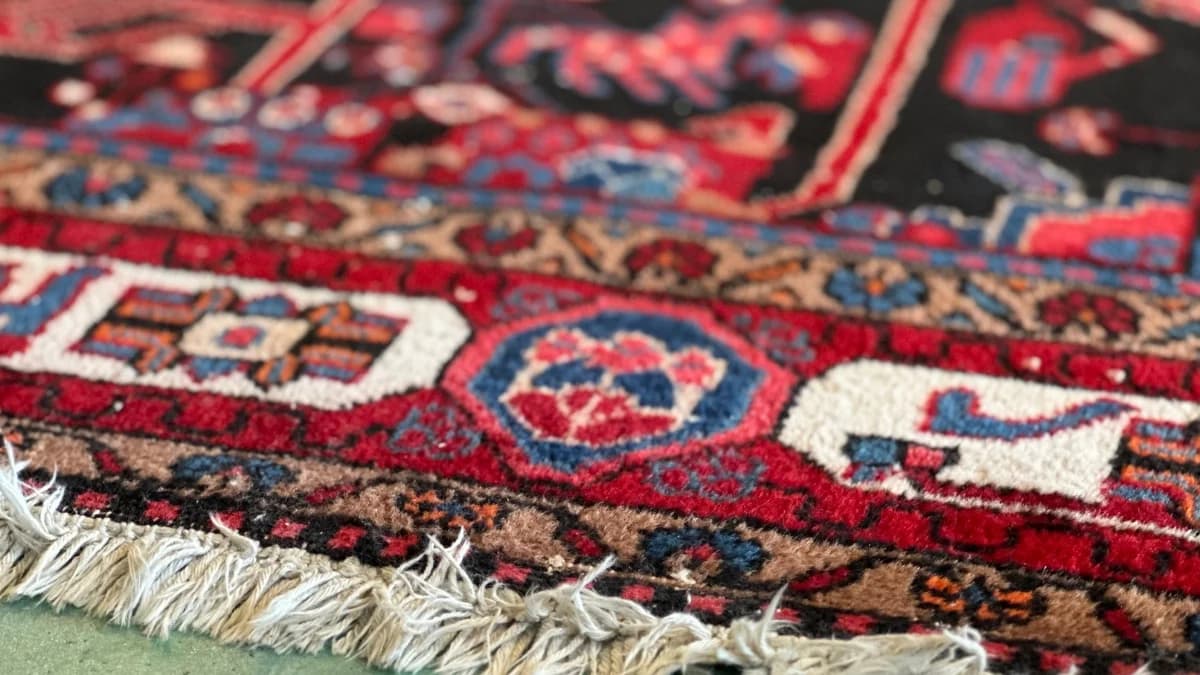
- Examine the fringe. On a hand-knotted carpet, the fringe is an extension of the warp threads — it is structural. On a machine-made carpet, fringe is sewn on as decoration.
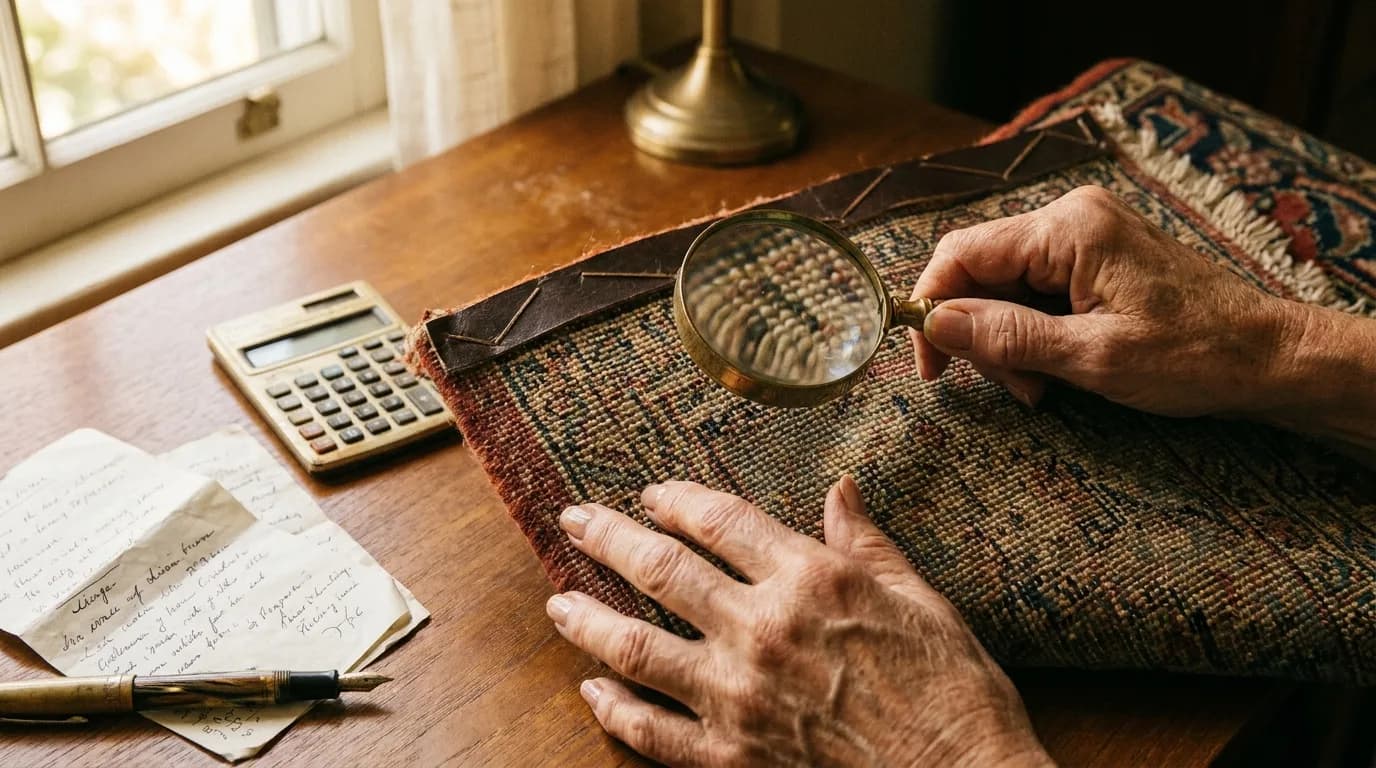
- Ask for provenance. A reputable dealer should be able to tell you the weaving city, approximate age, and material. At Al Malakia, all stock is sourced directly from weavers and weaving families in Iran, which means that information is available for every piece.
Are Persian Carpets a Good Investment?
Fine Persian carpets — particularly silk Qum, antique Isfahan, and high-density Nain — have historically held or increased in value over decades. They are not liquid assets, and their value depends heavily on condition and provenance. However, unlike furniture or décor that depreciates immediately, a well-maintained hand-knotted carpet retains real-world resale value. For detailed guidance on what drives price appreciation in the UAE market, read our comprehensive resource on what determines Persian carpet value in 2026.
Why Visit Al Malakia Persian Carpets?
Al Malakia has operated from Shop 45–48, Central Souq Block 3 (Blue Souk), King Faisal Road, Sharjah since 2008. As a family-owned business sourcing directly from weavers in Iran, we hold over 500 hand-knotted Persian and Afghan carpets in our showroom at any time — across all price points from entry-level Afghan wool to fine Qum silk.
Visitors from Dubai receive a free door-to-door transfer from their hotel. Customers in Abu Dhabi and Al Ain can choose from photos and video we send on WhatsApp, and we deliver free anywhere in the UAE. There is no obligation to purchase.
Hours: Saturday–Thursday 10:00–22:00 | Friday 14:00–22:00
Phone: +971 50 537 2997 | WhatsApp: 50 537 2997
Contact us to arrange a visit or a free transfer from Dubai.
Frequently Asked Questions
Why are Persian carpets so expensive compared to regular carpets?
The cost reflects hand labour, not markup. A hand-knotted Persian carpet contains hundreds of thousands to millions of individually tied knots, each placed by a skilled artisan. The raw materials — particularly silk — are also costly. When you divide the final price by the number of hours invested in production, the per-hour cost is often lower than many other skilled trades.
What is the cheapest type of genuine Persian carpet I can buy?
Afghan hand-knotted wool carpets, particularly Ziegler (Chobi) styles, are typically the most accessible entry point, starting around AED 800–1,000 for smaller sizes. Among Iranian city carpets, Tabriz wool-on-cotton pieces are often the most competitively priced, starting around AED 1,200 for a 2×3 m piece.
Is a AED 15,000 Persian carpet worth it?
At AED 15,000, you are typically in the range of a fine Isfahan or Nain wool-and-silk carpet, or a smaller Qum silk. These pieces are hand-knotted at high density, will last several generations with basic care, and can be professionally cleaned and repaired indefinitely. Compared with a machine-made alternative that may need replacing within a decade, the lifetime cost is often lower — and the aesthetic and cultural value is incomparable.
Can I find Persian carpets in Dubai, or do I need to go to Sharjah?
Persian carpets are available in Dubai, but selection and pricing can vary significantly. Al Malakia's showroom in Sharjah's Blue Souk holds 500+ pieces across all price points and origins. For visitors from Dubai, we offer a complimentary door-to-door transfer from your hotel — making the trip straightforward and cost-free.
How do I know if a carpet is genuinely hand-knotted?
Turn it over. On a genuine hand-knotted carpet, the design is clearly visible from the back and individual knots are discernible. Machine-made carpets have a uniform, often latex-backed underside with no visible knot structure. Fringe on a hand-knotted carpet is structural — it is part of the warp — not sewn on.
Do Persian carpet prices differ between Sharjah and Abu Dhabi?
Prices for the same carpet should not differ significantly based on geography — the cost is in the making, not the location. However, selection varies widely by showroom. For visitors from Abu Dhabi, the Sharjah showroom gives you access to our full stock of 500+ pieces rather than a limited retail selection. You are welcome to drive over, or choose from photos and video we send on WhatsApp, with free delivery anywhere in the UAE.
The Bottom Line
Persian carpets are not uniformly expensive. They span from accessible Afghan wool pieces under AED 1,000 to museum-quality Qum silk exceeding AED 100,000. What makes a specific carpet worth its price is always traceable: the city it came from, the material it was made with, the density of its weave, and the number of hours a skilled artisan invested in its creation. Once those factors are understood, the prices are not surprising — they are logical.
If you would like to see that range in person, Al Malakia's showroom in Sharjah's Blue Souk holds over 500 hand-knotted pieces and has done so since 2008. Visit us at Shop 45–48, Central Souq Block 3, King Faisal Road, Sharjah — or send us a WhatsApp message on +971 50 537 2997 to arrange your free transfer from Dubai or to ask any question before you visit. Browse our full range at the about page to learn more about how we source directly from Iranian weavers.