Quick Facts
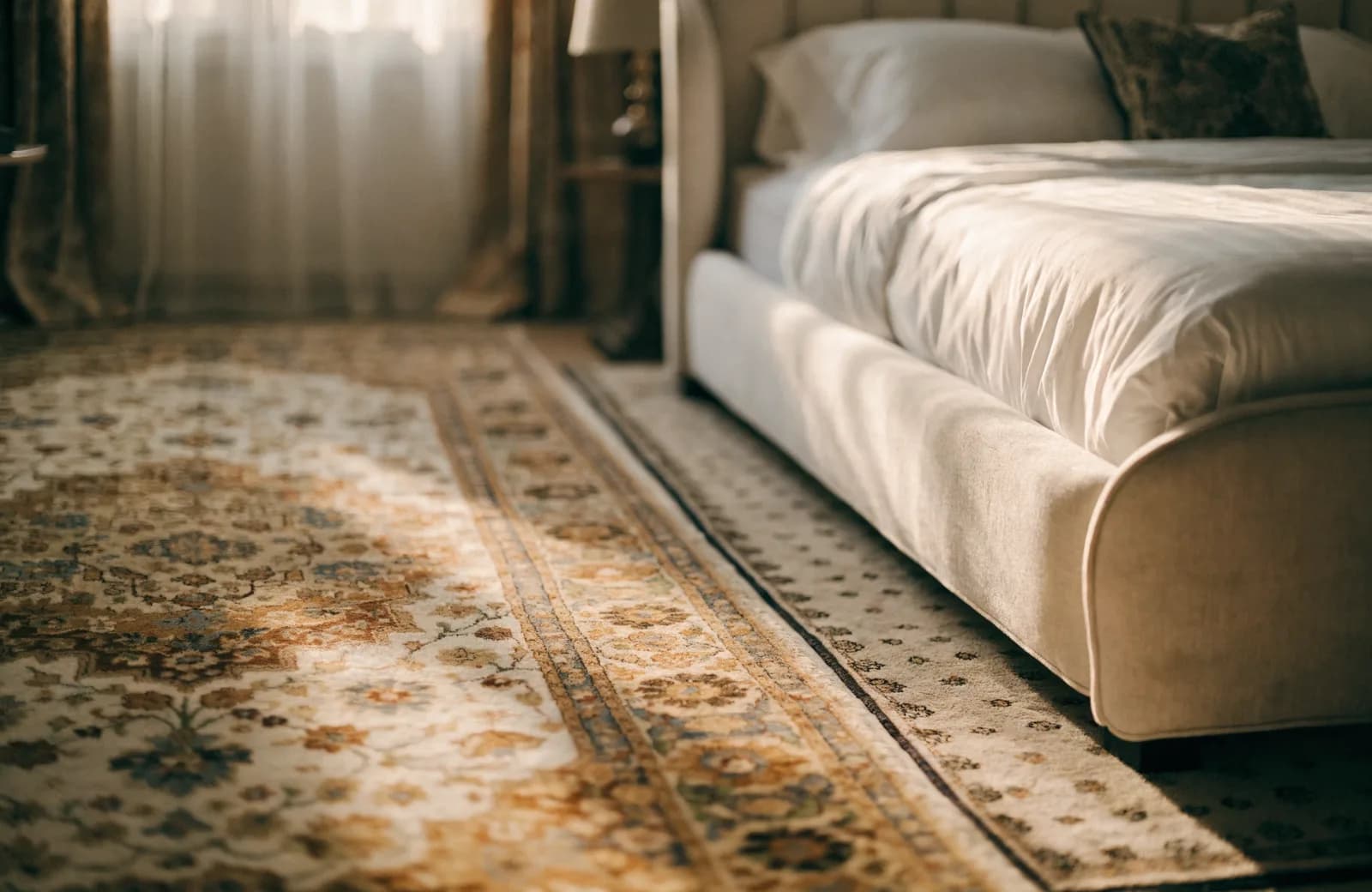
Most common bedroom layout: one large rug centred under the bed with 45–60 cm of carpet showing on three sides.
Sizes that work for a king bed: usually 2.4×3 m or 3×4 m; queen beds suit 2×3 m.
Runner option: 80×300 cm runners on each side of the bed are ideal for apartments and shared rooms.
Best feel underfoot: soft, dense wool pile in Tabriz, Kashan or Nain weaves; silk Qum for accent areas.
UAE-relevant: hand-knotted wool handles AC dryness and bare-foot living far better than synthetic.
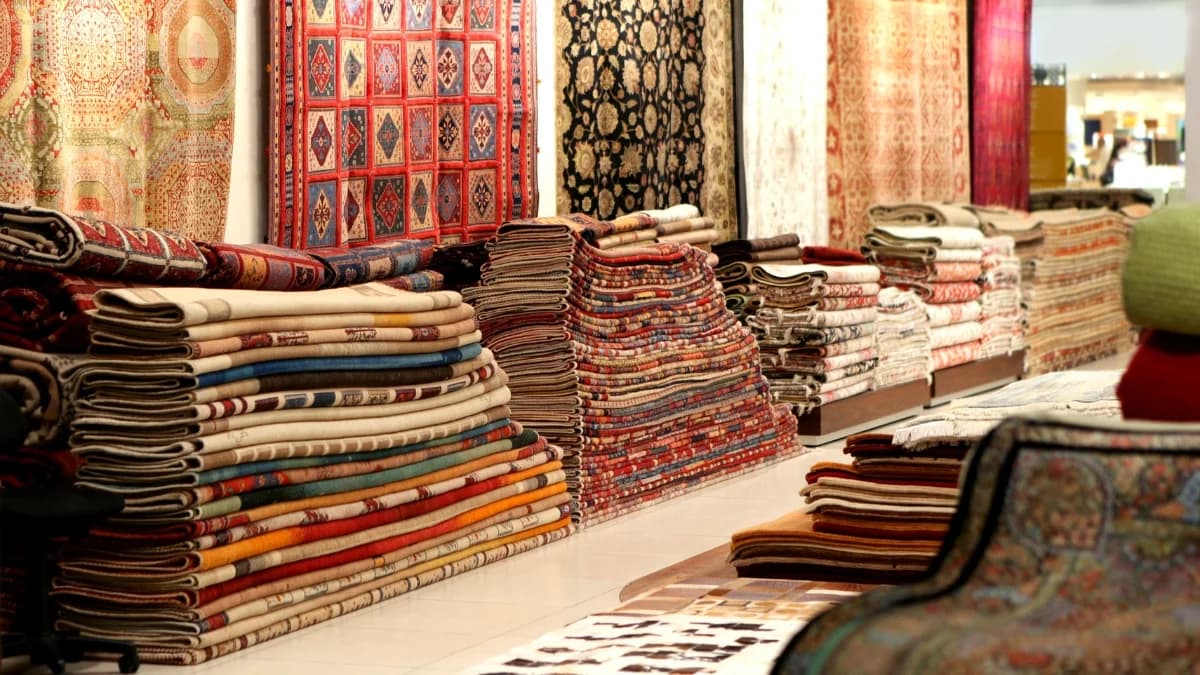
At Al Malakia: 500+ pieces in stock from 60×90 cm to 4×6 m, Afghan pieces from AED 800, fine Qum silk from AED 8,000+.
A bedroom is the one room where you walk barefoot first thing in the morning and last thing at night, so the rug under and around your bed does more emotional work than almost any other piece in the home. The two questions we hear most often at Al Malakia Persian Carpets are simple: where exactly should the carpet go relative to the bed, and what size should it be? This guide answers both, with the layouts, measurements and material choices that actually work in Sharjah, Dubai and Abu Dhabi homes — from compact apartments to large villa master suites.
We have spent years helping UAE families lay carpets in bedrooms of every shape, and the same principles repeat. Get the size and placement right and the room feels grounded, warm and finished. Get them wrong and even a beautiful carpet looks like an afterthought, marooned in the middle of the floor.
Why a Persian carpet belongs in the bedroom
Living rooms and majlis tend to get the showpiece carpets, but the bedroom is arguably where a hand-knotted rug earns its keep most. You are barefoot, the lighting is soft, and you spend more uninterrupted hours here than anywhere else. A dense wool pile insulates against cold tile floors in winter and feels cool and clean in summer — a real advantage in UAE homes where polished marble and porcelain dominate.
There is also an acoustic benefit. Bedrooms are often the quietest room in the home, and a thick carpet absorbs footsteps and softens echo, which matters in the tall-ceilinged apartments common across Dubai and Sharjah. If you are weighing materials, our broader Best Persian Carpets for Dubai Apartments guide covers how different weaves behave in air-conditioned, hard-floored homes.
Finally, there is the simple matter of how the room makes you feel. A genuine hand-knotted carpet brings a depth of colour and a hand-made texture that no machine-made rug can imitate. In a bedroom — the most personal room you own — that quality is felt every single day, and it is exactly the kind of long-term piece that holds and even grows in value rather than wearing out and being thrown away.
The three classic bedroom layouts
Almost every successful bedroom carpet arrangement is a variation of one of three layouts. Choose based on your room size, your bed size, and how much of the carpet you want visible.
1. One large rug under the bed (the gold standard)
This is the most popular and, in most rooms, the most elegant. A single large carpet sits under the bed and extends well past it on three sides — the foot of the bed and both sides — leaving a generous border of carpet to step onto. The top edge of the rug typically starts under the nightstands or just in front of them, so the headboard wall is not carpeted but everything you actually walk on is.
The target is roughly 45–60 cm of carpet showing on each exposed side. That margin is what makes the room feel deliberate rather than cramped. This layout needs a genuinely large piece, which is why master bedrooms in villas are its natural home.
2. Two runners flanking the bed
When the room is too narrow for a single large rug — or the bed sits against a built-in wardrobe wall — two runners, one down each side of the bed, are the smart solution. Each runner (commonly 80×300 cm) gives you a soft landing exactly where your feet hit the floor, without committing to a room-sized piece. This is the most apartment-friendly approach and lets you pair two matching or complementary rugs.
3. One rug at the foot of the bed
In smaller bedrooms or guest rooms, a single medium rug placed horizontally across the foot of the bed adds warmth and colour without filling the whole floor. It works well under a bench and is the most budget-friendly option, though it gives you the least barefoot coverage of the three.
Getting the size right
Size is where most people go wrong — usually by buying too small. A carpet that stops short of the bed, or that disappears almost entirely underneath it, undercuts the whole effect. Here is how the standard bed sizes pair with rug dimensions for the under-the-bed layout.
| Bed size | Recommended rug (under-bed) | Runner alternative | Best for |
|---|---|---|---|
| Single / Twin | 1.5×2.4 m | One 80×250 cm runner | Children's & guest rooms |
| Queen | 2×3 m | Two 80×250 cm runners | Apartments, mid-size rooms |
| King | 2.4×3 m | Two 80×300 cm runners | Standard master bedrooms |
| Super King / large suite | 3×4 m or larger | Two 80×300 cm runners | Villa master suites |
These are starting points, not rigid rules — the right number always depends on the actual room, the position of doors and wardrobes, and how much floor you want framed. For a fuller breakdown across the whole home, see The Right Persian Carpet Size for Every Room: a UAE Guide, which walks through living rooms, dining areas and hallways as well.
How to measure before you buy
A few minutes with a tape measure saves expensive mistakes:
- Measure the bed footprint first — the mattress plus frame, including any overhang.
- Add 45–60 cm on each side you want the carpet to show (typically the two long sides and the foot).
- Leave 20–30 cm of bare floor between the rug edge and the wall or wardrobe so the room can breathe.
- Mark the outline on the floor with painter's tape before deciding — it is the single most useful trick we recommend.
Where exactly to position the rug
Placement is as important as size. The most common error is centring the rug in the middle of the room rather than relating it to the bed. Align the rug to the bed, not to the four walls.
For the under-bed layout, slide the carpet under the bed so its top edge sits roughly level with the nightstands or a little in front of them. The pillows and headboard sit on bare floor; the rug carries everything from the nightstands forward. This keeps the visible carpet exactly where it is useful and avoids hiding an expensive piece under the headboard.
If the bed is in a corner or against a wardrobe, do not force symmetry. A single runner on the open side, or an off-centre rug that respects the walkable space, will always look better than a large rug crammed against fitted units.
Material and pile: what feels best underfoot
Because the bedroom is a barefoot, low-traffic room, you can prioritise softness and fineness over sheer durability. Our usual recommendations:
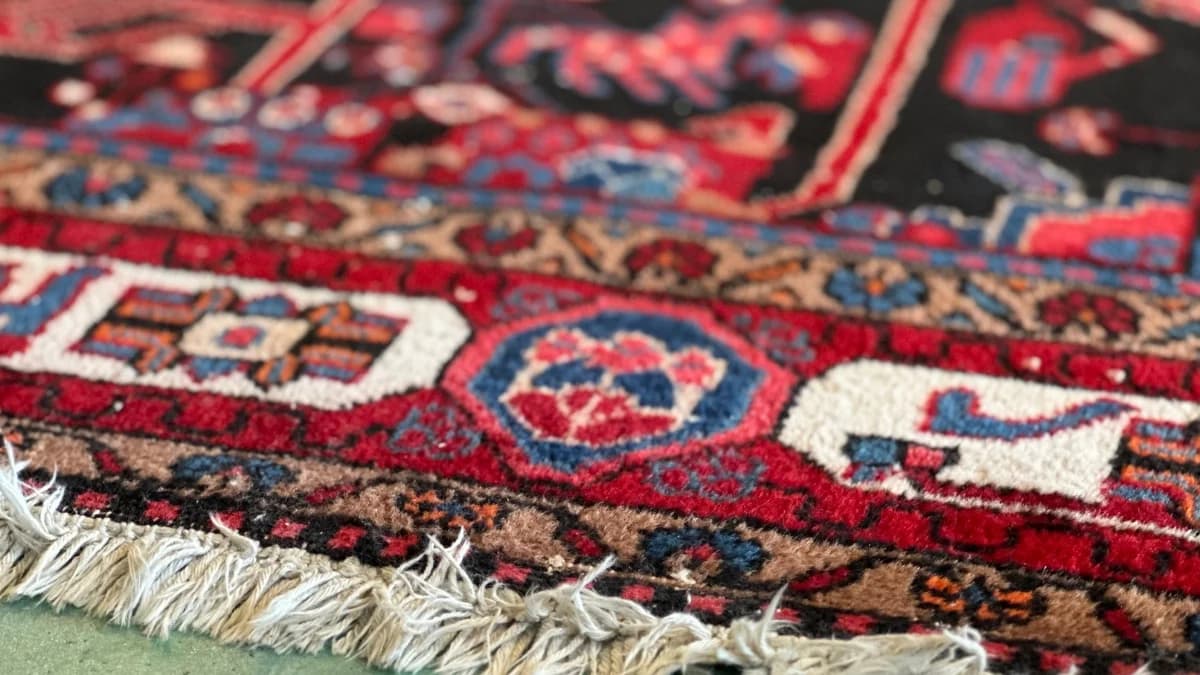
- Wool pile (Tabriz, Kashan, Heriz): the everyday workhorse — warm, soft, forgiving and resilient. The best all-round bedroom choice.
- Fine wool with silk highlights (Nain): a refined option with a subtle sheen that catches soft bedroom lighting beautifully.
- Pure silk (Qum): luminous and luxurious, ideal as a smaller accent rug beside the bed or under a seating nook rather than as the main walked-on piece.
- Afghan wool: robust, characterful and the most affordable entry point, from AED 800.
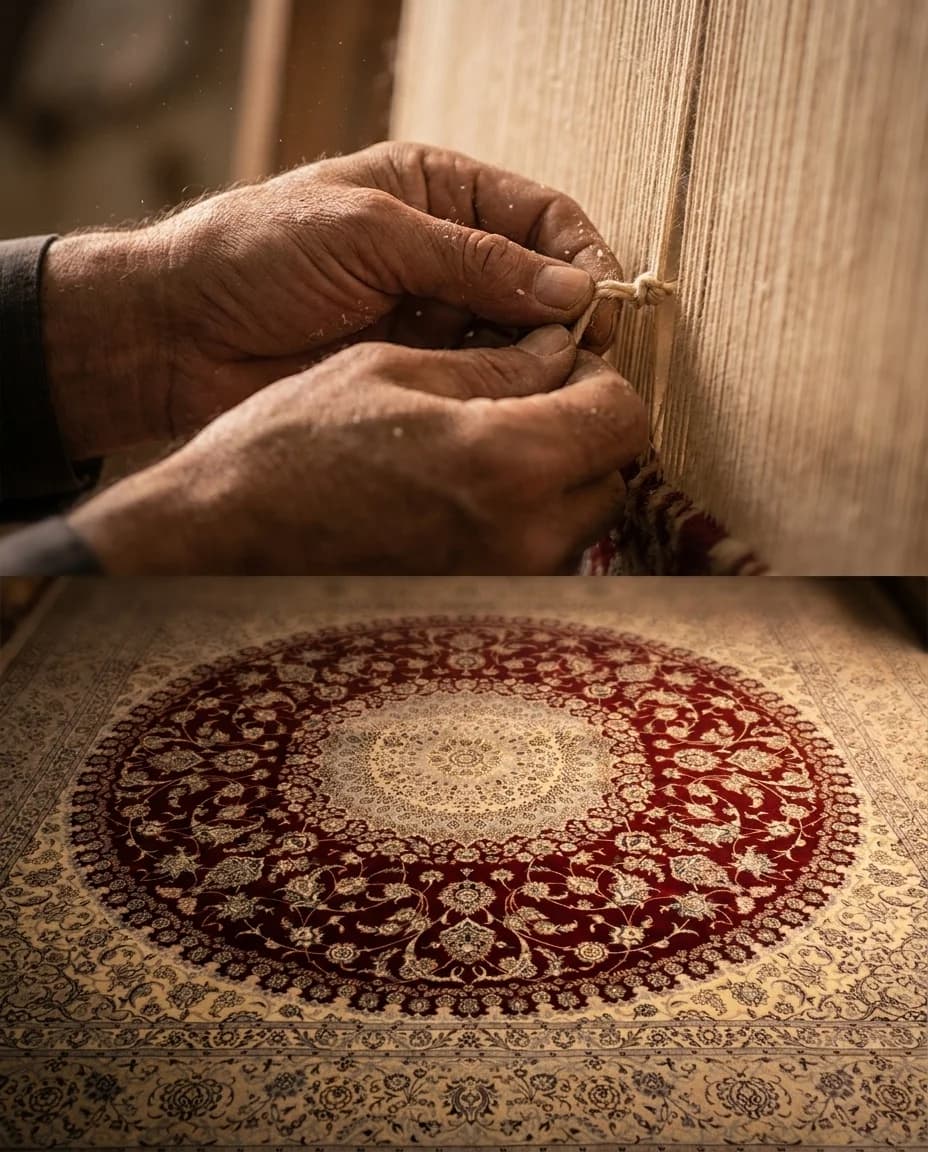
All our carpets are sourced directly from weavers in Qum, Tabriz, Isfahan, Kashan and Nain, with no intermediaries — so the piece you sleep beside has a provenance we can stand behind. You can read more about Al Malakia and our sourcing.
Colour and atmosphere
The bedroom is a place to rest, so most clients lean toward calmer, deeper palettes — soft blues, ivory and cream grounds, muted rose, and gentle indigo — rather than the high-contrast reds you might choose for a majlis. A carpet with a quiet field and a more detailed border reads as restful from the bed and interesting up close.
That said, a bedroom can absolutely carry a richer carpet if the rest of the room is restrained. For a full method on matching carpet tones to your walls, bedding and flooring, our guide on how to choose the right Persian carpet colour for your room is the place to start.
Practical care in UAE bedrooms
Two local realities shape bedroom carpet care here. First, constant air conditioning keeps indoor air dry, which is actually kind to wool and silk. Second, strong sunlight through bedroom windows can fade dyes over years. A few habits protect your investment:
- Rotate the rug 180 degrees once or twice a year so wear and sun exposure even out.
- Use sheer curtains or position the rug away from the harshest direct afternoon sun.
- Vacuum gently in the direction of the pile; avoid beater bars on fine pieces.
- Add a thin anti-slip underlay on tile or marble — it protects the foundation and stops the rug sliding when you get out of bed.
Apartment vs villa: a quick steer
If you live in a Dubai or Sharjah apartment, two runners or a single 2×3 m rug usually fit best and are easier to move. In a villa master suite with a super-king bed and a seating area, a 3×4 m piece — or even larger — anchors the room and can be paired with a small silk Qum accent by a reading chair. Remember too that we offer free door-to-door transfer from Dubai hotels and homes to our Sharjah showroom, so seeing a large piece in person before you commit costs you nothing. Whichever you are furnishing, browse our collection by size and origin, or contact us to talk through your exact floor plan before you buy.
Common mistakes to avoid
Three recurring errors account for most disappointing bedroom carpets. The first is buying too small — by far the most frequent, and the easiest to prevent by taping out the outline first. The second is centring the rug to the room instead of the bed, which leaves the carpet stranded and the walking areas bare. The third is choosing for the showroom rather than the room: a bold, high-contrast design that dazzles under bright shop lights can feel restless in a space meant for sleep. When in doubt, take a sample home, lay it where it will live, and look at it at the times of day you actually use the room.
Why Visit Al Malakia Persian Carpets?
- Direct sourcing: Purchased from weavers in Qum, Tabriz, Isfahan, Kashan, and Nain — no intermediaries, transparent provenance.
- Scale of stock: 500+ hand-knotted pieces in the showroom, across sizes from 60×90 cm to 4×6 m.
- Free Dubai transfer: Complimentary door-to-door pick-up from Dubai hotels and homes.
- Family expertise: Founded in 2008 by Eid Al Salam, a second-generation Persian carpet merchant.
- Blue Souk location: Shop 45–48, Central Souq Block 3, King Faisal Road, Sharjah. Open Saturday–Thursday 10:00–22:00, Friday 14:00–22:00.
Contact us or WhatsApp +971 50 537 2997 to arrange your visit or request a consultation.