Quick Facts
Start with light: Sharjah and Dubai daylight is bright and warm, so cool blues and ivories read softer indoors than they do in the showroom.
The 60-30-10 rule: let the carpet carry roughly 60% of a room's colour story; pull accents from its border for cushions and curtains.
Walls matter most: warm beige and greige walls (the UAE default) pair beautifully with Qum ivory, Kashan red and Tabriz indigo grounds.
Majlis vs. living room: deep red and navy medallions suit a formal majlis; soft ivory and pastel fields suit open-plan apartments.
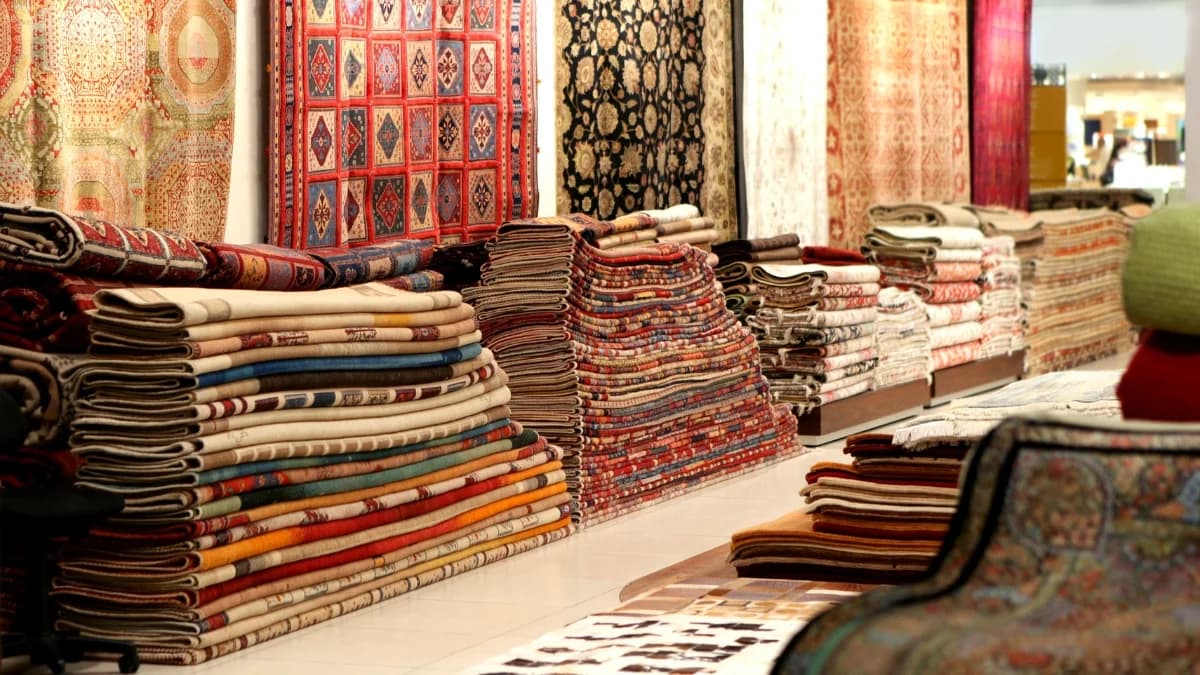
Stock and price: we hold 500+ hand-knotted pieces in Sharjah, from Afghan rugs at AED 800 to fine Qum silk from AED 8,000+, so most palettes are available to compare side by side.
See it at home: free door-to-door transfer lets you trial pieces against your own walls and light before deciding.
Colour is the single decision that makes or breaks a Persian carpet in your home. A piece that looks magnificent under showroom spotlights can fall flat against beige villa walls — or, just as often, a quiet rug you almost overlooked turns out to be the one that pulls a whole room together. The question we hear most often at Al Malakia is simple: how do I choose a Persian carpet colour that actually works in my room?
This guide answers that question the way we would on the showroom floor in the Blue Souk — starting with your light and your walls, then moving through furniture, room function, the classic dyes of each weaving region, and the practical UAE realities of dust, sunlight and open-plan living. By the end you will know how to narrow hundreds of options down to a confident shortlist.
Start With Your Light, Not the Carpet
The most common mistake is choosing a carpet under one set of lights and living with it under another. Persian carpets are dyed with depth and subtlety, and their colours shift noticeably with the light around them. UAE daylight is particularly strong: the low-angle morning and late-afternoon sun that pours through villa and apartment windows is warm and golden, which pushes reds and oranges forward and can flatten cool blues.
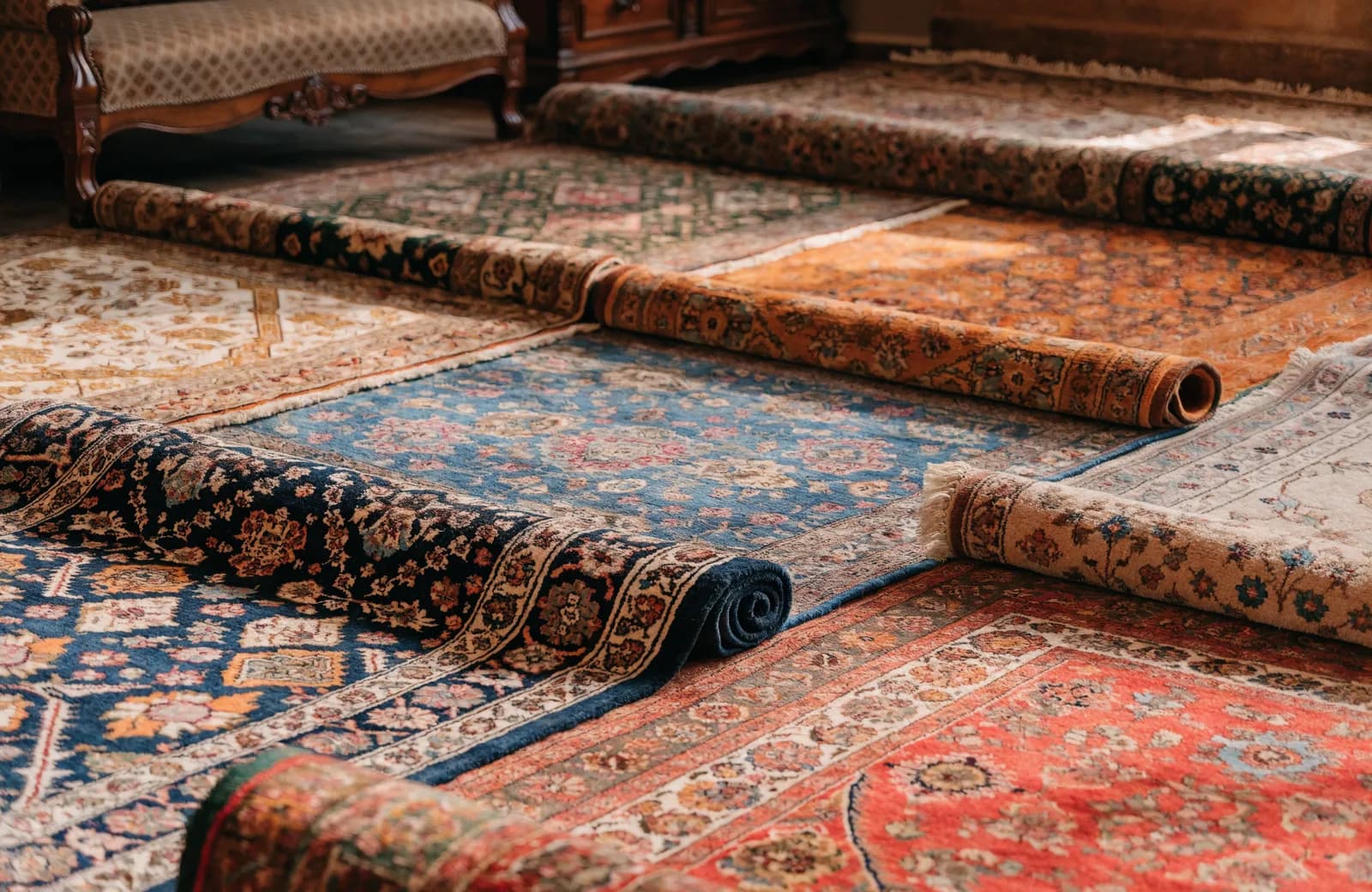
Before you fall for any colour, look at your room at three times of day — mid-morning, mid-afternoon, and at night under your own lamps. A Tabriz indigo that reads almost black at noon can glow a deep, living blue under warm evening light. This is exactly why our free door-to-door transfer matters so much: we will bring shortlisted pieces to your Dubai or Sharjah home so you can see them in your own light before you commit. No photograph, and no showroom, can replicate that.
Warm light vs. cool light
If your room runs warm — golden downlights, west-facing windows, beige walls — cooler carpets (ivory, soft blue, sage) bring welcome balance and stop the space feeling heavy. If your room runs cool — north light, white walls, grey furniture — a warmer carpet (terracotta red, gold, soft rose) adds the warmth the room is missing. Choosing a colour that complements your light, rather than competing with it, is the foundation everything else builds on.
Read Your Walls and Floor First
Walls are the largest colour surface in any room, so they set the rules. The UAE default — warm white, beige, greige, or a sandy neutral — is one of the most forgiving backdrops for Persian carpets, which is good news. Against these tones, almost every classic palette works, but some sing:
- Beige and cream walls: a red-ground Kashan or Tabriz medallion gives a rich, traditional anchor; an ivory Qum keeps things light and luxurious.
- Grey or greige walls: indigo and teal grounds look crisp and contemporary; avoid muddy browns that can read flat.
- White walls: almost anything works, so let the carpet be the hero — a bold medallion or a saturated field has room to breathe.
- Dark or feature walls: ivory and gold grounds lift the room and stop it feeling closed in.
Floor tone matters too. Most UAE homes have pale marble, porcelain or light wood floors, which means a carpet can be as dark or as light as you like without fighting the floor. If you have dark wood or charcoal tiles, an ivory or pastel carpet provides essential contrast so the piece does not disappear.
Work With Your Furniture, Not Around It
Your sofas, curtains and cabinetry are usually already chosen, so the carpet's job is to tie them together rather than introduce a fourth or fifth competing colour. A reliable method is the 60-30-10 rule: let one colour dominate (around 60% — often the carpet field), a second support it (30% — walls or large furniture), and a third appear as accents (10% — cushions, art, a vase).
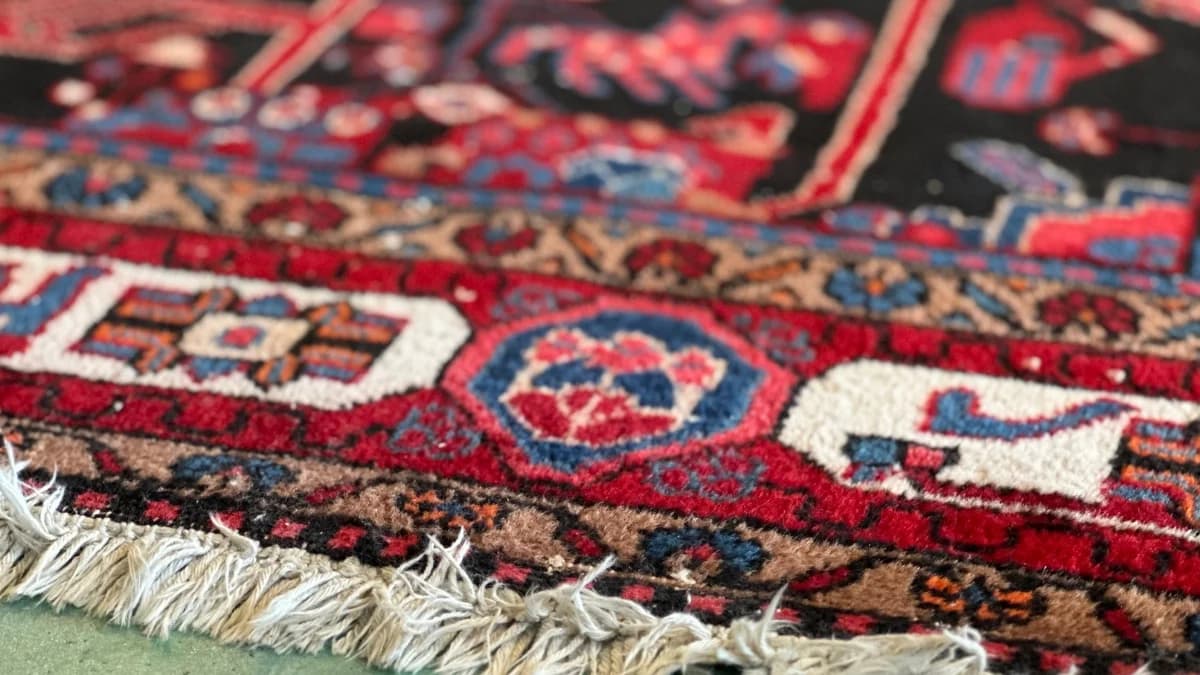
The easiest way to make a Persian carpet feel deliberate is to pull your accent colours out of the carpet's border. A Qum or Isfahan border might carry a thread of soft green, rose, or gold that barely registers at first glance — echo that exact tone in two cushions and the whole scheme suddenly looks designed rather than assembled. For more on this, our guide to Mixing Persian Carpets with Modern & Minimalist Furniture walks through pairing traditional pieces with contemporary sofas, which is how most UAE homes are furnished today.
If your furniture is neutral
Beige, grey and white furniture is a blank canvas — this is your chance to let a richly coloured carpet do the talking. A deep red Kashan or a multi-colour Tabriz becomes the room's centrepiece.
If your furniture is already colourful
If you own a navy or emerald sofa, choose a carpet that contains that colour somewhere in its design and keeps the rest of its palette calm. A predominantly ivory rug with navy detailing, for example, will flatter a navy sofa without doubling down on it.
Match the Colour to the Room's Job
Different rooms ask for different colour temperatures. A carpet's colour should support how a room is actually used in a UAE home.
- Majlis / formal sitting room: this is where Persian carpets traditionally shine. Deep reds, navy, and gold medallions convey warmth, generosity and status — exactly the impression a majlis is meant to make. A bold, symmetrical Kashan or Tabriz medallion is the classic choice.
- Open-plan living and dining: lighter ivory and pastel grounds keep large, bright apartments feeling airy and prevent the carpet from overwhelming the space.
- Bedroom: soft blues, rose, and muted ivory promote calm; avoid high-contrast designs at the foot of the bed.
- Entrance / hallway: a darker, busier field is practical — it hides the desert dust that comes with UAE living and welcomes guests with instant warmth.
- Children's areas and high-traffic rooms: mid-tone reds and blues with an all-over (rather than central-medallion) pattern hide marks far better than a pale, open field.
If you are unsure how a colour will scale across a large open-plan area, read it alongside our Persian carpet size guide — colour and size decisions are closely linked, because a pale rug needs to be large enough to anchor the seating, while a dark rug can feel heavy if it is oversized.
Know the Signature Colours of Each Region
One of the joys of buying a genuine hand-knotted piece is that colour is tied to place. Each Persian weaving region has its own palette, rooted in local dye traditions and design conventions. Knowing these helps you shop with intent rather than browsing blindly. We source directly from weavers in the five main Persian carpet regions, and each brings a distinct colour signature.
| Region | Signature colours | Best for |
|---|---|---|
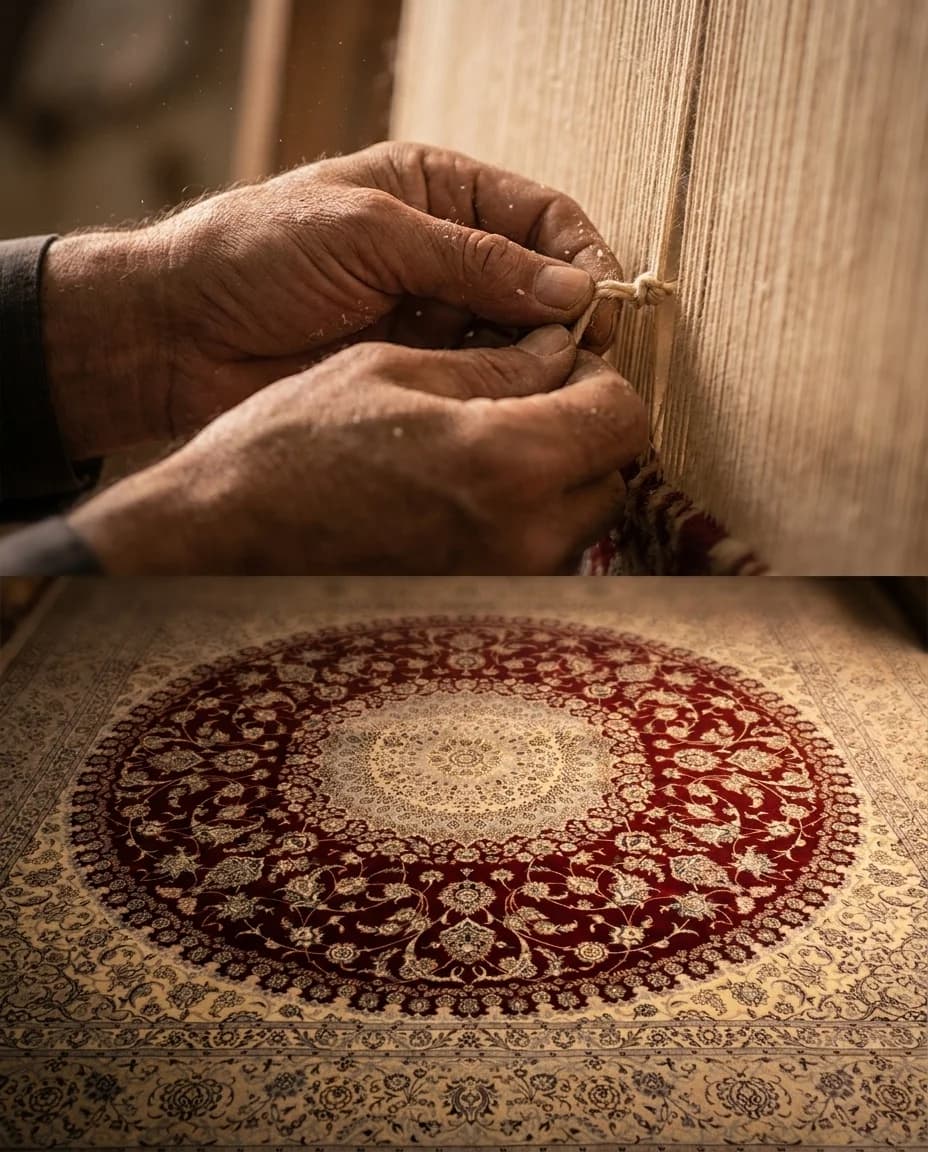
| Qum (silk) | Ivory, soft blue, rose, gold — luminous and refined | Formal living rooms, low-traffic feature pieces, light schemes |
| Tabriz | Deep indigo, brick red, cream medallions | Majlis, traditional and transitional rooms |
| Isfahan | Ivory grounds with blue and rose detailing | Elegant, light interiors; classic medallion designs |
| Kashan | Rich red grounds with navy and ivory | Warm, traditional majlis and sitting rooms |
| Nain | Soft ivory, light blue, subtle beige — understated | Modern and minimalist UAE homes; pale schemes |
If your home leans modern and light, Nain and Qum tend to suit best; if you want a traditional, warm anchor for a majlis, Kashan and Tabriz are the natural starting points. You can compare grounds from all five regions side by side in our collection.
Practical UAE Realities: Dust, Sun and Maintenance
Colour choice is not only about aesthetics — in the UAE it is also about practicality. Two local factors deserve real thought.
Desert dust
Fine sand finds its way into every home, and it shows most clearly on very dark, solid-colour carpets and on very pale, open ones. The most forgiving choice is a mid-tone, multi-colour field — a busy Tabriz or all-over Heriz-style design disguises dust and the occasional spill far better than a single flat colour. This is worth weighing for entrances and family rooms in particular.
Strong sunlight
UAE sunlight is intense, and over years it can gently fade any textile. Genuine hand-knotted carpets use stable, traditional dyes and fade far more gracefully than machine-made rugs — but if a room gets direct, all-day sun, a mid-tone or darker carpet will hold its appearance longer than a very pale silk. For a treasured Qum silk in a bright room, we simply recommend a sheer to soften the harshest midday light.
Colour Combinations That Reliably Work in UAE Homes
If you want a shortcut, these pairings consistently look considered in Sharjah and Dubai interiors:
- Beige walls + red Kashan + cream and gold accents: the timeless majlis formula — warm, generous, classic.
- Greige walls + indigo Tabriz + ivory and brass accents: contemporary and crisp, ideal for transitional living rooms.
- White walls + ivory Qum or Nain + soft blue accents: light, luxurious and calm, perfect for bright apartments.
- Grey furniture + multi-colour Heriz-style rug: the carpet adds the warmth a cool grey scheme needs.
- Dark feature wall + gold-and-ivory Isfahan: the pale ground lifts the room and balances the drama.
None of these are rigid rules — they are starting points. The right answer is always the one that looks right in your light, against your walls, which is why we encourage every client to trial pieces at home.
How We Help You Decide
Choosing colour is far easier with hundreds of pieces in front of you and someone who can explain why a particular ground will or will not suit your room. At Al Malakia we have been guiding clients through exactly this decision since 2008. Bring a photograph of your room, the dimensions, and ideally a cushion or curtain sample, and we will narrow 500+ carpets down to a handful worth seeing at home. You are always welcome to learn more about Al Malakia or simply to contact us with photos of your space for an initial recommendation.
Why Visit Al Malakia Persian Carpets?
- Direct sourcing: Purchased from weavers in Qum, Tabriz, Isfahan, Kashan, and Nain — no intermediaries, transparent provenance.
- Scale of stock: 500+ hand-knotted pieces in the showroom, across sizes from 60×90 cm to 4×6 m.
- Free Dubai transfer: Complimentary door-to-door pick-up from Dubai hotels and homes.
- Family expertise: Founded in 2008 by Eid Al Salam, a second-generation Persian carpet merchant.
- Blue Souk location: Shop 45–48, Central Souq Block 3, King Faisal Road, Sharjah. Open Saturday–Thursday 10:00–22:00, Friday 14:00–22:00.
Contact us or WhatsApp +971 50 537 2997 to arrange your visit or request a consultation.