Quick Facts
Best knot density for apartments: 150–400 knots per square inch (KPSI) — fine enough for detail, durable enough for daily foot traffic
Recommended sizes for living rooms: 160×230 cm or 200×300 cm; for bedrooms: 120×180 cm or 100×150 cm
Top origins for compact spaces: Qum silk (finest weave), Nain (lightweight, high detail), Kashan (medium pile, robust)
Price range at Al Malakia: Entry-level Afghan pieces from AED 800; Qum silk from AED 8,000+
Drive time from Dubai Marina to Al Malakia: Approximately 25–30 minutes via Sheikh Mohammed Bin Zayed Road
Free transfer service: Door-to-door from Dubai hotels — call +971 50 537 2997 to arrange
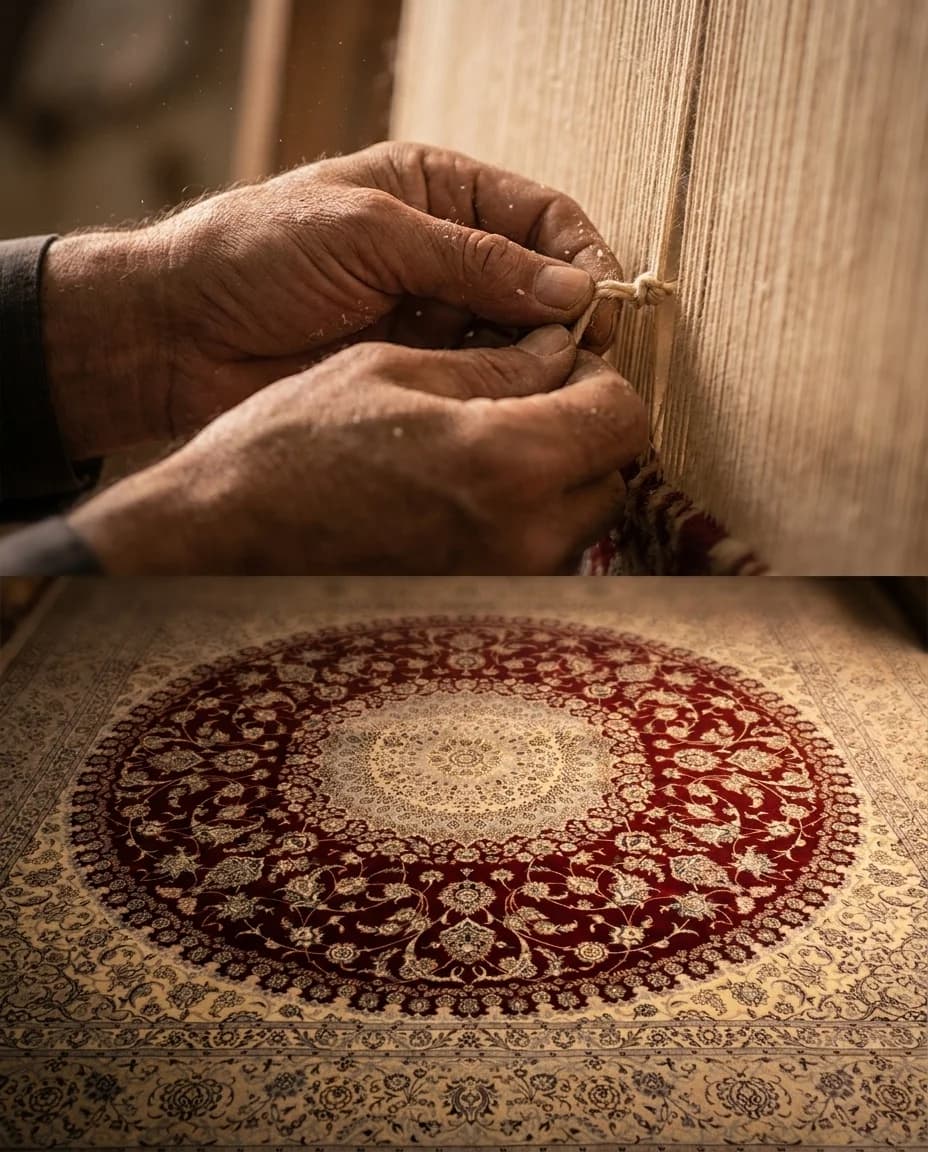
A hand-knotted Persian carpet with 200 knots per square inch contains roughly 3.1 million individual knots in a standard 160×230 cm piece. That level of craft does not shrink to fit a smaller room — it simply needs to be selected with more precision. Dubai apartments, whether a studio in JLT or a two-bedroom in Downtown, present specific spatial constraints: lower ceilings, open-plan layouts, and hard tile or engineered-wood floors that demand a rug with the right pile height and visual weight. This guide draws on over 15 years of experience at Al Malakia Persian Carpets, founded in 2008 and sourced directly from weavers in Iran, to help you make a confident, informed choice.
Why Apartment Scale Changes Everything
In a villa or palace, a 3×4 metre Tabriz can anchor a room without effort. In a Dubai apartment, the same piece overwhelms the floor plan and competes with furniture. The principle most designers apply is the "floating island" rule: the rug should define a seating or sleeping zone without extending beneath every piece of furniture. For a standard Dubai living room of roughly 20–30 square metres, a 160×230 cm or 200×300 cm carpet typically works well. For a bedroom, 120×180 cm placed at the foot of a king-size bed creates visual warmth without crowding the space.
Pile height matters equally. A high-pile carpet above 12 mm can feel oppressive in a low-ceilinged apartment and is harder to clean in a busy urban environment. For apartment use, a pile height of 6–10 mm — typical of Kashan, Nain, and Qum pieces — provides comfort underfoot while remaining practical.
The Best Persian Carpet Origins for Smaller Rooms
Not every weaving city produces carpets suited to apartment proportions. Here is a practical breakdown of the main origins available at our Persian carpet collection and how each performs in compact Dubai spaces.
| Origin | Typical KPSI | Pile Material | Best Room Use | Visual Character |
|---|---|---|---|---|
| Qum (Qom) | 200–600+ | Silk | Bedroom, study, wall hanging | Fine medallion or pictorial; luminous sheen |
| Nain | 150–300 | Wool on silk foundation | Living room, dining area | Ivory/cream ground, intricate arabesques |
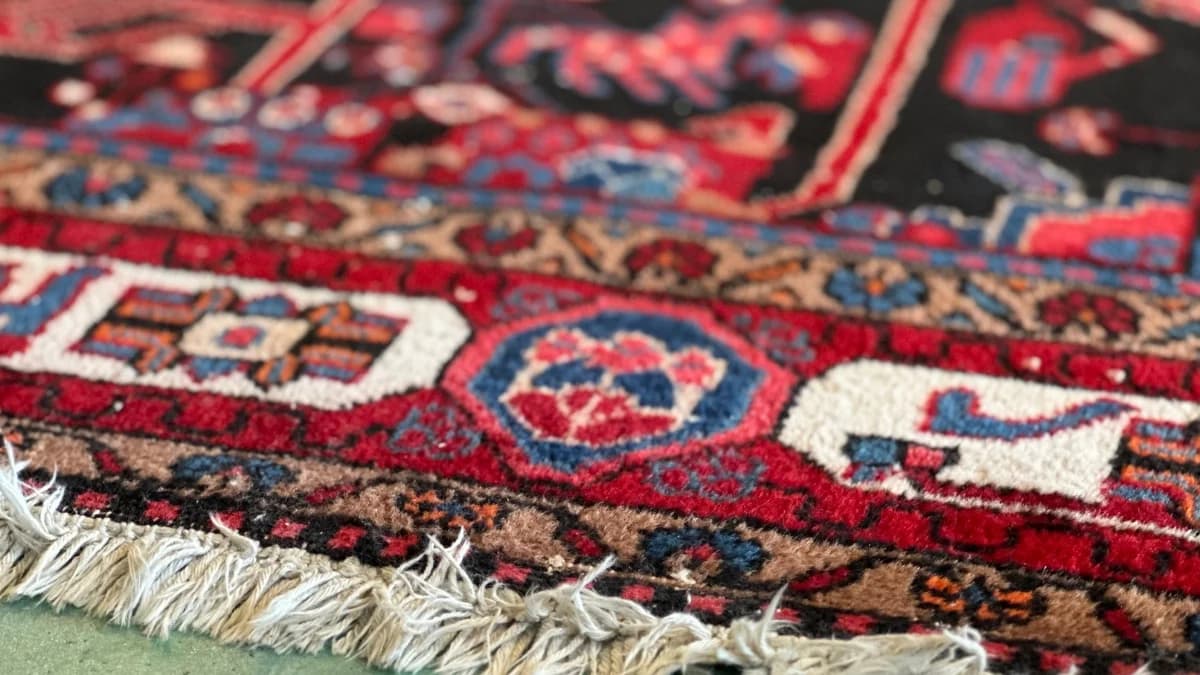
| Kashan | 120–250 | Wool (sometimes silk highlights) | Living room, hallway | Deep reds and blues, classic medallion |
| Isfahan | 150–300 | Wool on silk or cotton | Living room, master bedroom | Balanced, symmetrical floral compositions |
| Tabriz | 70–350 | Wool, silk, or wool-on-silk | Versatile — any room | Wide range: geometric to pictorial |
For the smallest rooms — a reading corner, a prayer space, or a child's bedroom — a Qum silk piece in a 60×90 cm or 80×120 cm format functions as both floor covering and art object. Because hand-knotted Persian carpets are woven to last generations, even a small piece represents genuine long-term value.
Colour and Pattern: Making a Small Room Feel Larger
Lighter grounds — the ivory and cream tones characteristic of Nain and certain Isfahan pieces — reflect more light and visually expand a room. Conversely, the deep indigo and crimson grounds of classic Kashan carpets can make a small room feel intimate rather than cramped, provided the surrounding furniture is kept neutral.
Geometric patterns with open negative space (common in Afghan Kilim-influenced work) tend to read well in modern apartments with clean architectural lines. Allover floral repeats, such as the Herati or Boteh motif, work in any scale because the pattern does not demand a full field to be legible.
One practical rule: if your apartment has patterned tiles or strong-grain engineered wood, choose a carpet with a relatively simple border and a contained central design. Competing patterns at floor level create visual noise that smaller rooms cannot absorb.
Wool vs Silk: Which Is Right for an Apartment?
Silk carpets are thinner, lighter, and carry the highest knot densities — qualities that suit apartments perfectly in terms of scale and portability. However, silk is more sensitive to moisture and abrasion, so a pure Qum silk piece is best placed in a low-traffic zone: a bedroom, study, or behind a sofa. For a hallway or open-plan living-dining area, a wool Kashan or wool-on-silk Tabriz offers the visual richness of fine Persian work with considerably more resilience.
Afghan carpets — also stocked in depth at Al Malakia — use hand-spun wool with natural vegetable dyes and tend to have a slightly higher pile. In an apartment context they suit living rooms and are particularly well-matched to the warm, earthy tones favoured in contemporary UAE interior design.
How to Measure Before You Buy
Follow these five steps before visiting a showroom or requesting a WhatsApp consultation:
- Mark out the zone: Use masking tape on the floor to outline the target carpet area, leaving at least 40–50 cm of bare floor between the carpet edge and the wall.
- Photograph from above: Stand on a chair and photograph the taped zone — this gives an accurate sense of proportion relative to furniture.
- Record exact dimensions in centimetres: Persian carpets are measured in centimetres, not feet. Standard sizes include 80×120, 100×150, 120×180, 160×230, and 200×300 cm.
- Note dominant colours in the room: Bring a fabric swatch or phone photo of your sofa, curtains, or wall paint to the showroom.
- Check door clearance: A pile height above 10 mm can prevent doors from opening freely over the carpet. Measure the gap under each door in the target room.
Caring for a Persian Carpet in a Dubai Apartment
Dubai's climate — low humidity indoors due to air conditioning, and occasional sand ingress — creates specific care considerations. Rotate the carpet 180 degrees every six to twelve months to even out foot-traffic wear and UV exposure from windows. Vacuum with a suction-only head (no rotating brush) along the pile direction, not against it. For silk pieces, professional cleaning every three to five years is sufficient; wool carpets in regular use benefit from professional washing every two to four years.
Underlay is important on tile floors, which are near-universal in Dubai apartments. A 4–6 mm felt-and-rubber underlay prevents slipping, adds cushioning, and lifts the pile slightly, improving the drape and appearance of the carpet.
Getting to Al Malakia from Dubai
Al Malakia Persian Carpets is located at Shop 45–48, Central Souq Block 3, King Faisal Road, Sharjah — commonly known as the Blue Souk. From Dubai Marina or JBR, the drive via Sheikh Mohammed Bin Zayed Road (E311) takes approximately 25–30 minutes outside peak hours. From Downtown Dubai, allow 30–35 minutes.
For customers staying in Dubai hotels, Al Malakia offers a complimentary door-to-door transfer service. Call or WhatsApp +971 50 537 2997 to arrange a pick-up time. Customers in Abu Dhabi and Al Ain can choose from photos and video we send on WhatsApp, and we deliver free anywhere in the UAE. Contact us for details via our Dubai visitor page or the Abu Dhabi visitor page.
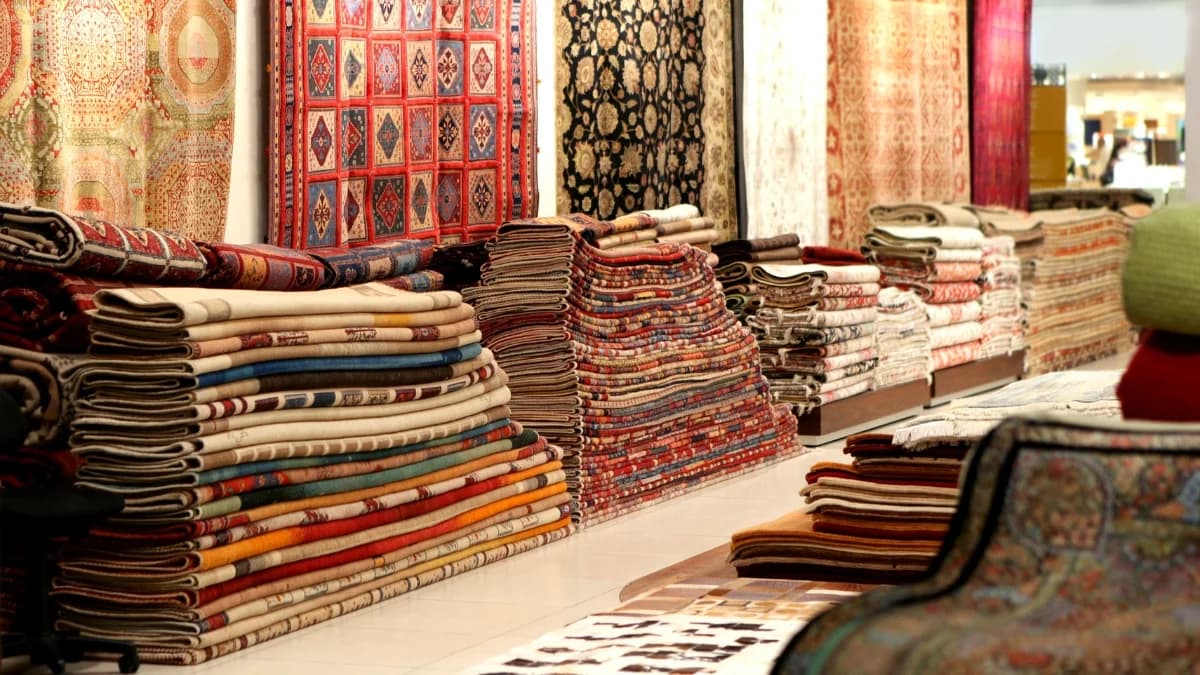
The showroom carries more than 500 hand-knotted pieces at any given time, with dedicated sections by origin city and size, making it straightforward to narrow down options once you arrive with your measurements. For a broader overview of where to source authentic Persian carpets across the Emirates, see our guide: Where to Buy Persian Carpets in Dubai (2026 Guide).
Why Visit Al Malakia Persian Carpets?
- Direct sourcing: Purchased from weavers in Qum, Tabriz, Isfahan, Kashan, and Nain — no intermediaries, transparent provenance.
- Scale of stock: 500+ hand-knotted pieces in the showroom, across sizes from 60×90 cm to 4×6 m.
- Free Dubai transfer: Complimentary door-to-door pick-up from Dubai hotels.
- Family expertise: Founded in 2008 by Eid Al Salam, a second-generation Persian carpet merchant with decades of sourcing experience.
- Blue Souk location: Shop 45–48, Central Souq Block 3, King Faisal Road, Sharjah. Open Saturday–Thursday 10:00–22:00, Friday 14:00–22:00.
Contact us or WhatsApp +971 50 537 2997 to arrange your visit or request a size consultation.
Frequently Asked Questions
What size Persian carpet works best in a Dubai apartment living room?
For a standard Dubai apartment living room of 20–30 square metres, a 160×230 cm or 200×300 cm carpet is usually the right proportion. The rug should sit under the front legs of the sofa and chairs, unifying the seating group without covering all the floor. If the layout is open-plan (living and dining combined), two smaller pieces — one per zone — often work better than a single large carpet.
Is a silk Persian carpet practical for everyday apartment use?
Silk carpets are best suited to lower-traffic areas within an apartment: bedrooms, studies, or behind furniture. They are not ideal for hallways or high-footfall zones. A wool or wool-on-silk piece from Kashan, Tabriz, or Isfahan offers comparable visual quality with greater durability for daily use.
How much should I expect to pay for a quality Persian carpet in Dubai?
At Al Malakia, entry-level Afghan hand-knotted pieces in smaller sizes start from approximately AED 800. A mid-range wool Kashan at 160×230 cm typically ranges from AED 4,000 to AED 12,000 depending on knot density and age. Qum silk carpets begin around AED 8,000 for small formats and increase significantly with size and KPSI. Prices reflect the direct-sourcing model — no showroom mark-up through wholesalers.
Can I see the carpet in my apartment before committing to a purchase?
Yes. Al Malakia is able to arrange a selection of pieces for viewing at your home in certain circumstances. WhatsApp +971 50 537 2997 to discuss your requirements. Alternatively, bringing precise measurements and room photographs to the showroom allows our team to narrow the selection to pieces that will genuinely fit your space before you make any decision.
What is the difference between hand-knotted and hand-tufted carpets, and does it matter for apartments?
A hand-knotted carpet has each knot individually tied onto the warp threads by a weaver — a process that can take months or years for a single piece. Hand-tufted carpets use a tufting gun to push wool through a backing fabric; they are faster and cheaper to produce but do not carry the same longevity or investment value. For an apartment, hand-knotted is the better long-term choice: it can be repaired, cleaned professionally, and appreciates in value over time. All pieces at Al Malakia are hand-knotted. For further detail on how Persian carpets are made, the UNESCO listing for Persian carpet craftsmanship provides useful background.
How do I find Al Malakia if I am coming from Dubai for the first time?
Enter "Blue Souk Sharjah" or "Central Souq Sharjah" into Google Maps and navigate to Block 3. Al Malakia occupies Shops 45–48 on the ground floor. Parking is available directly adjacent to the souq. If you prefer not to drive, use the free hotel transfer service by calling or WhatsApp on +971 50 537 2997. Full directions and a map are available on our Dubai visitor page. For a full comparison of where to buy authentic Persian carpets across the region, read our detailed guide: Where to Buy Persian Carpets in Dubai (2026 Guide).
Visit the Showroom or Start Online
Selecting a Persian carpet for a Dubai apartment is a decision worth making in person. No photograph reproduces the way silk shifts colour under different light, or how the pile of a fine Kashan feels underfoot. Al Malakia's showroom at the Blue Souk in Sharjah holds more than 500 pieces at any given time, with specialists on hand to guide you by size, origin, budget, and room context. Open six days a week until 22:00, with a free transfer from Dubai hotels, the visit is straightforward to arrange. WhatsApp +971 50 537 2997, call +971 6 573 1399, or use the contact page to plan your appointment today.