Typical majlis carpet size: 3×5 m to 4×6 m (large formats preferred for seating all four walls)
Recommended knot density: 120–400 KPSI (knots per square inch) for daily-use majlis carpets; 400+ KPSI for display pieces
Key origins for majlis use: Tabriz, Kashan, Isfahan — all carried in stock at Al Malakia
Price range (indicative): AED 3,000–AED 150,000+ depending on size, origin, and knot count
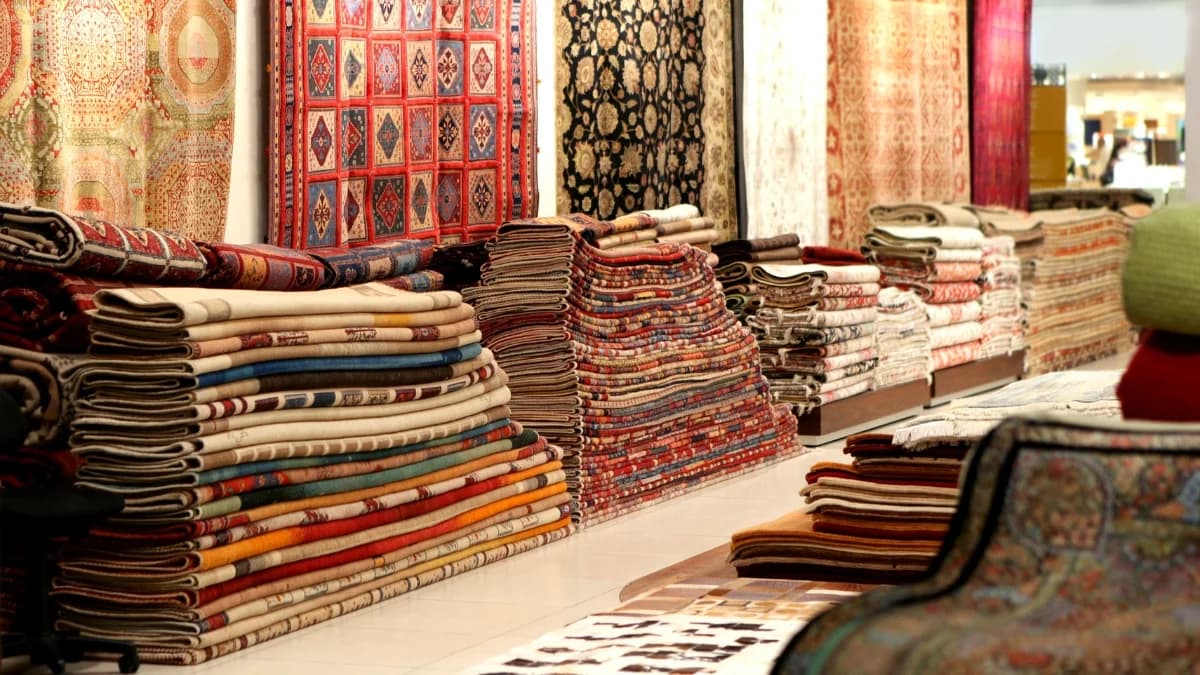
Al Malakia stock: 500+ hand-knotted Persian and Afghan carpets, Blue Souk, Sharjah
Founded: 2008, family-owned, sourcing directly from weavers in Iran
The Arabic majlis is a room built around a specific social contract: guests line the walls, conversation flows for hours, and the floor anchors the entire visual and cultural experience. A hand-knotted Persian carpet placed in that space carries 2,500 years of weaving tradition — but choosing the wrong pile height, pattern density, or size can disrupt both the aesthetics and the practical demands of daily use. At Al Malakia Persian Carpets, founded in 2008 and based at Shop 45–48 in the Blue Souk, Sharjah, we have guided hundreds of UAE families through exactly this decision. This article sets out the criteria that matter most.
What Makes the Majlis Different from Other Rooms
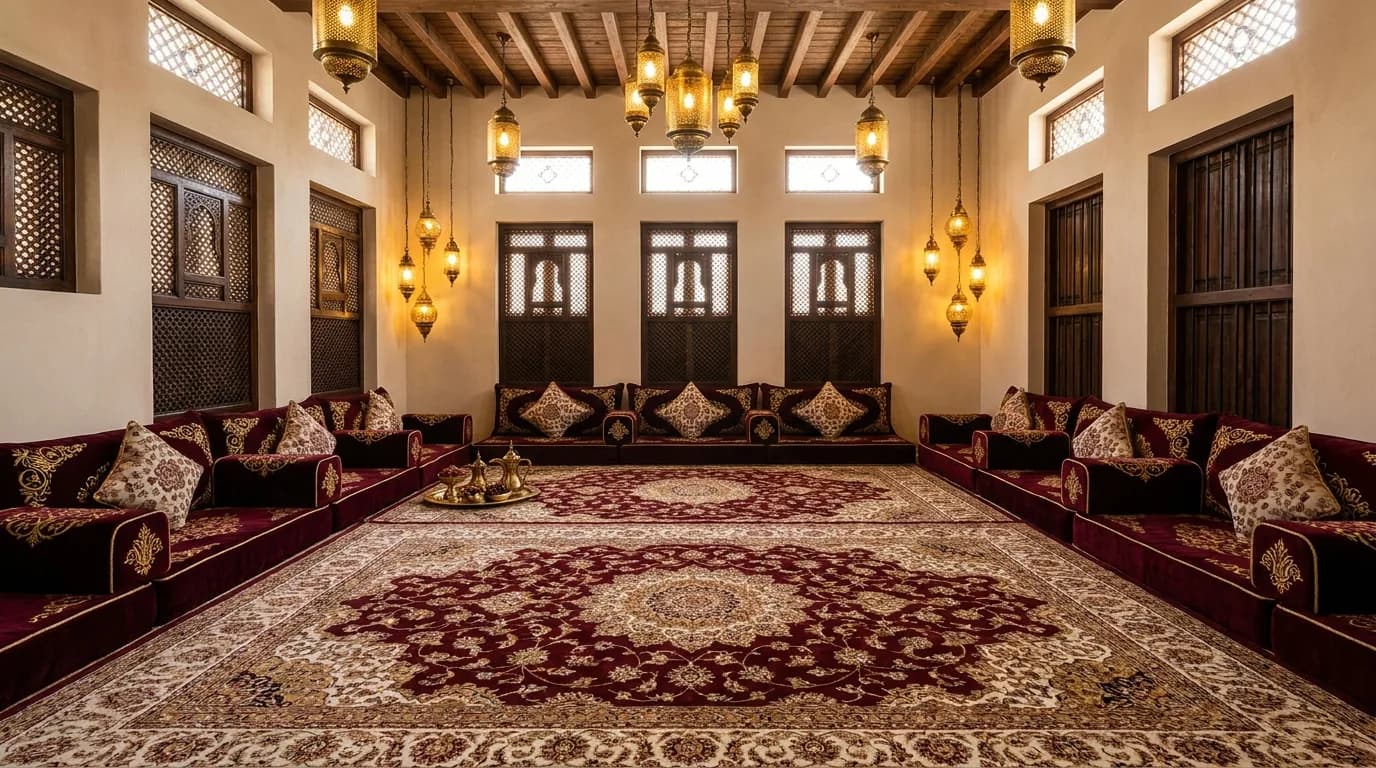
Most interior spaces are navigated centrally — a dining table, a television, a bed. The majlis is peripheral: seating runs along the walls, and the carpet occupies the open centre, visible to every person in the room simultaneously. This means pattern legibility from multiple angles is critical. Medallion-centred designs, which project outward equally in all directions, have historically been the dominant choice. All-over repeat patterns such as the Herati or Mina Khani also work well because they maintain visual coherence regardless of the viewing direction.
Traffic in a majlis is also specific: guests enter, sit, and remain largely stationary. There is less foot-traffic wear than in a corridor, but the carpet must withstand prolonged pressure from seated guests and, in many households, regular barefoot contact. A medium-to-high knot density in wool or wool-on-silk construction offers the right balance of durability and visual depth.
The Five Regional Origins Best Suited to Majlis Use
Persian carpet production is not uniform. Different weaving centres have distinct structural traditions, and those traditions translate directly into how a carpet performs and looks in a majlis setting. The following five origins — all stocked at Al Malakia — are the most consistently requested by UAE families furnishing formal reception rooms.
| Origin | Primary Material | Typical Knot Density | Dominant Patterns | Majlis Suitability |
|---|---|---|---|---|
| Tabriz | Wool, silk, wool-on-silk | 100–350 KPSI | Medallion, hunting scenes, floral | Excellent — versatile and durable |
| Kashan | Wool on cotton | 120–300 KPSI | Central medallion, arabesque | Excellent — classic proportions |
| Isfahan | Wool on silk or cotton | 200–400 KPSI | Floral, vine scrolls | Very good — refined detail |
| Nain | Wool and silk | 300–500 KPSI | Arabesque, medallion, pale palette | Very good — formal, understated |
| Qum (Qom) | Pure silk | 400–700 KPSI | Garden, pictorial, geometric | Good for display; less suited to heavy daily use |
Understanding Knot Density and Why It Matters
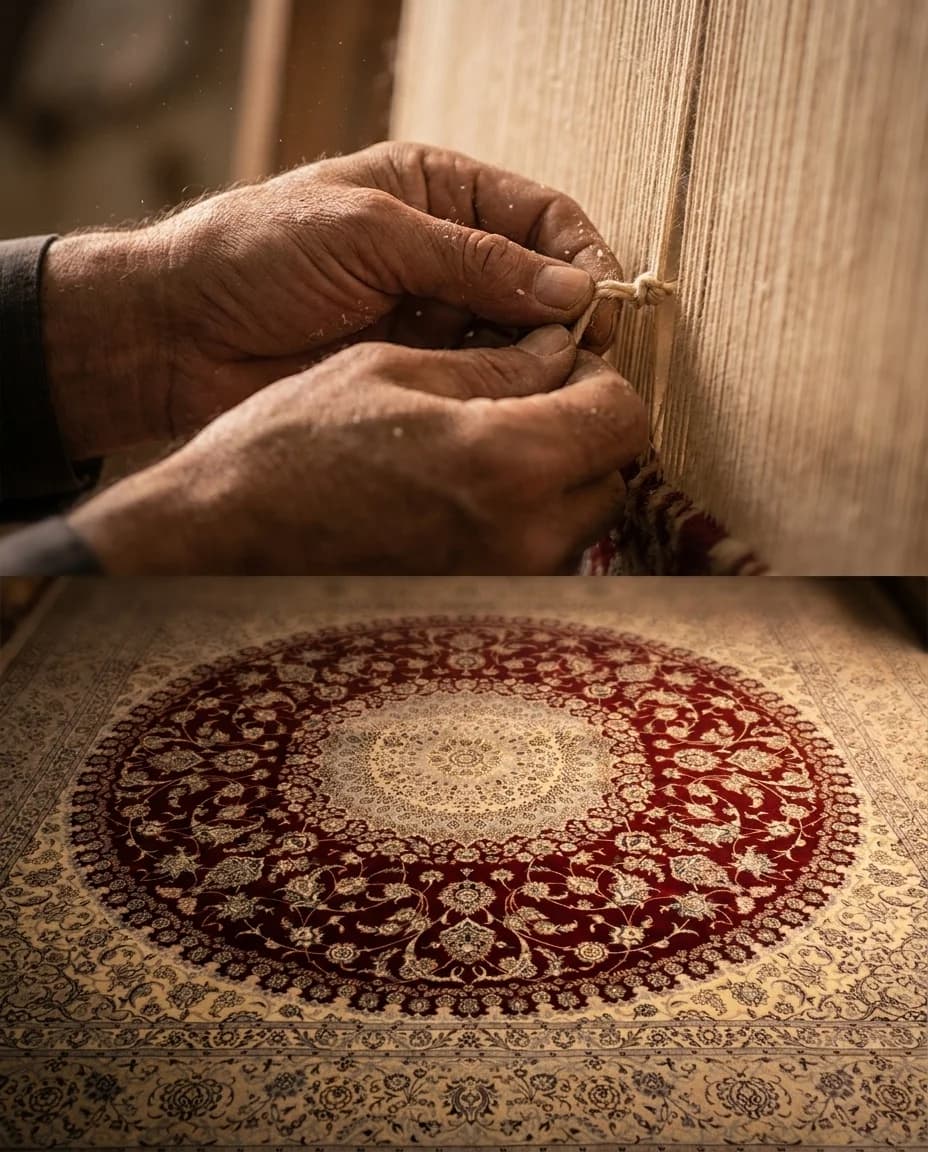
Knot density — measured in knots per square inch (KPSI) or knots per square metre — is the most reliable objective indicator of a carpet's quality and longevity. A Tabriz carpet at 160 KPSI will show a clear, detailed pattern and withstand decades of use in a family majlis. A Qum silk at 600 KPSI will display photographic-level detail but is structurally more delicate under constant foot pressure.
For a working majlis used daily, we recommend a minimum of 120 KPSI in a wool or wool-on-silk construction. For a formal reception room used primarily for guests, a Nain or Isfahan at 300+ KPSI offers both the visual impact expected of the space and adequate structural integrity. Our full carpet collection is organised by origin and knot density, making direct comparison straightforward in the showroom.
The Persian carpet weaving tradition, recognised by UNESCO as an Intangible Cultural Heritage of Humanity, encompasses dozens of regional styles, each with documented knotting techniques that determine the finished density.
Sizing a Carpet for the Majlis Floor Plan
Accurate sizing is the most common point of error when purchasing a majlis carpet. The standard Arabic majlis places L-shaped or perimeter seating along two to four walls. The carpet should extend beneath the front legs of all seating and leave a minimum 30–40 cm border of flooring visible at each wall — wider in larger rooms.
Practical sizing guidelines:
- Measure the full internal dimensions of the majlis, including alcoves.
- Subtract 60–80 cm from each dimension to establish the carpet's maximum footprint.
- For rooms exceeding 5×7 m, consider two complementary runners flanking a central carpet rather than a single oversized piece.
- Confirm pile direction before finalising placement — pile should face toward the main entrance for consistent sheen from the guest's perspective.
- In rooms with underfloor heating, ensure the carpet backing is not sealed rubber, which traps heat; hand-knotted Persian carpets with cotton or silk warps allow adequate airflow.
Colour and Pattern: Reading the Room Correctly
Traditional Arabic majlis interiors frequently use ivory, gold, and deep navy in upholstery and wall finishes. Kashan carpets in the classic red-and-navy medallion palette complement these tones directly. Tabriz pieces in ivory-ground floral designs introduce contrast without competing with the existing décor. Nain carpets — typically ivory with pale blue and terracotta accents — suit contemporary majlis interiors where the furniture palette is neutral or monochromatic.
A key principle: the carpet's border should echo at least one dominant colour in the room's fixed elements (doors, architraves, curtain fabric). This creates visual continuity that experienced eye immediately registers as intentional rather than coincidental.
Wool, Silk, or Wool-on-Silk: Choosing the Right Pile
Each material has distinct properties relevant to the majlis context:
- Wool pile: Resilient, naturally soil-resistant, and tactile underfoot. The preferred choice for family majlis rooms with regular daily use. Wool carpets from Tabriz and Kashan typically use the symmetrical (Turkish/Ghiordes) knot, which produces a denser, more upright pile.
- Silk pile: Produces the finest pattern detail and a characteristic directional sheen. Less forgiving under heavy foot traffic. Best reserved for reception-only majlis rooms or as wall hangings.
- Wool-on-silk (foundation): A practical middle ground — silk warps and wefts provide a stable, fine foundation that allows higher knot counts, while the wool pile maintains practical durability. Many of our Tabriz and Isfahan pieces use this construction.
How to Evaluate a Carpet Before Purchase
When visiting the Al Malakia showroom, we encourage buyers to carry out the following checks before committing to a piece for the majlis:
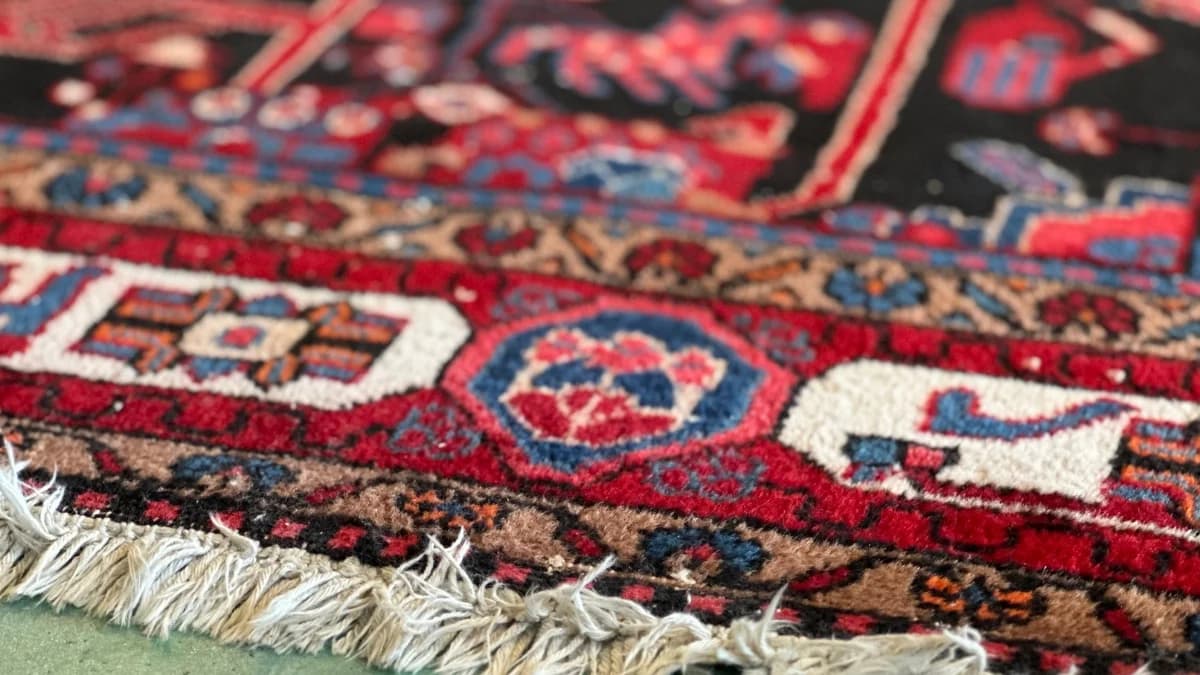
- Fold the pile back: Count visible knot rows per inch in both directions to verify the stated density.
- Check the back: A hand-knotted carpet's pattern is visible — if less detailed — on the reverse. Machine-made carpets show an even latex backing.
- View from four directions: The pile will appear lighter from one direction and darker from another. Establish which direction the carpet will face in the majlis before making a final decision.
- Check fringe integrity: On a hand-knotted carpet, the fringe is an extension of the warp threads — integral, not sewn on. Sewn-on fringe indicates machine manufacture or significant repair.
- Ask for provenance documentation: Al Malakia sources directly from weavers in Iran. We can confirm origin, approximate age, and construction method for every piece in stock.
Afghan Carpets as an Alternative for the Majlis
Afghanistan's weaving tradition — particularly from the Kunduz and Herat regions — produces carpets that share many structural similarities with Persian pieces but tend toward darker, more saturated palettes and geometric rather than curvilinear patterns. Afghan Sultanabad and Ziegler-revival designs have become increasingly popular in Emirati majlis interiors where the owner wants a traditional aesthetic with a slightly more graphic quality.
Al Malakia stocks over 500 hand-knotted Persian and Afghan carpets. The Afghan section of our collection includes Mamluk-revival, Kazak, and tribal designs that pair well with contemporary Arabic furniture.
Visit Al Malakia Persian Carpets — Blue Souk, Sharjah
Al Malakia Persian Carpets has operated from Shop 45–48, Central Souq Block 3 (Blue Souk), King Faisal Road, Sharjah since 2008. Our showroom holds 500+ hand-knotted Persian and Afghan carpets, all sourced directly from weavers in Iran. Second-generation merchant Eid Al Salam and the team are available to advise on sizing, origin, and knot density for your specific majlis dimensions.
- Hours: Saturday–Thursday 10:00–22:00 | Friday 14:00–22:00
- Phone: +971 50 537 2997 | +971 6 573 1399
- WhatsApp: 50 537 2997
- From Dubai: Free door-to-door hotel transfer available — see our Dubai visitor page
- From Abu Dhabi: Choose from photos and video on WhatsApp, with free delivery anywhere in the UAE — see our Abu Dhabi visitor page
Planning your visit? Read our full guide: Where to Buy Persian Carpets in Dubai (2026 Guide).
Frequently Asked Questions
What size Persian carpet is best for an Arabic majlis?
Most Arabic majlis rooms require a carpet between 3×5 m and 4×6 m. The standard rule is to subtract 60–80 cm from each wall dimension and ensure the carpet sits beneath the front legs of all perimeter seating. For oversized rooms, two complementary pieces flanking a central runner can be more practical than a single extra-large carpet. At Al Malakia, we can cut or custom-order specific dimensions through our direct relationships with weavers in Iran.
Which Persian carpet origin is most durable for a busy family majlis?
Tabriz and Kashan wool carpets are the most consistently recommended for daily family use. Both origins use tightly twisted, high-quality wool pile and sturdy cotton foundations. Knot densities in the 120–300 KPSI range are sufficient for decades of normal use. Avoid pure silk-pile carpets in rooms with heavy daily traffic — silk pile, while visually exceptional, compresses more readily under sustained pressure.
How do I tell a hand-knotted Persian carpet from a machine-made one?
Turn the carpet over. On a genuine hand-knotted piece, the pattern is partially visible on the reverse, the knots are individually tied and irregular under close examination, and the fringe is an extension of the warp threads — not stitched on. Machine-made carpets have an even latex or synthetic backing, perfectly uniform pile from above, and fringe that is sewn or glued to the edge. At Al Malakia, every piece in stock is hand-knotted, and we encourage buyers to examine the reverse before purchasing.
Can I visit Al Malakia from Dubai without a car?
Yes. Al Malakia offers a free door-to-door transfer service from Dubai hotels. Contact us on WhatsApp at 50 537 2997 or by phone on +971 50 537 2997 to arrange your visit. The Blue Souk in Sharjah is also accessible by taxi from Dubai in approximately 30–45 minutes depending on traffic. For more detail, see our Dubai visitor information page or the 2026 guide to buying Persian carpets in Dubai.
Is a Qum silk carpet suitable for a majlis?
A Qum (Qom) silk carpet is one of the finest objects a majlis can contain — knot densities of 400–700 KPSI produce pattern detail unmatched by any wool equivalent. However, silk pile is best suited to rooms where foot traffic is light and the carpet is primarily viewed rather than heavily walked upon. For a formal reception majlis used several times per week, a wool-on-silk Tabriz or Isfahan offers similar visual refinement with greater structural resilience.
Do Persian carpets suit a contemporary-style majlis, or only traditional décor?
Hand-knotted Persian carpets have been placed in minimalist and contemporary interiors with consistent success. The key is selecting the correct palette: a Nain carpet in ivory, pale blue, and terracotta grounds a neutral modern space without visual conflict. Afghan geometric designs in charcoal and rust pair well with clean-lined contemporary furniture. The structure and natural materials of a hand-knotted carpet — wool, silk, natural dyes — complement almost any interior approach when the colour palette is chosen deliberately.
Planning Your Visit
Al Malakia Persian Carpets is located at Shop 45–48, Central Souq Block 3 (Blue Souk), King Faisal Road, Sharjah — a 30-to-45-minute drive from central Dubai, with free hotel transfer available on request. The showroom is open Saturday through Thursday from 10:00 to 22:00, and on Fridays from 14:00 to 22:00. With 500+ hand-knotted pieces across Tabriz, Kashan, Isfahan, Nain, and Qum origins, alongside Afghan tribal and Sultanabad designs, the selection covers every requirement a majlis presents. Contact us before your visit to describe your room dimensions and we will have relevant pieces laid out for your arrival. You can also reach us directly on WhatsApp at +971 50 537 2997.