Quick Facts
Origin: Nain, a town on the edge of Iran's central desert, between Isfahan and Yazd.
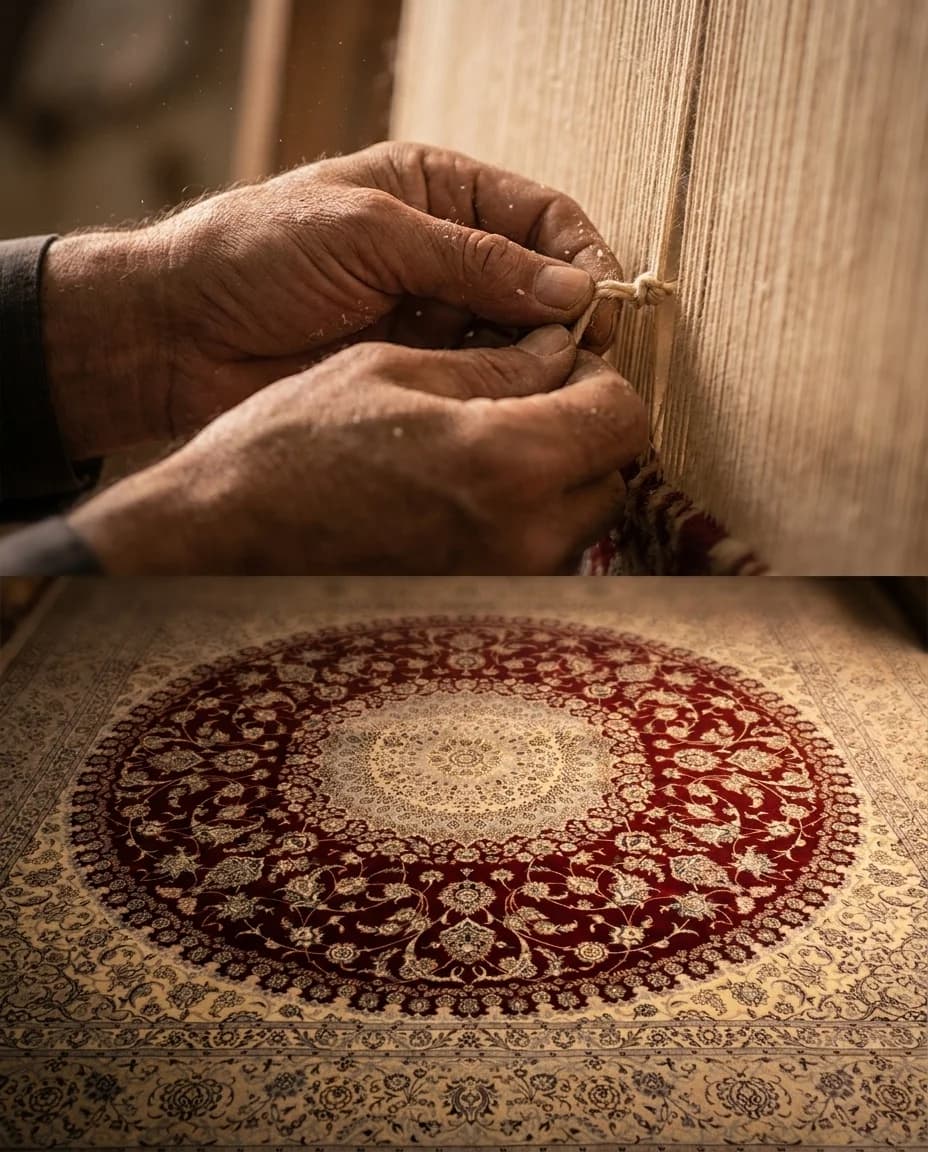
Signature look: Ivory, beige and pale-blue grounds with a central medallion and fine arabesque vinework.
Quality grades: Measured in "La" — 9La is coarsest, 6La and 4La are the finest, with silk highlights.
Knot density: Roughly 250 to 700+ KPSI; the best 4La pieces are among the densest Persian weaves.
Materials: Highland wool ground with silk used to outline the design (part-silk), or rarely all-silk.
At Al Malakia: Genuine Nain pieces are part of our 500+ in-stock carpets, sourced direct from Iranian weavers, with prices that typically open around AED 6,000 for smaller part-silk pieces.
If you have ever stood in front of a Persian carpet and felt that its pale, luminous ground was almost lit from within, there is a good chance you were looking at a Nain. Among collectors and decorators across the UAE, Nain carpets are prized for exactly this: a restrained, elegant palette of ivory and soft blue that works as beautifully in a bright Dubai apartment as it does in a traditional Sharjah majlis. But "a Nain" can mean many things, from a sturdy decorative rug to a museum-grade silk-accented masterpiece, and the price gap between them is enormous.
This guide explains what a Nain carpet actually is, how to read its quality at a glance, what the confusing "La" grading system means, how to tell a genuine Nain from a lookalike, and what you should expect to pay in the UAE. At about Al Malakia you can read how we source these pieces; here, we focus on helping you buy one well.
Where Nain Carpets Come From
Nain is a small town on the western edge of Iran's great central desert, roughly between the weaving capitals of Isfahan and the city of Yazd. Compared with the centuries-old traditions of Tabriz or Kashan, Nain is a relative newcomer to fine carpet weaving — its industry only really took off in the 1920s and 1930s. Before that, the town was known for weaving fine wool cloth for the abas (cloaks) worn across Persia. When demand for that cloth fell, Nain's highly skilled weavers turned their precision to knotting carpets instead.
That history matters because it explains the Nain character. These were textile artisans accustomed to extremely fine work, and they brought an unusually delicate hand to the loom. Rather than developing a bold regional folk style, Nain weavers refined the elegant curvilinear designs associated with nearby Isfahan, but rendered them in a cooler, lighter palette. The result is a carpet that feels formal and serene rather than dramatic. To understand where Nain sits among its neighbours, it helps to read our overview of The 5 Main Persian Carpet Regions.
How to Recognise a Nain at a Glance
Once you know what to look for, Nain carpets are among the easier Persian rugs to identify. A few signatures recur across almost every genuine piece:
- A pale, light ground. Ivory, cream, beige and a distinctive soft sky-blue dominate. You rarely see the deep reds that define a Kashan or a Tabriz.
- A central medallion. Most Nains are built around a rounded central medallion with matching quarter-medallions in the corners, floating on an open field.
- Fine arabesque vinework. Slender, scrolling vines (the islimi motif) wind across the field in a precise, almost architectural rhythm.
- Silk outlining. In better pieces, silk is used to outline the motifs, so the design appears to shimmer and lift away from the wool ground when the light moves.
- A blue-and-ivory border. The main border usually echoes the field's palette rather than contrasting violently with it.
The overall impression is of quiet luxury — a carpet that whispers rather than shouts. This is precisely why Nains suit modern UAE interiors so well: they bring the depth and craftsmanship of a hand-knotted Persian rug without overwhelming a pale, contemporary room.
The "La" Grading System Explained
The single most important thing to understand before buying a Nain is its grade, expressed as a number followed by "La" — for example 9La, 6La or 4La. This is unique to Nain and often misunderstood, so it is worth getting right.
In Nain weaving, each knot is tied around a bundle of warp threads, and "La" (لا) refers to the number of threads twisted together to form each strand of that warp. A lower number means each strand is thinner, which lets the weaver pack knots more tightly and render finer detail. So the counting is inverse to what you might expect:
- 9La — the coarsest standard grade. Still a fine carpet by any normal measure, but the most affordable Nain, with a relatively open, robust weave.
- 6La — a significantly finer weave, with higher knot density and crisper detail. The most common "fine" Nain.
- 4La — the finest regular grade, extremely dense, almost always with silk outlining and sometimes a silk foundation. These are collector-level pieces.
Because La describes the warp rather than directly counting knots, two Nains of the same grade can still differ in actual knot density. That is why the La number should always be checked alongside an actual What Is KPSI (Knots Per Square Inch) reading. A reputable seller will happily turn the carpet over and let you count the knots on the back yourself.
Wool, Silk and Part-Silk Nains
Material is the second great driver of a Nain's value. Three broad categories exist, and knowing which you are looking at protects you from overpaying — or from missing a bargain.
Wool ground with silk outlining (part-silk)
This is the classic, most desirable everyday Nain. The field and pile are knotted in fine highland wool, while silk is used selectively to outline the medallion, vines and border. The silk catches the light and gives the carpet its characteristic glow, while the wool provides durability underfoot. For most UAE homes, a part-silk Nain is the sweet spot of beauty and practicality.
All-wool Nains
Entirely wool Nains exist, particularly in coarser grades, and they are perfectly genuine. They lack the shimmer of silk outlining but are hard-wearing and more affordable — a sensible choice for a busy family majlis or a high-traffic living area.
All-silk Nains
Rarest of all, an entirely silk Nain is a luxury object. Lighter, more lustrous and far more delicate, these are best treated as decorative or display pieces rather than floor coverings in a busy home. If you are weighing silk against wool more generally, our guide to Silk vs Wool Persian Carpets: Which Should You Buy? walks through the trade-offs in detail.
Nain Quality Grades Compared
The table below summarises how the main Nain grades typically compare. Treat the figures as indicative ranges — every carpet is individual, and these are guidelines rather than fixed rules.
| Grade | Typical KPSI | Silk content | Best suited to | Indicative UAE price (per sq m) |
|---|---|---|---|---|
| 9La | 250–350 | Little or none | Family rooms, high-traffic areas | From AED 1,500 |
| 6La | 350–500 | Silk outlining common | Living rooms, formal majlis | From AED 3,500 |
| 4La | 500–700+ | Silk outlining, sometimes silk foundation | Statement and collector pieces | From AED 7,000 |
| All-silk | 600–900+ | Full silk | Display and wall pieces | From AED 12,000 |
How to Spot a Genuine Hand-Knotted Nain
The Nain name carries a premium, which unfortunately means imitations and machine-made copies circulate widely. A handful of simple checks will protect you:
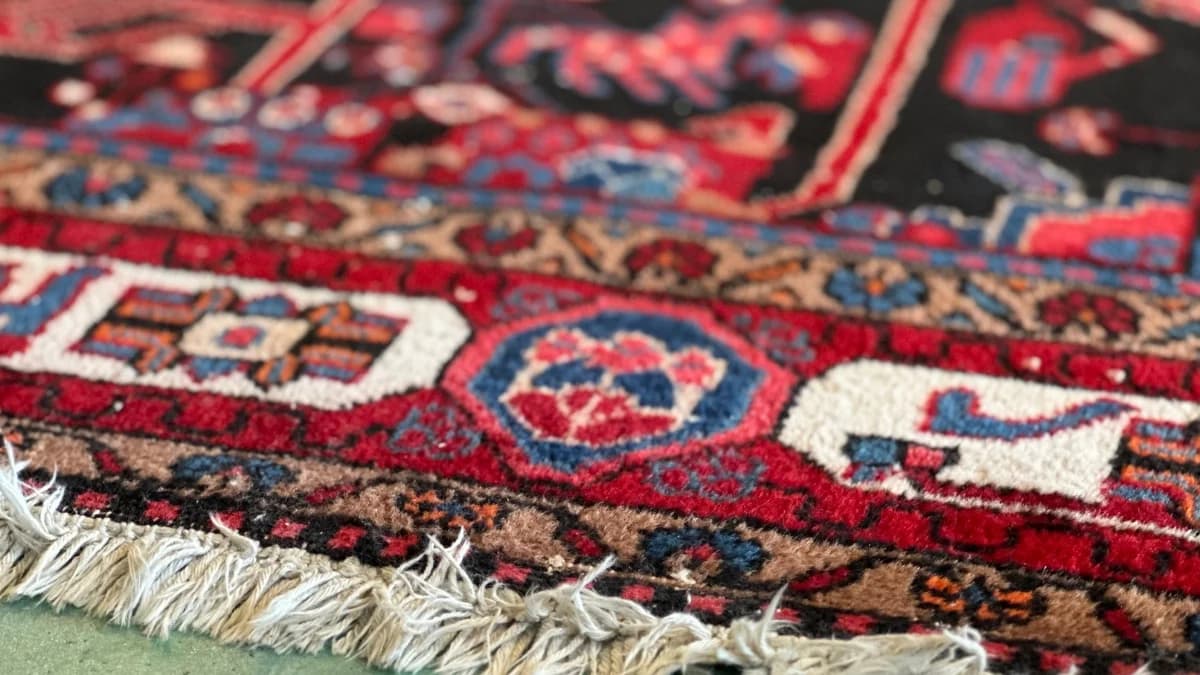
- Turn it over. On a hand-knotted Nain, the pattern is clearly visible on the back, and you can see individual knots. A machine-made rug has a uniform, gridded reverse and often a fabric or latex backing.
- Look for gentle irregularity. Hand knotting produces tiny, charming variations in line and colour (the natural abrash of hand-dyed wool). Perfect, mechanical uniformity is a warning sign.
- Check the fringe. On a genuine piece the fringe is a continuation of the warp threads, not sewn or glued on afterwards.
- Feel the silk. Real silk outlining is cool, smooth and slightly springy; it warms in your hand. Mercerised cotton ("art silk") posing as silk feels different and lacks the same lustre.
- Ask about provenance. A trustworthy dealer can tell you the grade, the materials and roughly where and when the piece was woven.
At Al Malakia, every Nain in the showroom is hand-knotted and bought directly from Iranian weavers, so we can answer all of these questions with confidence. If you are still building your eye, comparing a Nain side by side with a Kashan Carpets: History, Patterns & How to Identify One piece is one of the fastest ways to learn what fine weaving feels like.
Choosing the Right Nain for a UAE Home
A carpet that looks perfect in a showroom can feel wrong at home if size and palette are not considered. A few practical pointers for Sharjah, Dubai and Abu Dhabi interiors:
Size and proportion
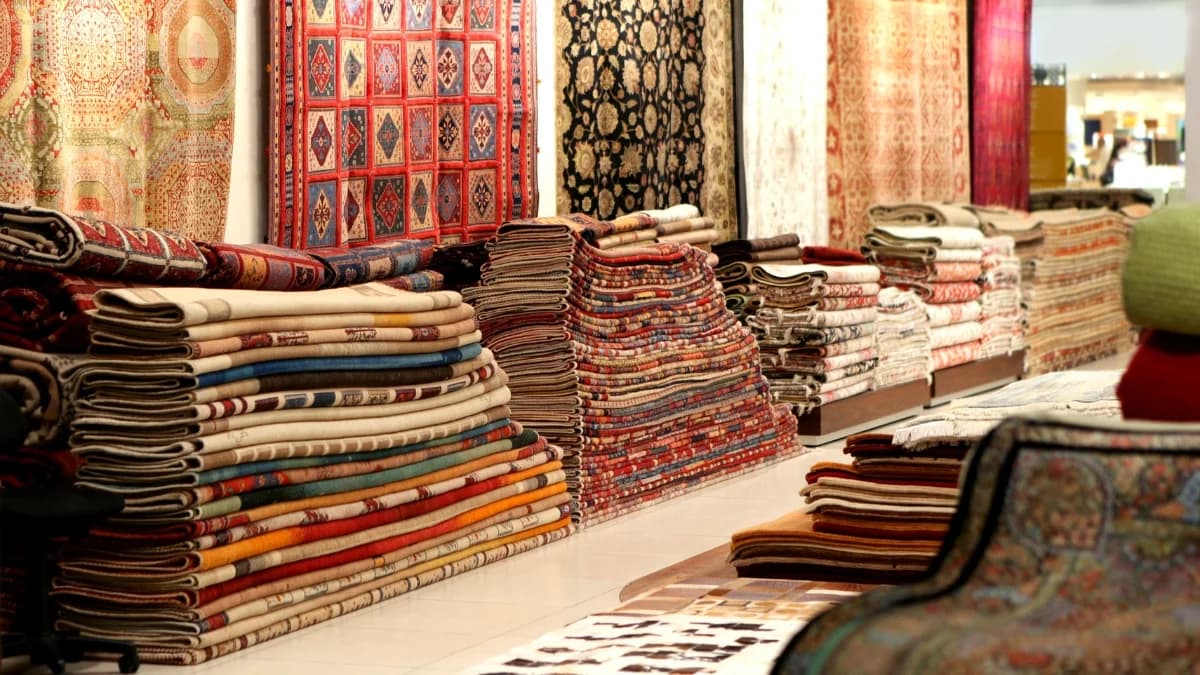
For a majlis, a generous piece that anchors the seating — roughly 3×4 m or larger — reads as intentional and grand. In an apartment living room, a 2×3 m Nain under the central seating usually works better than something that crowds the space. We stock Nains across our standard range of sizes from 60×90 cm runners and accents up to 4×6 m room-fillers; you can browse our collection to gauge proportions.
Light and climate
The pale Nain palette is a genuine asset in the Gulf. Light-ground carpets keep a room feeling cool and airy under strong sunlight, and they pair effortlessly with the neutral marble and pale joinery common in UAE homes. Wool also handles the move between fierce outdoor heat and chilled air conditioning better than many people assume, provided the carpet is kept out of direct, prolonged sun to protect the dyes.
Practicality
For a household with children or frequent guests, a 9La or 6La wool-ground Nain is the wise choice: beautiful, but built to be lived on. Reserve all-silk and the finest 4La pieces for formal rooms where they will be admired rather than walked across daily.
What You Should Expect to Pay
Nain prices vary enormously with grade, size, age and silk content, so treat any single figure with caution. As a rough orientation for the UAE market: a smaller part-silk Nain in good condition typically opens around AED 6,000, mid-grade 6La room pieces sit in the low tens of thousands, and an exceptional large 4La or all-silk Nain can climb well beyond AED 50,000 — with the very finest room-sized Persian pieces in our showroom reaching AED 200,000 and above.
The most important advice is not to shop on price alone. A cheap "Nain" is usually cheap for a reason — a coarser grade, a synthetic blend, or a machine-made copy. Buy the best grade you can comfortably afford in the size you genuinely need, from a dealer who will explain exactly what you are paying for. If you would like a no-pressure assessment of a piece, or help matching a Nain to a specific room, simply contact us.
Caring for a Nain Carpet
A well-made Nain is a multi-generational object, and basic care keeps it that way. Rotate the carpet every six months or so to even out wear and sun exposure. Vacuum gently and in the direction of the pile, avoiding the fringes. Deal with spills immediately by blotting — never rubbing — with a clean cloth. For anything more serious, especially on part-silk and silk pieces, use a specialist hand-washer rather than a general carpet cleaner, and keep the carpet out of standing humidity. Treated with this modest respect, a fine Nain will look better in thirty years than the day you bought it.
Why Visit Al Malakia Persian Carpets?
- Direct sourcing: Purchased from weavers in Qum, Tabriz, Isfahan, Kashan, and Nain — no intermediaries, transparent provenance.
- Scale of stock: 500+ hand-knotted pieces in the showroom, across sizes from 60×90 cm to 4×6 m.
- Free Dubai transfer: Complimentary door-to-door pick-up from Dubai hotels and homes.
- Family expertise: Founded in 2008 by Eid Al Salam, a second-generation Persian carpet merchant.
- Blue Souk location: Shop 45–48, Central Souq Block 3, King Faisal Road, Sharjah. Open Saturday–Thursday 10:00–22:00, Friday 14:00–22:00.
Contact us or WhatsApp +971 50 537 2997 to arrange your visit or request a consultation.