Quick Facts
Origin: Kashan, a historic weaving city in central Iran, north of Isfahan.
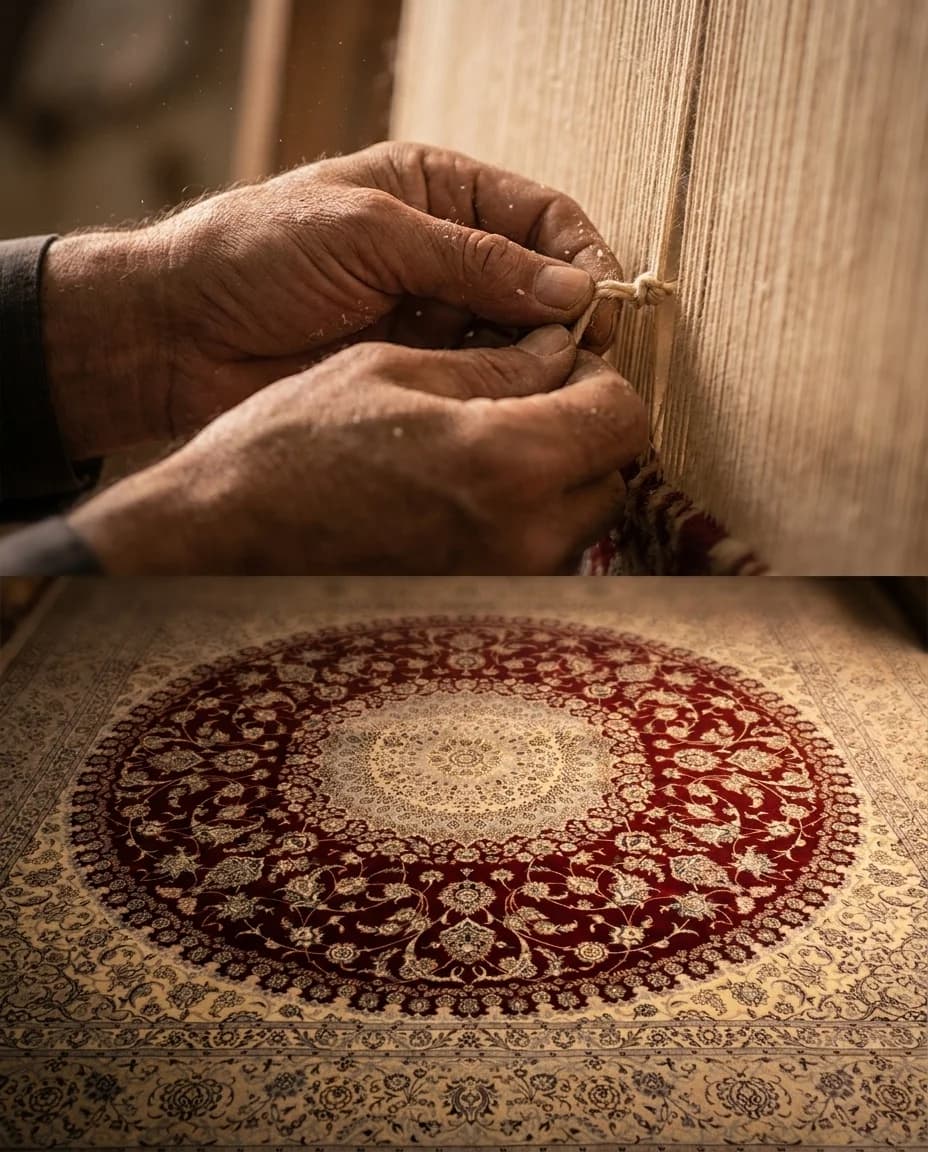
Signature design: A single central medallion on a deep field, framed by ornate corner spandrels and a multi-band border.
Typical materials: Hand-spun wool pile on a cotton foundation; the finest pieces are pure silk.
Knot density: Commonly 120–475 knots per square inch (KPSI), with master silk pieces going far higher.
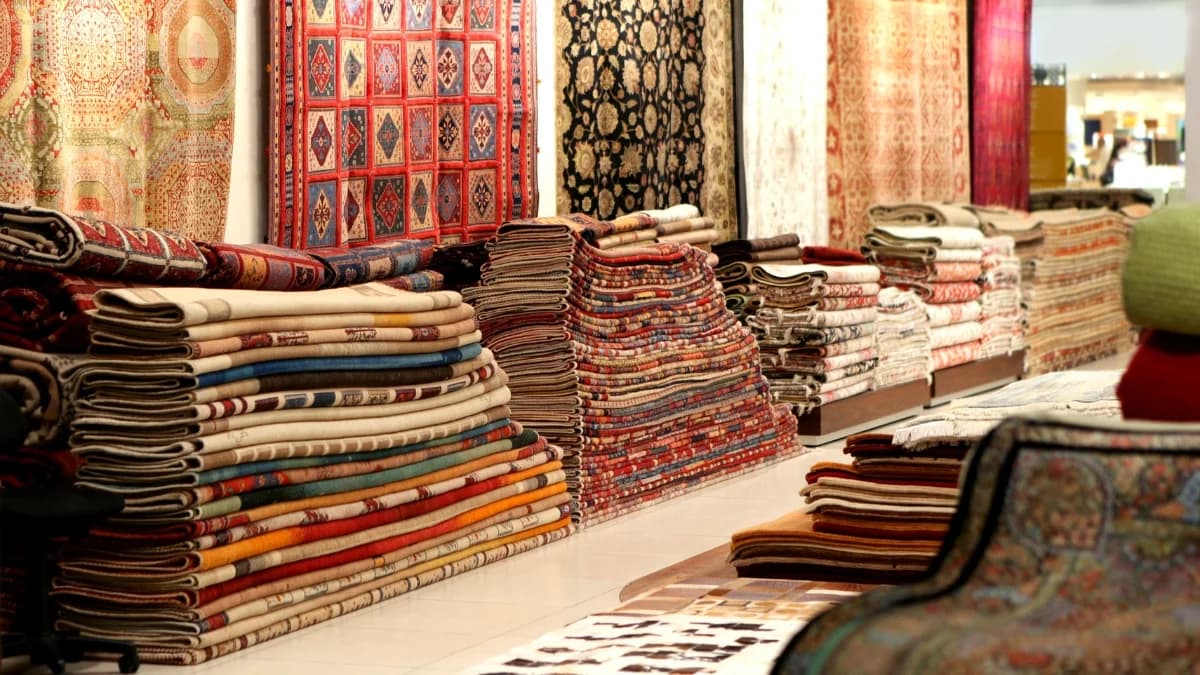
At Al Malakia: Kashan pieces sit within our 500+ hand-knotted stock, sourced directly from Kashan weavers with no intermediaries.
Where to see them: Shop 45–48, Central Souq Block 3 (Blue Souk), King Faisal Road, Sharjah.
Few names in the Persian carpet world carry the prestige of Kashan. For more than a century, carpets from this central-Iranian city have been a benchmark for classical design — the disciplined central medallion, the rich madder-red field, the curvilinear floral vinework that flows from corner to corner. If you have ever admired a formal Persian rug in a hotel lobby, an embassy or a grand majlis and wondered what it was, there is a fair chance it was a Kashan.
This guide explains where Kashan carpets come from, how to read their patterns, what materials and knot counts to expect, and — most usefully — how to tell a genuine hand-knotted Kashan from a machine-made or mislabelled copy. We write this as a working showroom in Sharjah that handles these pieces every day, so the advice is practical rather than theoretical.
Where Kashan carpets come from
Kashan is an old city on the edge of Iran's central desert, roughly between Tehran and Isfahan. It has been a centre of fine craft for centuries — its silk and textile trade predates the modern carpet industry by generations. The famous Ardabil Carpet, one of the most celebrated Persian carpets in the world (now in London's Victoria and Albert Museum), is often associated with the Kashan weaving tradition, which gives you a sense of the city's pedigree.
The modern Kashan carpet industry as we know it took shape in the late nineteenth and early twentieth centuries, when local workshops revived classical court designs for a growing export market. What set Kashan apart was consistency: tightly organised town workshops, high-quality hand-spun wool, and a deep, stable palette built around madder red and indigo blue. Kashan sits within a small group of elite Persian weaving centres — to see how it relates to its neighbours, read our overview of The 5 Main Persian Carpet Regions.
The signature Kashan design
If a carpet looks formal, symmetrical and centred on one bold ornament, you are probably looking at a medallion design — and Kashan is the textbook example of it. The classic layout has four parts working together:
- The central medallion: a single large, often diamond- or teardrop-shaped ornament in the exact centre of the field, frequently with pendants extending top and bottom.
- The field: the main background, usually a deep madder red or a rich navy, filled with curving floral vines, palmettes and arabesques rather than left plain.
- The spandrels (corners): quarter-medallion shapes in each corner that echo and frame the central ornament.
- The border: a wide main border flanked by several narrow guard stripes, typically running a turtle-palmette or floral vine motif.
Kashan is fundamentally a curvilinear, floral style — soft flowing lines, not the bold angular geometry you see in tribal or village weaving. That curvilinear character is the clearest way to separate it from a geometric classic like Heriz Carpets: the Durable Geometric Classic, where the same central-medallion idea is rendered in straight lines and large angular hooks. Both are medallion carpets; they simply speak different visual languages.
Colours that say "Kashan"
The traditional Kashan palette is instantly recognisable: a dominant madder red (a warm, slightly brick-toned crimson from the madder root), indigo blue, ivory or cream for detailing, and accents of soft gold, green and rose. Newer and decorative Kashans broaden the palette into pastels and lighter grounds to suit contemporary interiors, but the deep-red-and-navy combination remains the classic signature — and it happens to suit a UAE majlis beautifully, anchoring a seating area without fighting the light.
Materials: wool, silk and the cotton foundation
Most Kashan carpets are wool pile on a cotton foundation. The pile is hand-spun sheep's wool, valued for its lustre and durability; the warp and weft (the hidden structural threads) are cotton, which gives a flat, stable shape that lies well on the floor. This wool-on-cotton construction is the workhorse Kashan and the one most UAE homes will use day to day.
At the top of the range sit the silk Kashans — pile entirely of hand-spun silk, or silk highlights on a wool ground. Silk allows far finer knotting and a shimmering surface that changes colour as you walk around it. These are decorative and collector pieces rather than high-traffic floor rugs, and they sit in the same fine-silk tier as our our collection of Qum silks. A genuine all-silk Kashan is rare and priced accordingly.
Knot density and quality
Knot density — measured in knots per square inch (KPSI) — is one honest indicator of how much work went into a carpet, though it is not the only measure of quality. Kashan uses the asymmetric (Persian/Senneh) knot, which suits its fine curved detailing.
| Quality tier | Typical KPSI | Material | Best for |
|---|---|---|---|
| Decorative / everyday | 120–200 | Wool on cotton | Living rooms, majlis, high-traffic areas |
| Fine workshop | 200–350 | Wool on cotton | Formal rooms, feature pieces |
| Master / silk | 350–700+ | Silk or silk-on-wool | Collectors, wall display, low-traffic |
A higher knot count lets the weaver render finer curves and smaller floral detail, which is why the most intricate Kashans are also the most densely knotted. But a beautifully designed 180-KPSI wool Kashan can be a better buy for a busy family home than a fragile fine-silk piece — match the carpet to how you actually live.
How to identify a genuine Kashan
Here is the part most buyers want: how to confirm a carpet is a genuine hand-knotted Kashan rather than a machine-made print or a mislabelled rug from elsewhere. Work through these checks in order.
1. Turn it over
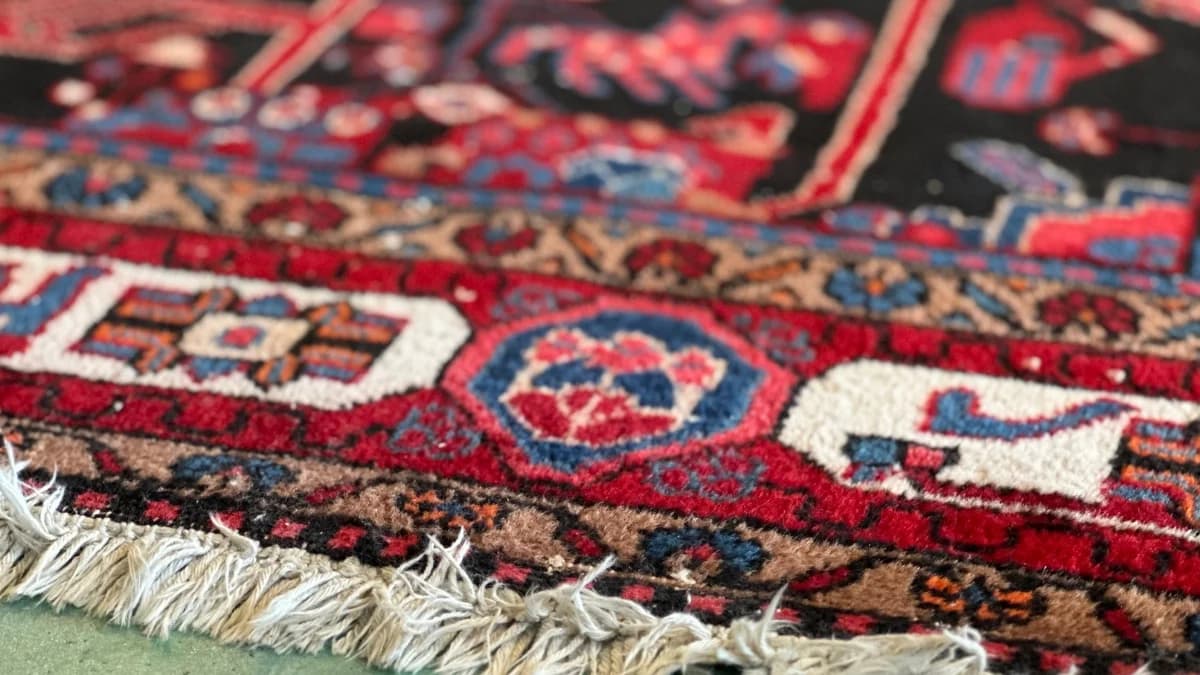
The back tells the truth. On a hand-knotted Kashan, the pattern is clearly visible on the reverse, and you can see thousands of individual knots — slightly irregular, hand-tied. A machine-made rug has a uniform, mechanical back, often with a glued mesh or fringe stitched on as an afterthought. On a genuine piece, the fringe is the actual warp of the carpet, not a separate attachment.
2. Read the knots and the curves
Look closely at how the floral lines curve. Hand-knotting produces tiny, natural irregularities and softly stepped curves; machine printing produces unnaturally perfect, repeating lines. Slight asymmetry between the top and bottom halves of the medallion is a sign of human hands, not a flaw.
3. Check the foundation and the knot type
A traditional Kashan has a cotton foundation and uses the asymmetric Persian knot. Feel the weight and flexibility; ask the seller directly what the warp and weft are made of.
4. Look for honest age and wear
Genuine vegetable dyes mellow gracefully with age, and the back often shows slightly more saturated colour than the worn pile face. Beware of suspiciously uniform "antique" effects, which can be chemically faked. For a deeper checklist that applies across all Persian rugs, read How to Spot a Fake Persian Carpet.
5. Buy from a transparent source
The simplest protection is provenance. A reputable merchant will tell you the origin, material, knot type and rough age without hedging, and will let you examine the back in good light. That transparency is exactly the standard we hold ourselves to — read more about Al Malakia and how we source.
Kashan compared to other Persian carpets
It helps to place Kashan among its peers. Against Heriz, Kashan is the curvilinear, floral, formal option where Heriz is geometric, robust and village-made. Against the fine ivory-ground weaving of Nain Carpets: a Buyer's Guide to Persia's Fine Whites, Kashan typically runs warmer and bolder in colour, with that signature deep-red field, while Nain leans pale, blue-and-ivory and extremely fine. None is "better" — they suit different rooms, light conditions and tastes. A Kashan grounds a richly furnished majlis; a Nain lifts a minimalist, light-filled Dubai apartment.
Living with a Kashan in the UAE
Kashan carpets adapt very well to UAE homes, but the local climate asks for a little care:
- Sunlight: Gulf sun is strong. Keep a fine Kashan out of direct, all-day sunlight, or rotate it twice a year so any fading is even. The deep madder reds are fairly stable, but silk highlights are more delicate.
- Air-conditioning and dust: Vacuum gently and regularly to lift fine desert dust from the pile; avoid beater bars on silk pieces.
- Underlay: A quality non-slip underlay protects the foundation on hard marble and tiled floors common in UAE villas and apartments.
- Professional cleaning: Hand-wash by a specialist every few years — never a household carpet-shampoo machine on a hand-knotted piece.
Whether you are furnishing a villa in Sharjah, an apartment in Dubai or a home in Abu Dhabi, a well-chosen Kashan is a piece you keep for decades and often pass on. If you would like to see the difference between a 180-KPSI wool Kashan and a fine silk one side by side, the best thing is to handle them in person — and you are welcome to contact us to arrange that.
What a Kashan costs
Pricing depends on size, material and knot density far more than on the name alone. As a rough guide, a good decorative wool Kashan starts well below the price of a fine-silk piece, while a master silk Kashan can rise into the same tier as the finest carpets we stock — fine Qum silks at Al Malakia begin from AED 8,000+, and large, exceptionally fine room-sized pieces can reach AED 200,000+. The honest advice: decide your size and how the room is used first, then let those constraints guide you to the right material and knot count rather than chasing the highest number.
Why Visit Al Malakia Persian Carpets?
- Direct sourcing: Purchased from weavers in Qum, Tabriz, Isfahan, Kashan, and Nain — no intermediaries, transparent provenance.
- Scale of stock: 500+ hand-knotted pieces in the showroom, across sizes from 60×90 cm to 4×6 m.
- Free Dubai transfer: Complimentary door-to-door pick-up from Dubai hotels and homes.
- Family expertise: Founded in 2008 by Eid Al Salam, a second-generation Persian carpet merchant.
- Blue Souk location: Shop 45–48, Central Souq Block 3, King Faisal Road, Sharjah. Open Saturday–Thursday 10:00–22:00, Friday 14:00–22:00.
Contact us or WhatsApp +971 50 537 2997 to arrange your visit or request a consultation.