Quick Facts
Origin: The Heriz district in north-western Iran, east of Tabriz in the Azerbaijan region.
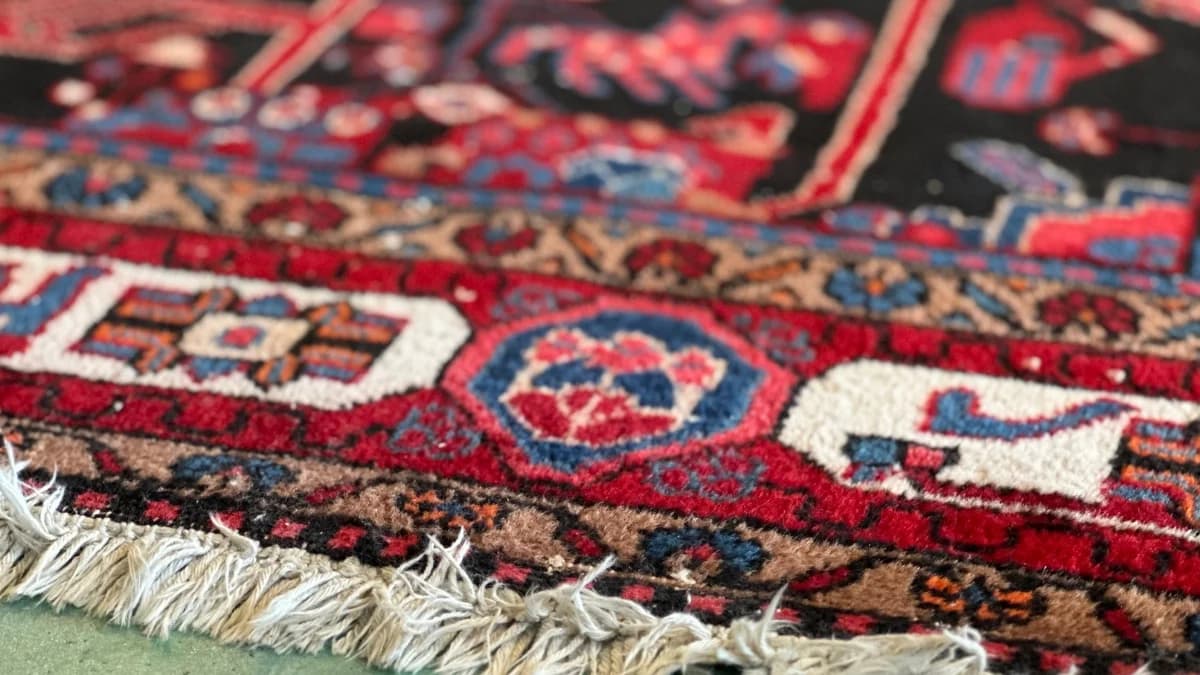
Signature look: A large, angular central medallion with bold geometric borders, usually on a copper-red or terracotta ground.
Material: Hard-wearing highland wool on a cotton foundation — built for daily traffic, not just display.
Best for: Living rooms, majlis, hallways and dining areas where a rug must look good and survive heavy use.
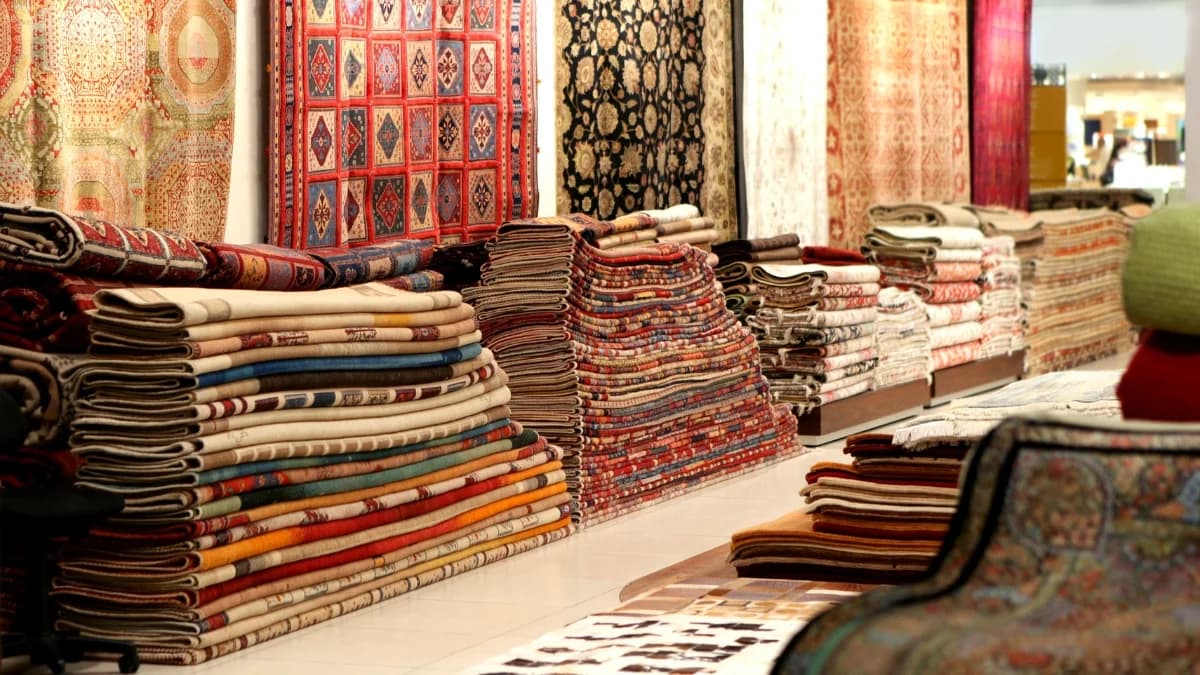
At Al Malakia: Hand-knotted Heriz pieces sit within our 500+ in-stock carpets at the Blue Souk, sourced directly from weaving regions with no intermediaries.
Price guide: Robust room-sized Heriz carpets typically start in the mid hundreds to low thousands of AED, with fine antique examples reaching much higher.
If you want a Persian carpet that can take the foot traffic of a busy UAE family home and still look striking decades from now, the question is rarely "silk or wool?" — it is usually "which weaving region?" And for sheer durability paired with bold, instantly recognisable design, few answers beat a Heriz. This guide explains exactly what a Heriz carpet is, how to recognise one, why it is so hard-wearing, and how to choose the right piece for a villa, apartment or majlis in Sharjah, Dubai or Abu Dhabi.
At Al Malakia Persian Carpets we have sold Heriz rugs to families across the Emirates for years, and they remain one of the most reliable recommendations we make. Below we cover the region and its history, the unmistakable Heriz pattern, the materials and construction that make it last, how it compares to finer city rugs, sizing and pricing for UAE homes, and how to care for one in this climate.
Where Heriz Carpets Come From
Heriz (sometimes spelled Heris) is a town and district in north-western Iran, roughly 60 kilometres east of Tabriz in the East Azerbaijan province. The wider area takes in a cluster of weaving villages — names such as Gorevan, Mehraban, Ahar and Bakshaish appear in the trade — but all share a recognisable family resemblance. Carpets from this corner of Iran are among the most copied and most loved in the world, and they have been woven here for well over a century.
The region sits high in the mountains, and that altitude matters more than it sounds. The soil around Heriz is rich in copper, the water is hard, and the local sheep grow a coarse, resilient wool. Together these give Heriz rugs their famously tough fibre and their characteristic warm, slightly rusty colour palette. To understand how Heriz fits among its neighbours, it helps to read our overview of The 5 Main Persian Carpet Regions, where the contrast between rugged village weaving and refined city workshops becomes clear.
How to Recognise a Heriz Carpet
Heriz designs are some of the easiest Persian patterns to identify, because almost everything about them is angular rather than curved. Where a city rug from Qum or Isfahan flows in soft, rounded arabesques, a Heriz states its design in straight lines and bold blocks of colour. Once you have seen a few, you rarely mistake them.
The central medallion
The defining feature is a single large, geometric medallion in the middle of the field, often shaped like a stepped diamond or an eight-pointed star. It is big — it commands the carpet — and it is drawn with crisp, angular outlines rather than gentle curves. Radiating from it are stylised leaf and vine forms, again all rendered geometrically.
Corner pieces and borders
The four corners of the field usually carry quarter-medallions that echo the centre, and the whole composition is framed by a strong main border, typically filled with a turtle or angular floral motif. If you want to understand what those repeating shapes are actually saying, our guide to Persian Carpet Motifs and Their Hidden Meanings decodes the symbolism behind the medallion, the vine and the border guards.
The colour palette
The classic Heriz ground is a warm copper red, terracotta or brick tone, set against a deep indigo medallion and ivory or salmon corners. Some pieces use a softer rust or even an ivory field, but that copper-red core is what most people picture when they hear "Heriz." The colours come from natural and time-tested dyes and tend to mellow beautifully with age rather than fade flatly.
Why Heriz Carpets Are So Durable
Durability is the real headline with Heriz, and it is not marketing — it is built into the wool and the weave.
- Highland wool: The sheep of the Heriz mountains produce a coarse, springy, lanolin-rich fleece. This wool resists crushing and bounces back underfoot, which is exactly what you want in a high-traffic room.
- Cotton foundation: Heriz rugs are knotted on a strong cotton warp and weft, giving the carpet a stable, flat backbone that holds its shape and lies properly on the floor.
- Symmetrical (Turkish) knot: The region traditionally uses the symmetrical knot, which is robust and well suited to the bold, geometric designs — and to decades of use.
- Sensible knot density: Heriz rugs are not ultra-fine, and that is a strength. A medium knot count with thick, sturdy pile is far more practical for a family home than a delicate, high-count piece that shows every footstep.
The practical result is a carpet you can actually live on. A Heriz handles a busy majlis, a dining table with chairs being pulled in and out, and children and guests crossing it daily — and it ages with character rather than wearing out. That combination of beauty and toughness is why we so often steer UAE families toward Heriz when they ask for "something that will last." You can see the range in our collection at the showroom.
Heriz vs Fine City Carpets
It helps to set Heriz against the finer city rugs so you can choose with open eyes. Neither is "better" — they are built for different jobs. A Qum silk is a jewel for a formal, low-traffic setting; a Heriz is a workhorse with genuine presence.
| Feature | Heriz (village) | Fine city rug (e.g. Qum, Isfahan) |
|---|---|---|
| Design style | Bold, geometric, angular | Fine, curvilinear, floral |
| Pile material | Coarse, durable wool | Fine wool or silk |
| Knot density | Medium | Very high |
| Durability | Excellent — daily use | Best in low-traffic rooms |
| Typical use | Living room, majlis, dining | Formal sitting room, display |
| Care needs | Forgiving and practical | More delicate handling |
For a closer look at one of the great city traditions on the other end of that spectrum, our Kashan Carpets: History, Patterns & How to Identify One guide shows just how different a finely-drawn floral rug can be from a robust Heriz medallion.
Choosing the Right Heriz for a UAE Home
Heriz carpets are made in a wide range of sizes, which makes them flexible for the variety of homes across the Emirates — from compact Dubai apartments to large Sharjah and Abu Dhabi villas.
Sizing for the room
For a majlis or a large living room, a generous Heriz that lets the front legs of your sofas sit on the rug anchors the whole seating arrangement. In a dining room, choose a size that keeps the chairs on the carpet even when pulled out. For a hallway or entrance, a runner-style or smaller geometric piece adds warmth where shoes come and go — and Heriz wool shrugs off that traffic. At Al Malakia our stock runs from 60×90 cm up to 4×6 m, so most rooms can be matched without compromise.
Matching your interior
The warm copper-red of a classic Heriz is surprisingly versatile. It grounds neutral, beige and cream UAE interiors with a hit of warmth, and it sits comfortably alongside dark wood, brass and the earthy tones common in Emirati and majlis décor. If your scheme is cooler, look for Heriz pieces with an ivory field or softer rust ground, which read as lighter in a room.
Price Expectations for Heriz Carpets
Because Heriz rugs are wool rather than silk and medium rather than ultra-fine in knot count, they offer some of the best value-for-durability in the Persian world. A solid, room-sized hand-knotted Heriz is an attainable centrepiece rather than a luxury reserved for the few.
As a frame of reference, at Al Malakia entry-level Afghan hand-knotted pieces start from AED 800, while fine Qum silk begins at AED 8,000+ and the most exceptional room-sized fine carpets can reach AED 200,000+. Heriz typically lands well within the practical middle of that range — robust, large, and built to last for a fraction of what a comparable silk would cost. Price depends on size, age, wool quality and knot density, so the honest answer is always best given in person; contact us and we will quote real pieces rather than guesses.
Caring for a Heriz Carpet in the UAE
One of the quiet joys of a Heriz is that it is forgiving. The same toughness that makes it last also makes it low-maintenance — a real advantage in our climate, where fine silk rugs need more careful handling.
- Vacuum regularly in the direction of the pile, without a rotating beater bar, to lift grit before it works into the foundation.
- Rotate the rug a couple of times a year so any sun exposure and footfall wear evens out across the carpet.
- Use a quality underlay to stop slipping on marble and tile floors, which are common in UAE homes, and to cushion the pile.
- Blot spills immediately with a clean, damp cloth — never rub — and let professionals handle any deep clean. Heriz wool with natural dyes responds best to gentle, traditional washing.
Treated this way, a good Heriz does not just survive decades of UAE living — it improves, the colours softening into the mellow glow that makes older Heriz rugs so sought after.
Why Buy Your Heriz from Al Malakia
Heriz is a region whose name gets borrowed freely, so provenance matters. At Al Malakia Persian Carpets we source directly from weavers in the Persian heartland with no intermediaries, which means the Heriz pieces on our floor are the genuine article, with a clear story behind them. Founded in 2008 by Eid Al Salam, a second-generation Persian carpet merchant, our showroom in the Blue Souk holds more than 500 hand-knotted carpets, so you can compare several Heriz rugs side by side rather than from a single photograph. To learn more about our family and sourcing, read about Al Malakia.
Why Visit Al Malakia Persian Carpets?
- Direct sourcing: Purchased from weavers in Qum, Tabriz, Isfahan, Kashan, and Nain — no intermediaries, transparent provenance.
- Scale of stock: 500+ hand-knotted pieces in the showroom, across sizes from 60×90 cm to 4×6 m.
- Free Dubai transfer: Complimentary door-to-door pick-up from Dubai hotels and homes.
- Family expertise: Founded in 2008 by Eid Al Salam, a second-generation Persian carpet merchant.
- Blue Souk location: Shop 45–48, Central Souq Block 3, King Faisal Road, Sharjah. Open Saturday–Thursday 10:00–22:00, Friday 14:00–22:00.
Contact us or WhatsApp +971 50 537 2997 to arrange your visit or request a consultation.