Quick Facts
What motifs are: The repeated symbols — boteh, medallions, gardens, animals, tribal geometrics — that carry centuries of meaning in a Persian carpet.
Why they differ: Each weaving region (Qum, Tabriz, Isfahan, Kashan, Nain) favours its own vocabulary of pattern.
Curvilinear vs. geometric: City carpets use flowing floral curves; tribal and village rugs use bold geometric shapes.
Most famous motif: The boteh — the teardrop "paisley" — symbolising life, eternity, and a flame.
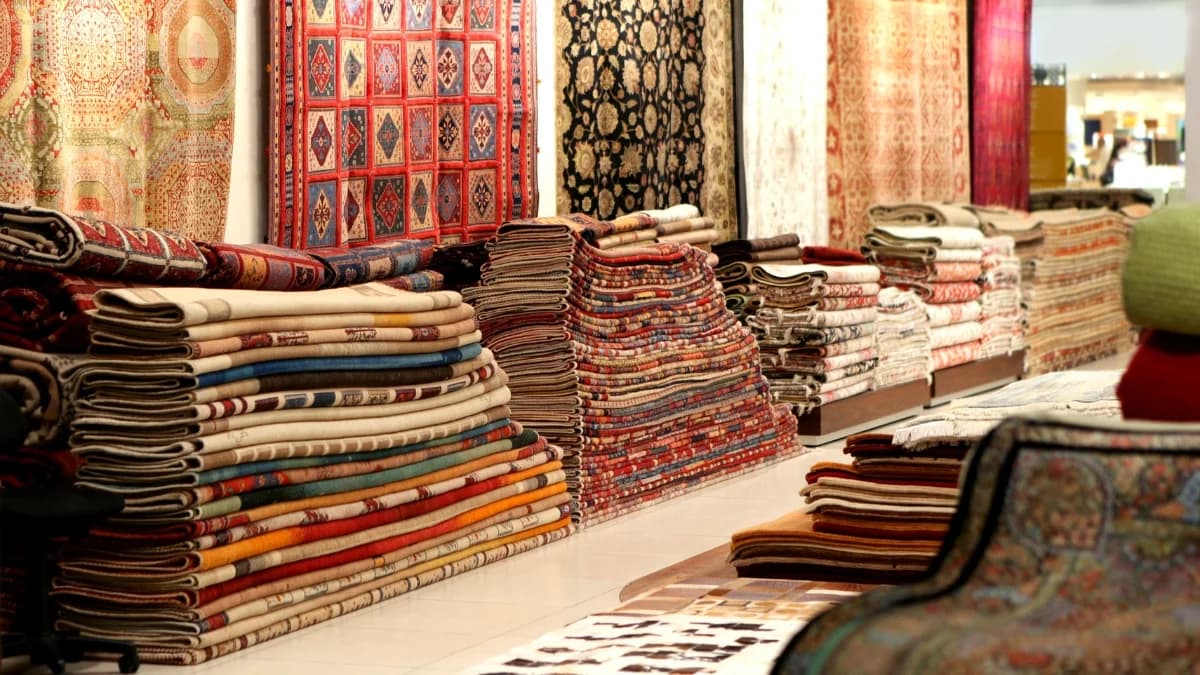
At Al Malakia: 500+ hand-knotted pieces sourced directly from Iranian weavers, with fine Qum silk from AED 8,000 and entry Afghan pieces from AED 800.
See them in person: Shop 45–48, Blue Souk, King Faisal Road, Sharjah — free door-to-door transfer from Dubai.
People often ask us a beautifully simple question when they visit our showroom in the Blue Souk: "What does this pattern mean?" It is the right question. A Persian carpet is not decorated at random. Every medallion, every curling vine, every small bird tucked into a corner is part of a visual language that weavers have refined for more than five centuries. This guide explains the most important Persian carpet motifs and their hidden meanings — what they symbolise, where they come from, and how to read a rug the way a collector does.
By the end you will be able to look at a carpet on a Sharjah showroom floor and recognise whether you are seeing a Garden of Paradise, a tribal protection symbol, or a poem woven in wool and silk. We will move from the grand structural motifs down to the small symbolic details, and finish with a regional cheat sheet you can use the next time you shop.
Why Persian Carpet Motifs Carry Meaning
Persian weaving grew up alongside Persian poetry, miniature painting, and garden design — and it borrowed freely from all three. A carpet was never merely a floor covering. In a traditional Persian home it was a portable garden, a status object, a prayer surface, and sometimes a record of family identity. Because most rural weavers could not read or write, pattern was their literacy: motifs encoded blessings, beliefs, and wishes for fertility, protection, and paradise.
This is why two carpets can look superficially similar yet "say" very different things. The first distinction to learn is between curvilinear designs — the flowing, naturalistic florals of the great city workshops — and geometric designs, the angular, stylised shapes of tribal and village weavers. City rugs from places like Isfahan and Kashan were often drawn first by a master designer on graph paper; tribal rugs were carried in the weaver's memory. Both are authentic; they simply speak in different dialects. If you want the full picture of how these patterns are physically built into the pile, our companion piece on How a Hand-Knotted Persian Carpet Is Made, Step by Step walks through the loom and the knot.
The Boteh: Persia's Most Famous Symbol
If you have ever owned a "paisley" tie or scarf, you have worn a Persian motif. The boteh — that curved teardrop with a bent tip — is the single most recognisable element in Persian design, and the West borrowed it (via the Scottish town of Paisley) without ever quite understanding it.
Interpretations of the boteh vary, which is part of its charm. Most commonly it is read as:
- A cypress tree bent by the wind — the cypress being an ancient Zoroastrian symbol of life and eternity.
- A flame, tying back to the sacred fire of Zoroastrian belief.
- A droplet or seed, signifying fertility and growth.
You will see the boteh scattered in repeating rows across whole fields, clustered into bouquets, or used as a delicate border. In tribal weaving it becomes blocky and bold; in fine city silk it can be rendered with astonishing, hair-fine detail.
The Medallion and Corners: Structure as Meaning
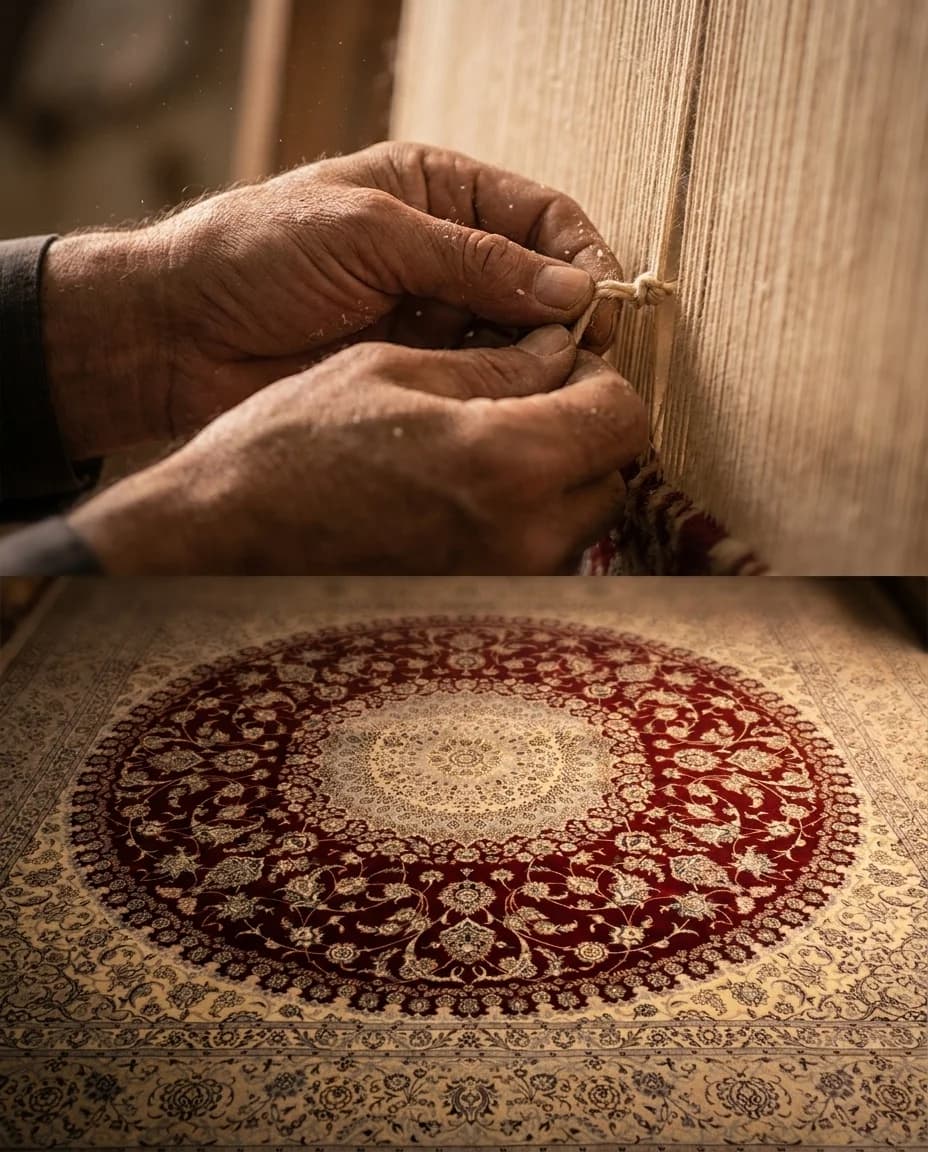
Stand back from a classic Persian carpet and the first thing you notice is usually a large central medallion (in Persian, toranj), often echoed by quarter-medallions in the four corners. This is the single most important structural motif in city weaving, and it is far from decorative filler.
The medallion is widely understood to represent a pool or a dome reflected in water — the heart of a Persian garden, where a central fountain mirrors the heavens. The corner pieces (lachak) complete the symmetry, framing the field like the four corners of a walled paradise garden. A medallion design therefore quietly states a theme of cosmic order and centred calm — which is exactly why it sits so well in a modern majlis or a formal Dubai living room. Cities such as Tabriz and Kashan are especially famous for their medallion layouts; you can read more about each centre's signature in our overview of The 5 Main Persian Carpet Regions.
Gardens, Vases, and the Tree of Life
Three of the most poetic Persian designs all circle the same idea — paradise as a garden.
The Garden (Paradise) Carpet
The chahar bagh, or "four gardens," design divides the field into quadrants by water channels, filling each section with flowers, trees, and sometimes fish and birds. The very word "paradise" comes from an Old Persian term for a walled garden. A garden carpet is, quite literally, an attempt to bring an eternal, blooming garden indoors — a deeply meaningful gift in a desert climate, then and now in the UAE.
The Vase Design
Closely related, the vase motif shows one or more vessels overflowing with blossoms, symbolising abundance, hospitality, and the generosity of nature. It is a favourite in Kashan and Isfahan workshops.
The Tree of Life
The Tree of Life rises from the base of the field, its branches spreading upward — a near-universal symbol connecting earth, the living world, and the heavens. Birds in its branches often represent souls. Tree-of-Life rugs are among the most popular we sell for prayer-room corners and quiet reading nooks.
Flowers and Their Meanings
Floral motifs are the beating heart of curvilinear design, and each bloom carries its own quiet message:
- Rose: beauty and, in Persian poetry, the beloved.
- Lotus: rebirth, purity, and immortality (an import from further east along the Silk Road).
- Tulip: a Turkish and Persian favourite, associated with perfect love.
- Pomegranate: fertility and abundance, thanks to its many seeds.
- Shah Abbasi palmette: a stylised composite flower named for Shah Abbas I, the great patron of 17th-century carpet weaving — a hallmark of grand classical designs.
The dense, all-over scrolling vine that links these flowers is called the islimi (arabesque): an endless, rhythmic line meant to suggest infinity and the unbroken order of creation. To see how these floral languages translate into finished pieces, browse our collection of city and village carpets.
Animals, Birds, and Their Symbolism
Animals appear far more often than newcomers expect — sometimes obvious, sometimes hidden in dense foliage as a little gift to the observant eye.
- Peacock: royalty, beauty, and immortality.
- Nightingale (bolbol): the lover of the rose in Persian poetry; longing and devotion.
- Lion: power, courage, and divine protection — central to the tribal Shir (lion) rugs of the Fars region.
- Dog and rooster: in tribal weaving, guardians that ward off evil.
- Fish (mahi): the famous mahi or "herati" pattern actually stylises four fish around a central rosette — a symbol of life and prosperity, named after the city of Herat.
This love of stylised animal life carries strongly into tribal rugs, where the shapes turn bold and graphic. The Gabbeh Rugs Explained: Tribal Simplicity & Bold Colour piece is a perfect next read if these warmer, simpler designs appeal to you.
Tribal and Geometric Motifs
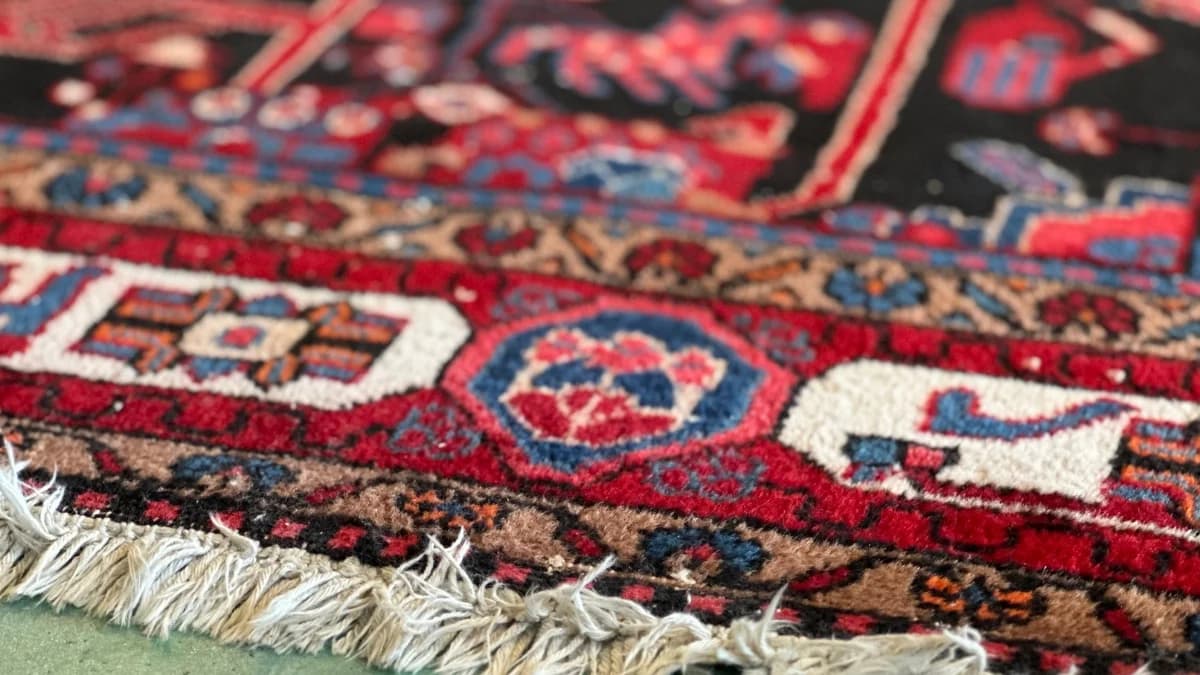
Move away from the city workshops and the symbolic language changes character entirely. Nomadic and village weavers — Qashqai, Bakhtiari, Baluch, Turkmen — work in bold geometry, often without a drawn pattern at all. Their motifs are protective and personal:
- Gul: a repeated octagonal medallion, almost a tribal coat of arms; each Turkmen group has its own gul.
- Boteh (geometric): the same teardrop, rendered in steps and angles.
- Comb and cross: symbols of cleanliness and protection against the evil eye.
- Running dog / latch-hook: a hooked border motif believed to ward off harm.
- Diamond lattice: often standing for the stars or a protective amulet.
Because these rugs are woven from memory and emotion, no two are identical — a deliberate "imperfection" that many collectors prize as a fingerprint of the maker. We have a deep stand of tribal Afghan and Persian pieces, with entry-level Afghan rugs starting from AED 800.
Colour Is a Motif Too
Symbolism in a Persian carpet is not only about shapes — colour carries meaning, and traditionally came from natural dyes:
- Red (madder): happiness, joy, courage, and luck — the most common ground colour.
- Blue (indigo): the heavens, peace, and the afterlife.
- Green: paradise and sacredness — used sparingly out of respect, often reserved for borders.
- Gold/yellow: sun, power, and wealth.
- Ivory/white: purity, peace, and a fresh start.
A weaver's choice of palette, dictated partly by the dye plants available in the region, is itself a regional signature — another reason Qum, Tabriz, and Nain pieces feel so distinct.
How to Read Motifs by Region
Here is a quick comparison of the five great weaving centres we source from directly, with the motifs and signatures you are most likely to encounter.
| Region | Design type | Signature motifs | Typically |
|---|---|---|---|
| Qum | Curvilinear | Garden panels, boteh, fine florals — often in silk | Fine silk, very high knot count |
| Tabriz | Curvilinear | Central medallion, Shah Abbasi palmettes, hunting scenes | Crisp, structured, wool or silk |
| Isfahan | Curvilinear | Medallion with arabesque islimi, vase & tree designs | Elegant, ivory grounds |
| Kashan | Curvilinear | Medallion & corner, dense florals, deep reds | Classic, richly coloured |
| Nain | Curvilinear | Delicate islimi, soft blues and ivory, fine wool | Light palette, silk highlights |
For a fuller orientation to buying in this market — sizes, prices, and care in a humid Gulf climate — our The Complete Guide to Persian Carpets in the UAE brings it all together, and you are always welcome to contact us with a photo of a piece you are curious about.
Reading a Carpet in Person
Motifs come alive when you can kneel down and trace them with a finger. We encourage every visitor to do exactly that. Look first at the overall structure — is there a central medallion, or an all-over repeat? Then hunt for the small surprises: a hidden bird, a signature cartouche, a weaver's deliberate "flaw." Ask us where the rug was made and what its symbols mean; that provenance is part of what you are buying, and as a family business sourcing without intermediaries, we can tell you honestly. You can read more about Al Malakia and our second-generation roots in the trade.
Why Visit Al Malakia Persian Carpets?
- Direct sourcing: Purchased from weavers in Qum, Tabriz, Isfahan, Kashan, and Nain — no intermediaries, transparent provenance.
- Scale of stock: 500+ hand-knotted pieces in the showroom, across sizes from 60×90 cm to 4×6 m.
- Free Dubai transfer: Complimentary door-to-door pick-up from Dubai hotels and homes.
- Family expertise: Founded in 2008 by Eid Al Salam, a second-generation Persian carpet merchant.
- Blue Souk location: Shop 45–48, Central Souq Block 3, King Faisal Road, Sharjah. Open Saturday–Thursday 10:00–22:00, Friday 14:00–22:00.
Contact us or WhatsApp +971 50 537 2997 to arrange your visit or request a consultation.