What KPSI stands for: Knots Per Square Inch — the number of individual hand-tied knots within one square inch of a carpet's pile.
Coarse weave: 16–80 KPSI (tribal and village carpets, bold geometric patterns).
Medium weave: 80–200 KPSI (workshop carpets, Tabriz, many Kashan pieces).
Fine weave: 200–400 KPSI (city carpets, Isfahan, Nain, fine Kashan).
Ultra-fine / silk: 400–1,000+ KPSI (Qum silk, some Tabriz silk-on-silk).
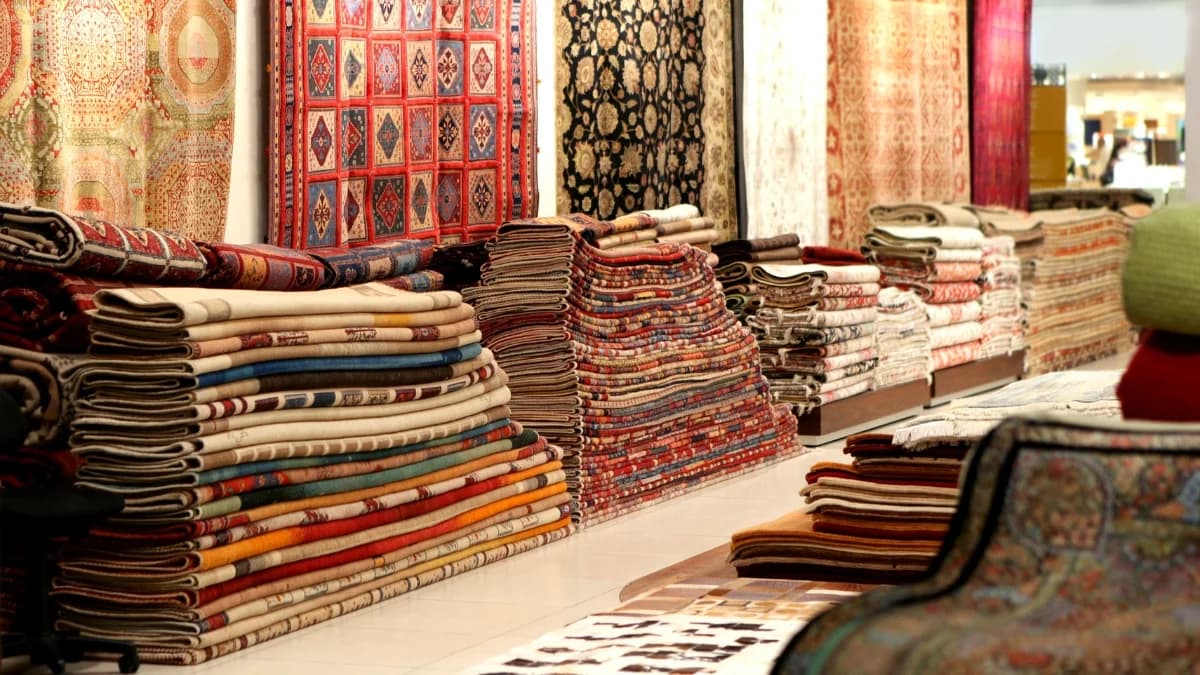
Al Malakia showroom: 500+ hand-knotted Persian and Afghan carpets on display, Shop 45–48, Central Souq Block 3, Blue Souk, Sharjah.
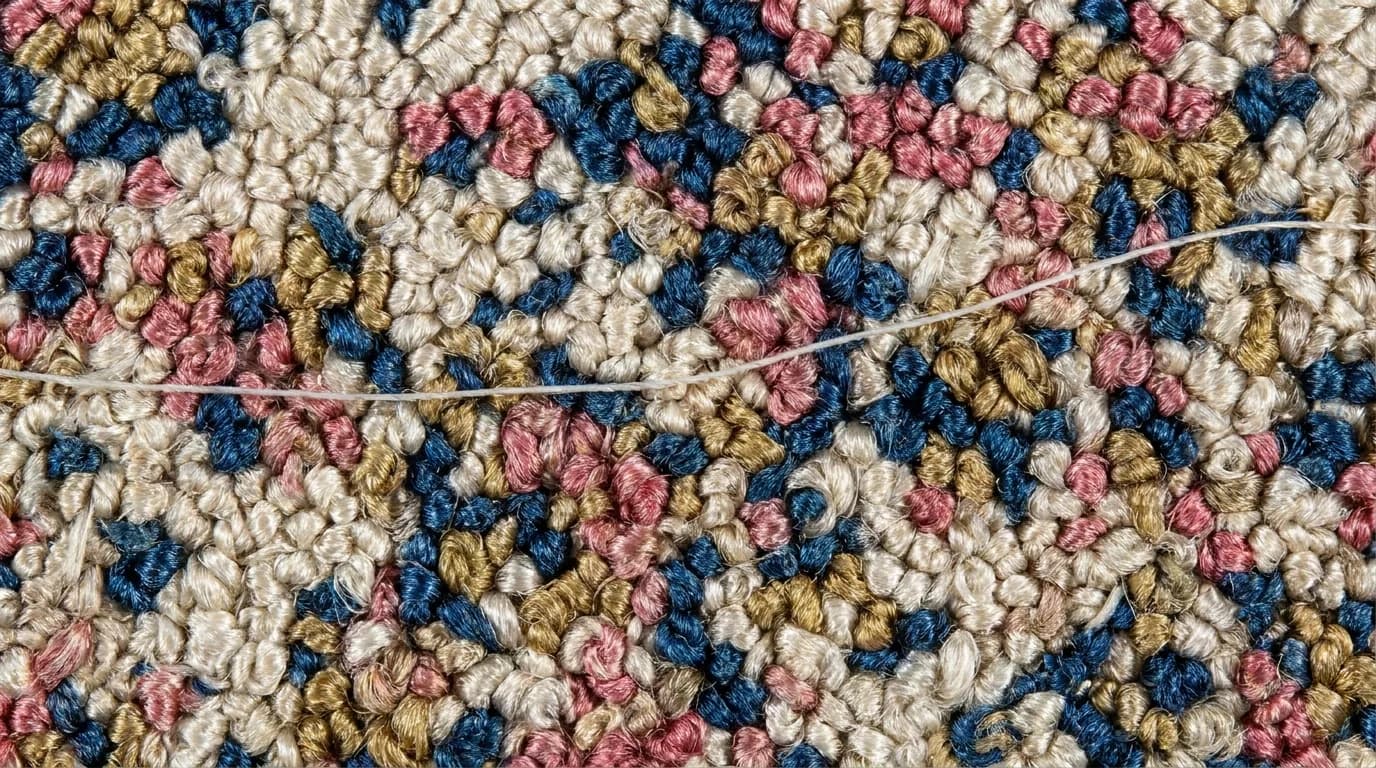
A single square inch of a Qum silk carpet can contain more than 900 individual hand-tied knots. That figure — expressed as KPSI, or knots per square inch — is the single most objective measure of a hand-knotted carpet's weave density. Yet it is also one of the most misunderstood numbers in the rug trade. Buyers sometimes assume that higher KPSI always means a better carpet, or that a low count signals poor quality. Neither is automatically true. Understanding what KPSI measures, how it relates to the type of carpet you are buying, and where it sits alongside other quality indicators will help you make a more informed purchase — whether you are selecting a piece for a family home in Dubai or commissioning something rare for a collector's room in Abu Dhabi.
How KPSI Is Calculated
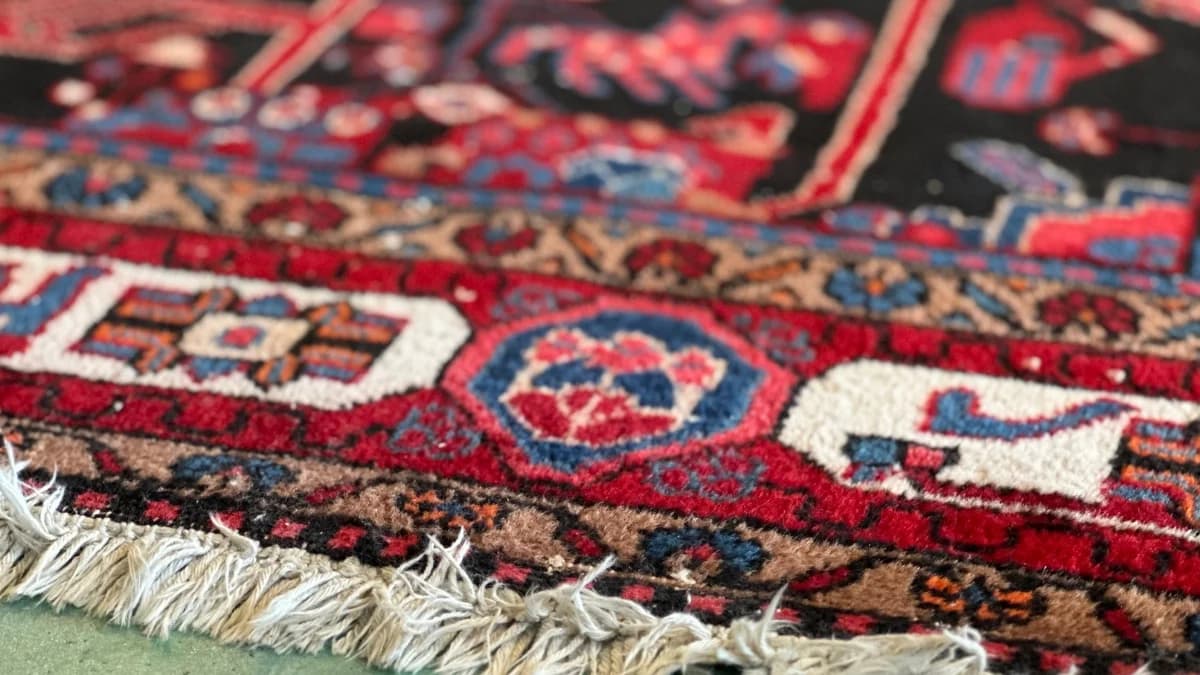
To find a carpet's KPSI, a specialist parts the pile with a blunt tool and counts the visible knot bases in a defined area — typically one linear inch across the warp (horizontal) and one linear inch along the weft (vertical). Multiplying the two figures gives the KPSI. A carpet with 20 knots per linear inch in each direction has 400 KPSI. Because pile direction can obscure the base, accurate counting requires experience; laboratory methods use digital magnification.
It is worth noting that KPSI measures surface density, not pile height. Two carpets can share the same KPSI but differ greatly in pile thickness, handle, and visual depth — factors determined by the material (wool, silk, or cotton warp) and the specific knotting technique used.
The Two Principal Knot Types and How They Affect Density
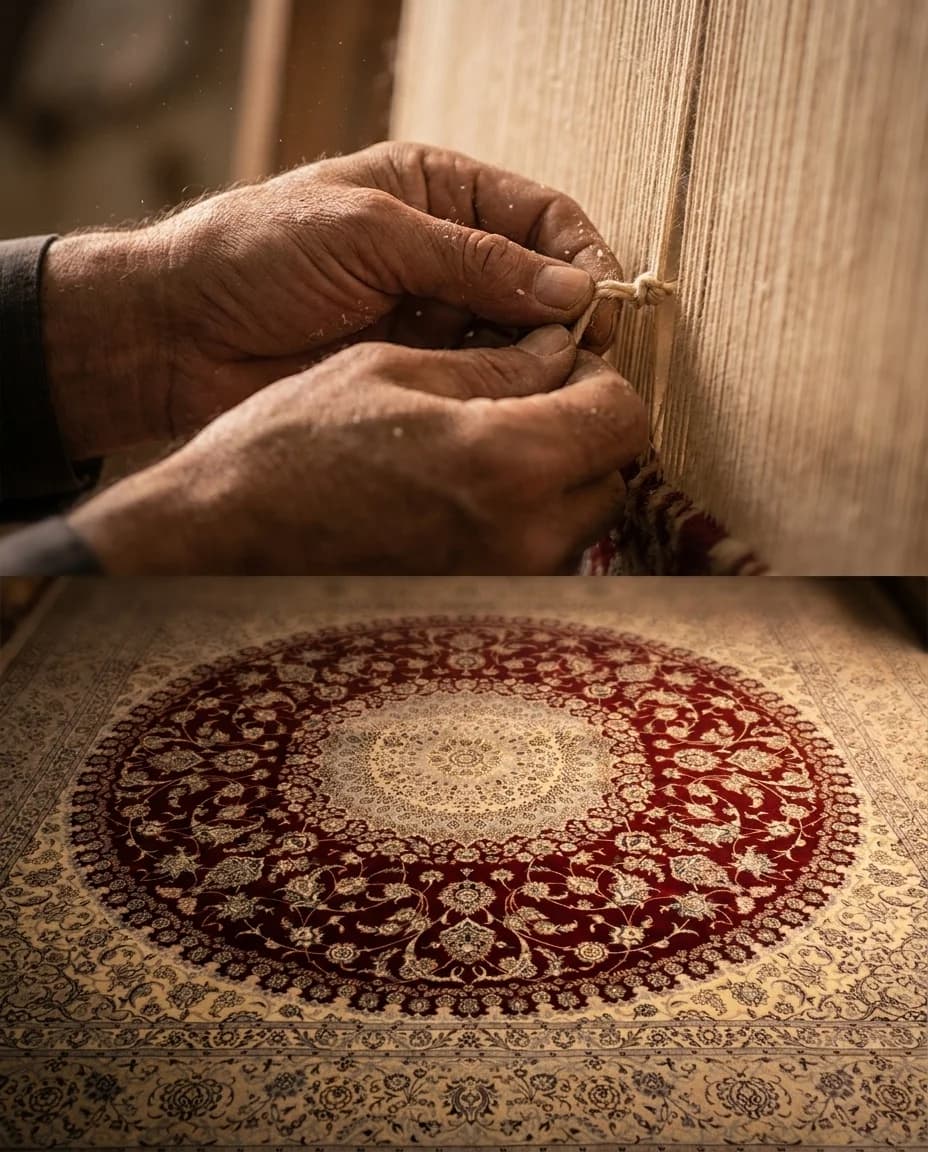
Persian (Senneh / asymmetric) and Turkish (Ghiordes / symmetric) knots are the two dominant hand-tying methods in traditional carpet weaving. The Persian knot wraps around one warp thread and passes loosely under the adjacent one, allowing weavers to achieve tighter spacing and therefore higher KPSI for a given yarn thickness. The Turkish knot encircles both warp threads symmetrically, creating a more robust pile that suits coarser wools and tribal designs.
Most pieces from Isfahan, Qum, Kashan, and Nain use the Persian knot. Tabriz traditionally uses a distinctive variation tied with a hook tool (the tarak). Afghan war rugs and many tribal pieces use the Turkish knot. Neither is inherently superior; the choice is dictated by design intent, material, and regional tradition.
KPSI Ranges by Carpet Origin: A Reference Table
| Origin | Typical KPSI Range | Dominant Material | Design Characteristics |
|---|---|---|---|
| Qum (Ghom) | 300–1,000+ | Silk on silk | Medallion, hunting, floral; extremely fine detail |
| Isfahan | 200–400 | Wool pile, cotton warp | Arabesque, Shah Abbasi floral, refined medallions |
| Kashan | 150–350 | Wool pile, cotton warp | Central medallion, deep reds and blues |
| Nain | 200–500 | Wool/silk combination | Intricate curvilinear floral, ivory fields |
| Tabriz | 100–400 | Wool, silk, wool-on-silk | Diverse: pictorial, hunting, garden, geometric |
| Afghan (tribal) | 40–120 | Hand-spun wool | Geometric guls, bold borders, earthy tones |
At our Persian carpet collection in the Blue Souk, Sharjah, you will find pieces spanning almost every row of this table — from tribal Afghan runners at modest KPSI to Qum silk panels that require a magnifying glass to appreciate the intricacy of their weave.
Why KPSI Alone Does Not Determine Value
KPSI is a necessary number to know, but it is one variable in a multi-factor equation. Consider the following:
- Material quality: A 300-KPSI carpet knotted in low-grade wool will fade, pill, and wear faster than a 120-KPSI piece in hand-spun, lanolin-rich wool from a highland flock. Fibre source matters as much as density.
- Natural versus synthetic dyes: Carpets dyed with vegetable and mineral dyes (pomegranate rind, indigo, madder root) develop a patina called abrash over decades. Synthetic dyes can appear vivid when new but may fade unevenly.
- Design complexity: A high-KPSI carpet with a simple geometric pattern offers less artistic achievement than a medium-KPSI piece with a flawlessly executed curvilinear floral. The design should justify the density.
- Foundation integrity: Warp and weft threads — typically cotton or silk in city carpets — must be tightly spun and evenly tensioned. A slack foundation causes buckling regardless of knot count.
- Provenance and age: Antique carpets (generally 80+ years) and semi-antiques carry historical value independent of KPSI. A Kashan from the early 20th century at 180 KPSI may outvalue a contemporary piece at 300 KPSI.
How to Verify KPSI When Buying
You do not need specialist equipment to get a working estimate. Fold a corner of the carpet back so the knot bases are exposed along the fold. Place a ruler along the fold and count the knot bases within one inch of warp, then one inch of weft. Multiply. If the pile is dense and the fold stiff, the count is likely accurate. If the carpet resists folding neatly, the foundation is probably cotton-warped — a sign of a city carpet, which typically commands a higher KPSI.
In our showroom, Eid Al Salam — second-generation carpet merchant and founder of Al Malakia — routinely demonstrates this process for visitors. Understanding it before you arrive means you can ask more specific questions and compare pieces with confidence. You are welcome to read more context in The Complete Guide to Buying Persian Carpets in the UAE before your visit.
KPSI and Carpet Longevity
A denser weave generally means each individual knot is smaller and more tightly anchored, which can improve abrasion resistance in high-traffic areas — provided the pile yarn itself is durable. Silk carpets, though often the highest in KPSI, are best suited to low-traffic areas or wall display. A 120–200 KPSI wool carpet from Tabriz or Kashan, properly maintained, can withstand daily family use for generations. UNESCO's recognition of Iranian traditional crafts underscores that hand-knotted carpet weaving is a living heritage — and the physical density of the knots is a key reason these textiles survive centuries of use.
What KPSI Ranges Are Suitable for Different Rooms
Matching knot density to use case is practical advice that most showrooms overlook:
- Entrance halls and corridors (high traffic): 80–150 KPSI wool, tribal or workshop grade. Durable, easier to clean.
- Living rooms (moderate traffic): 150–300 KPSI wool or wool-on-silk. Isfahan, Kashan, and mid-grade Tabriz are ideal.
- Formal dining rooms (low traffic): 200–400 KPSI. Nain and fine Kashan hold their definition well under a dining table.
- Bedrooms and studies (very low traffic): Any KPSI, including fine silk. Qum silk pieces shine in bedroom settings where foot contact is minimal.
- Wall display / collector pieces: 300–1,000+ KPSI silk. Hung correctly, these never experience foot traffic at all.
How Al Malakia Sources High-KPSI Carpets Directly
Since 2008, Al Malakia has sourced carpets directly from weaving families in Qum, Tabriz, Isfahan, Kashan, and Nain — bypassing the intermediary layers that inflate prices in many retail markets. Direct sourcing means we can verify the KPSI count, material origin, and dye type at the point of production. When you visit our showroom at Shop 45–48, Central Souq Block 3, Blue Souk, Sharjah, you can examine documentation on specific pieces and discuss provenance with someone who has visited the workshops in person. Guests travelling from Dubai can take advantage of our free door-to-door hotel transfer service from Dubai, and customers in Abu Dhabi and Al Ain can choose from photos and video we send on WhatsApp, with free delivery anywhere in the UAE.
Visit Al Malakia Persian Carpets in Sharjah
Our showroom at Shop 45–48, Central Souq Block 3 (Blue Souk), King Faisal Road, Sharjah holds 500+ hand-knotted Persian and Afghan carpets — from 40-KPSI tribal Afghan pieces to 900-KPSI Qum silk panels. Open Saturday–Thursday 10:00–22:00, Friday 14:00–22:00. Free transfer available from Dubai hotels. Abu Dhabi and Al Ain customers can choose from photos and video on WhatsApp, with free delivery anywhere in the UAE.
Call or WhatsApp: +971 50 537 2997 | Landline: +971 6 573 1399
Frequently Asked Questions about Persian Carpet KPSI
What is a good KPSI for a Persian carpet?
"Good" depends on the intended use and the carpet's origin. For a living-room wool carpet from Kashan or Tabriz, 150–300 KPSI represents strong craftsmanship and practical durability. For a collector-grade silk piece from Qum, 400–900 KPSI is achievable and expected. For a tribal Afghan with bold geometric design, 60–120 KPSI is entirely appropriate — higher density would actually disrupt the aesthetic intent of those patterns.
Can I measure KPSI myself without tools?
Yes. Fold a corner of the carpet so the knot bases are exposed, place a standard ruler along the fold, and count the knot bases per linear inch in both directions. Multiply the two figures. The result is your KPSI estimate. For very fine silk carpets, the knots may be too small to count accurately without a magnifying glass, but you can still get a rough figure. Showroom staff at Al Malakia are happy to demonstrate this process in person.
Does higher KPSI always mean a more expensive carpet?
Generally, yes — a higher knot count requires more weaver-hours, finer yarn, and a more experienced artisan. However, price is also affected by material (silk versus wool), age, regional origin, condition, and design rarity. A 200-KPSI antique Kashan in perfect condition may command a higher price than a new 400-KPSI piece of similar dimensions, because its age and provenance add a separate layer of value. Always evaluate KPSI alongside these other factors.
Is KPSI the same as knots per square metre (KPSM)?
They measure the same thing — knot density — but use different units. To convert KPSI to KPSM, multiply by 1,550 (because there are approximately 1,550 square inches in a square metre). A carpet with 200 KPSI therefore has roughly 310,000 knots per square metre. European and Iranian auction catalogues often use KPSM; US and UK retail typically uses KPSI. At Al Malakia, we quote both on request so you can compare pieces easily.
Do machine-made carpets have a KPSI?
Machine-made carpets are not knotted — they are tufted or woven mechanically, so KPSI is not a meaningful measure for them. Manufacturers sometimes quote a "stitch count" per square inch for marketing purposes, but this is not comparable to hand-tied knots. If a seller quotes a high KPSI for a carpet priced suspiciously low, ask to see the knot bases by folding the pile. Genuine hand-knotted carpets show individual, distinct knot bases; machine-made backings show a uniform latex or fabric layer.
Where can I see high-KPSI Persian carpets in the UAE?
Al Malakia Persian Carpets at the Blue Souk in Sharjah maintains one of the UAE's most diverse direct-sourced selections, including Qum silk pieces above 500 KPSI and fine Nain and Isfahan carpets in the 250–400 range. The showroom is approximately 20 minutes from central Dubai by car. Free hotel transfer from Dubai is available, and customers in Abu Dhabi and Al Ain can choose from photos and video on WhatsApp, with free delivery anywhere in the UAE. For the full buying process, read our complete guide to buying Persian carpets in the UAE.
KPSI is a precise, measurable starting point — the kind of number that gives you a foothold when comparing carpets across different origins, price points, and ages. But it is only the first question to ask. Material, dye, design execution, age, and provenance complete the picture. If you would like to examine pieces in person, our showroom at Shop 45–48, Central Souq Block 3, Blue Souk, Sharjah is open six days a week. WhatsApp us on +971 50 537 2997 to arrange a visit or to ask about specific origins and KPSI ranges before you travel.