Quick Facts
What it is: Placing a smaller, finer rug on top of a larger neutral one to create depth, texture and a focal point.
Best base layer: A large flatweave, jute or low-pile neutral rug that anchors the seating area.
Best top layer: A hand-knotted Persian or Afghan piece — the pattern, colour and craftsmanship people actually notice.
Why it works in the UAE: It warms up large marble-floored villa and apartment living rooms and defines zones in open-plan spaces.
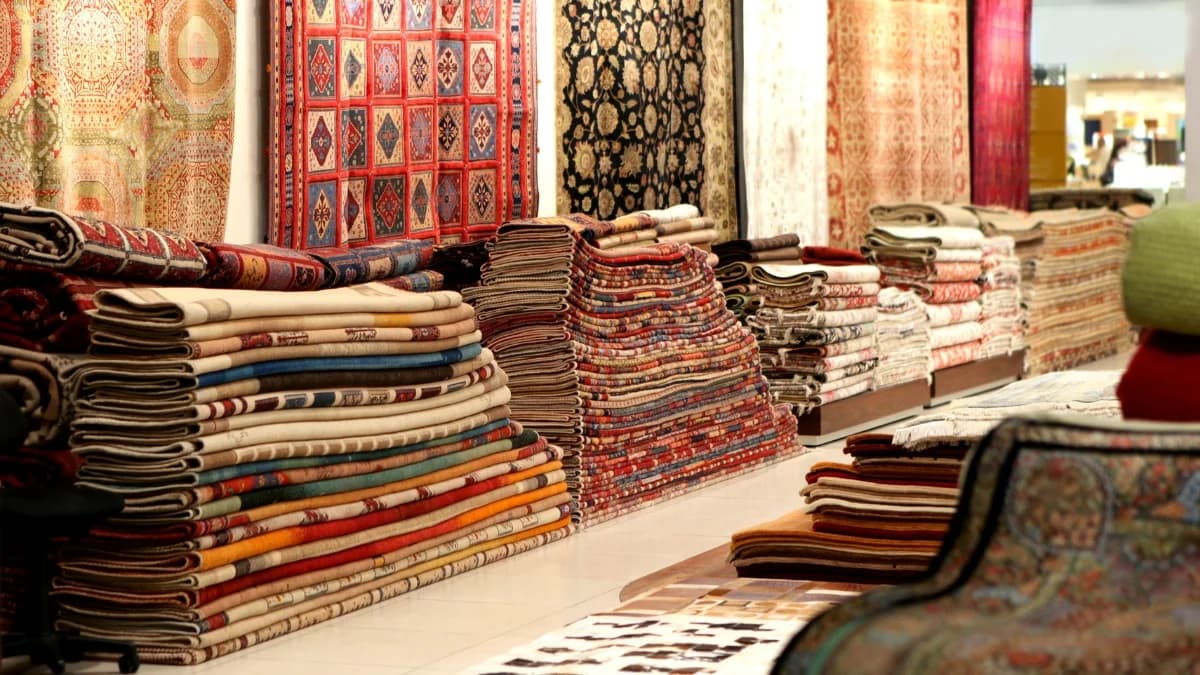
Where to start: Al Malakia keeps 500+ hand-knotted pieces in Sharjah's Blue Souk, from AED 800 for Afghan rugs up to fine Qum silks at AED 8,000+.
Try before you commit: We offer free door-to-door transfer from Dubai so you can see layers together at home.
Layering rugs has gone from a styling secret shared between interior designers to one of the most-requested looks in modern UAE homes. The idea is simple: instead of one rug doing all the work, you place a smaller, more characterful rug on top of a larger, calmer one. Done well, it adds warmth, texture and a clear focal point. Done badly, it looks like an accident — a rug that slid off the sofa and never got picked up.
This guide explains exactly how designers layer rugs, why the trend suits Emirati and expat homes so well, and how to build the look around a hand-knotted Persian or Afghan carpet. We will cover base layers, top layers, sizing, texture pairing, colour, the rooms that benefit most, and the mistakes that quietly ruin the effect.
What "layering rugs" actually means
Layering means putting two (occasionally three) rugs in the same spot, stacked, so part of the lower rug stays visible around the edges of the upper one. The bottom rug — the base layer — is usually large, plain or subtly textured, and relatively inexpensive. The top rug — the hero — is smaller, more detailed and more valuable. It is the piece that carries the pattern, the colour story and the craftsmanship.
The reason the technique looks so intentional is that it solves two problems at once. A single oversized patterned rug can overwhelm a room and cost a fortune in a large size. A single small rug can look lost and mean. Layering lets a modest, beautiful, hand-knotted piece sit on a large, affordable base — so you get full floor coverage and a genuine focal point without paying for a 4×6 m fine carpet.
Why the trend suits UAE homes
Layering is not a passing Instagram fad here; it answers real features of how homes are built in the Emirates. Most villas and apartments in Dubai, Sharjah and Abu Dhabi have large, hard floors — polished marble, porcelain or wood-effect tile. Those floors are cool, easy to clean and perfect for the climate, but they can feel echoey and impersonal, especially in big open-plan living and majlis areas.
A layered arrangement softens all of that. The base layer covers a generous footprint and tames the echo; the hand-knotted top layer brings in the colour, history and warmth that a bare marble floor lacks. In open-plan apartments, layering is also a brilliant zoning tool — a base rug can define the whole living zone while the hero rug sits exactly under the coffee table, marking the heart of the seating group. If you are furnishing a compact apartment, our notes on the Best Persian Carpets for Dubai Apartments pair naturally with this approach.
Choosing the base layer
The base layer has one job: to be large, calm and supportive. It should not compete with the hero rug. Good base-layer choices are:
- Natural-fibre flatweaves — jute, sisal or seagrass. Their visible weave reads as texture, not pattern, and the warm neutral tone flatters almost any Persian carpet on top.
- Low-pile wool or cotton in a solid colour — soft underfoot, quiet underneath, and kinder on bare feet than coarse jute in a family majlis.
- A worn or simple kilim — if you want a little texture in the base itself, a flatwoven kilim in muted tones still recedes behind a knotted hero rug.
Keep the base neutral: oatmeal, sand, soft grey, undyed wool. Size it generously — the base should be large enough that, in a standard seating group, the front legs of every sofa and chair sit on it. That single rule is what makes a layered room look planned rather than crowded.
Choosing the hero rug on top
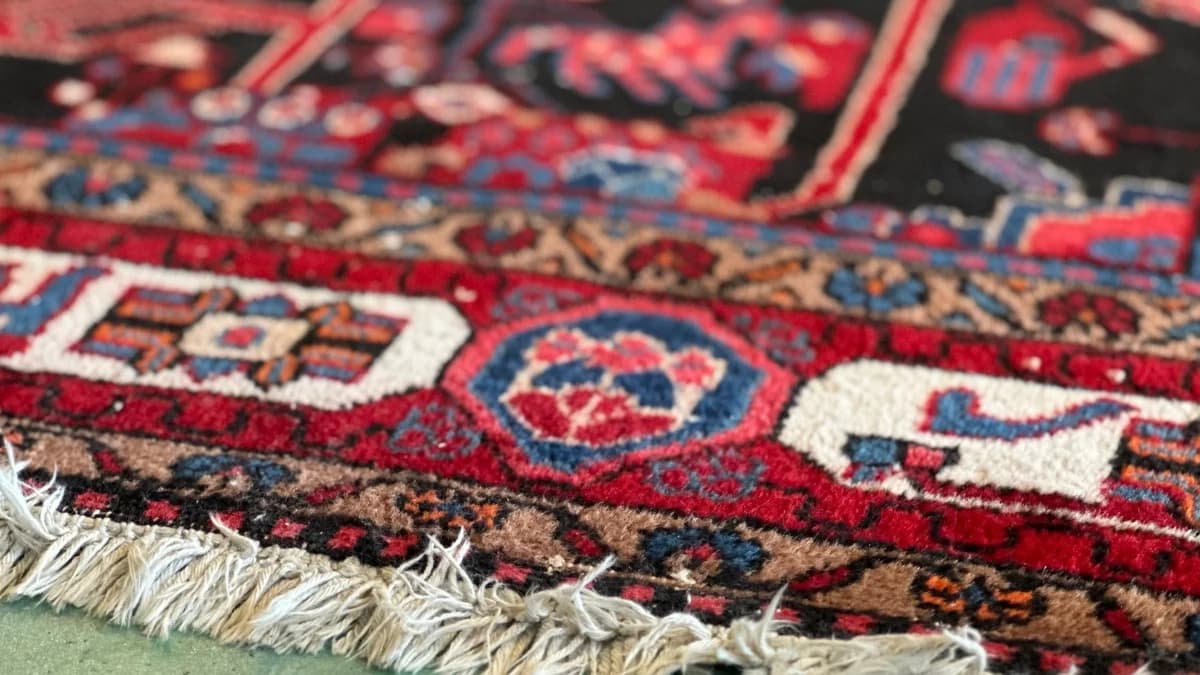
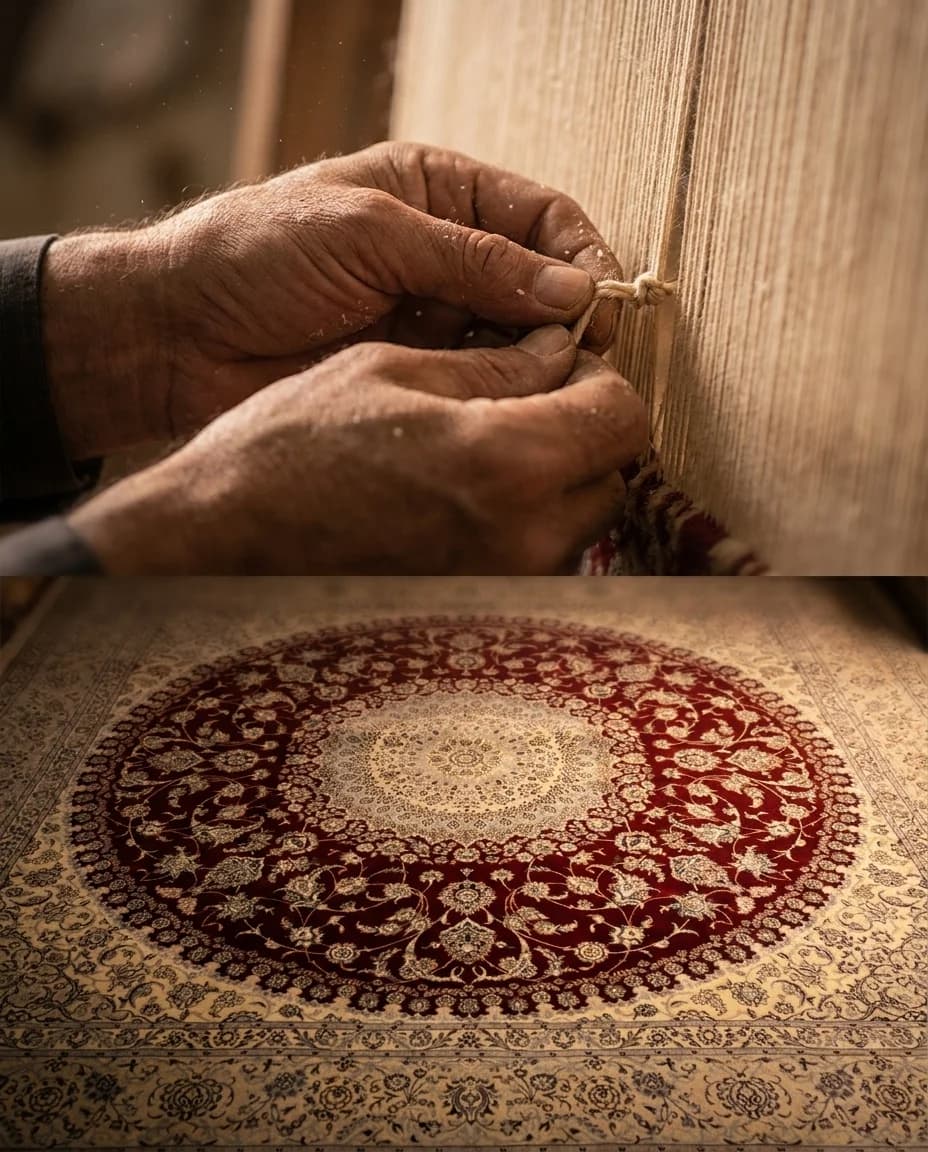
This is where a hand-knotted Persian or Afghan carpet earns its place. The top layer is closest to the eye and to the coffee table, so it is the piece people see in detail — they notice the knots, the silk highlights, the medallion or the all-over garden design. A machine-made rug looks flat and lifeless in this role; a hand-knotted piece glows.
For the hero layer we usually steer clients toward:
- Qum — fine silk or silk-and-wool, jewel colours, very high knot density. Spectacular as a smaller hero piece where every detail is seen up close.
- Tabriz and Kashan — classic medallion designs in wool or wool-and-silk; balanced, timeless and forgiving in busy rooms.
- Isfahan and Nain — refined ivory and blue palettes, beautifully drawn, ideal when you want the hero rug to feel light and elegant.
- Afghan — deep reds and geometric designs, hard-wearing wool, and budget-friendly from AED 800 — a great way to test layering before investing in a finer piece.
You can browse the regions side by side in our collection, where each origin's character becomes obvious once you see them together. If you are unsure which palette to commit to, our guide on How to Choose the Right Persian Carpet Colour for Your Room walks through reading your room's light and existing tones first.
Getting the sizing right
Sizing is where most layered rooms succeed or fail. The two layers must have a clear difference in scale, and the top rug must be centred deliberately — not nudged to one side. Use the table below as a starting point for a typical UAE living room.
| Room / zone | Base layer size | Hero rug size | Notes |
|---|---|---|---|
| Apartment living room | 200×300 cm | 120×180 cm | Front sofa legs on base; hero under the coffee table |
| Villa majlis / large lounge | 300×400 cm or larger | 170×240 cm | Base anchors the full seating group |
| Bedroom (foot of bed) | 240×340 cm | 90×150 cm | Hero rug runs across the bed's foot |
| Entry / reception nook | 160×230 cm | 80×120 cm | Smaller scale; hero as a welcome accent |
The principle behind every row: leave roughly 20–40 cm of base rug visible as a border around the hero rug. Less than that and the layering looks accidental; much more and the hero starts to look stranded. At Al Malakia we stock pieces from 60×90 cm up to 4×6 m, so matching a hero rug to almost any base footprint is straightforward.
Pairing texture and pile height
Layering only reads as luxurious when the two rugs feel different underfoot and to the eye. The classic, fail-safe combination is a flat base + a pile hero: a low jute or flatweave underneath, and a knotted wool or silk Persian carpet on top. The eye registers the change in height at the border, and that little shadow line is exactly what makes the arrangement look designed.
Combinations that work
- Jute base + wool Persian hero — the most forgiving, hard-wearing pairing for family rooms.
- Flatweave wool base + silk Qum hero — quiet base, luminous top; the silk catches the light beautifully against a matte ground.
- Muted kilim base + bold tribal Afghan hero — a more relaxed, layered-bohemian look that suits informal majlis seating.
Combinations to avoid
- Two high-pile rugs stacked — they merge visually and feel unstable underfoot.
- Two busy patterns fighting for attention — keep the base plain.
- A thick base under a fine silk hero in a high-traffic path — the silk should sit where it is admired, not walked across constantly.
Colour: how to make two rugs agree
The safest route is a neutral base with a hero rug that introduces all the colour. But layering also lets you be braver. Pull one accent colour from the hero carpet — a Tabriz red, an Isfahan blue, a soft Nain ivory — and echo it elsewhere in the room: cushions, a throw, ceramics. That single repeated note ties the two layers and the whole scheme together.
If your furniture is very modern or minimalist, the hero rug becomes the room's main source of pattern and soul, which is exactly the effect designers love. We explore that contrast in detail in Mixing Persian Carpets with Modern & Minimalist Furniture. The short version: a hand-knotted carpet stops a minimalist room from feeling cold, and layering gives it the generous footprint a large modern sofa demands.
Rooms that benefit most
Layering is most effective in three settings common to UAE homes:
- Open-plan living and dining — use a large base to claim the lounge zone, with the hero rug centring the sofas and visually separating them from the dining area.
- The majlis — a generous base ties together low seating around the edges of the room, while a fine hero piece in the centre signals the room's importance to guests.
- Master bedrooms — a soft base wall-to-wall feel under and around the bed, with a smaller knotted rug across the foot for colour and a warm landing spot in the morning.
In all three, the hand-knotted layer is the part guests remember — and the part that holds its value over decades.
Five layering mistakes to avoid
- The slipped-rug look. Centre the hero rug deliberately and leave an even border of base all around. An off-centre top rug reads as a mistake.
- Skipping the rug pad. Use a non-slip pad between the layers and under the base. It stops bunching, protects both rugs and stops anyone tripping.
- Too little contrast. If the two rugs are the same colour, pile and pattern, you have not layered — you have hidden one rug under another.
- A cheap hero. The top rug is the one on show. A machine-made top layer undoes the whole effect; this is where a genuine hand-knotted piece pays off.
- Ignoring proportion. A tiny hero on a vast base looks marooned. Follow the sizing table and the 20–40 cm border rule.
How Al Malakia helps you layer with confidence
Layering is far easier to judge in person, with the actual rugs in front of you. At Al Malakia we have helped clients across Sharjah, Dubai and Abu Dhabi build layered schemes since 2008, when the showroom was founded by Eid Al Salam, a second-generation Persian carpet merchant. Because we source directly from weavers in Qum, Tabriz, Isfahan, Kashan and Nain — with no intermediaries — we can show you base and hero options together and explain exactly what you are paying for. You can read more about Al Malakia, or simply contact us to talk through your room.
For clients in Dubai, our free door-to-door transfer means you can come to the Blue Souk showroom, see hundreds of hero rugs over a calm base, and take home exactly the layered combination that works for your space.
Why Visit Al Malakia Persian Carpets?
- Direct sourcing: Purchased from weavers in Qum, Tabriz, Isfahan, Kashan, and Nain — no intermediaries, transparent provenance.
- Scale of stock: 500+ hand-knotted pieces in the showroom, across sizes from 60×90 cm to 4×6 m.
- Free Dubai transfer: Complimentary door-to-door pick-up from Dubai hotels and homes.
- Family expertise: Founded in 2008 by Eid Al Salam, a second-generation Persian carpet merchant.
- Blue Souk location: Shop 45–48, Central Souq Block 3, King Faisal Road, Sharjah. Open Saturday–Thursday 10:00–22:00, Friday 14:00–22:00.
Contact us or WhatsApp +971 50 537 2997 to arrange your visit or request a consultation.