Quick Facts
Frequency: Vacuum a hand-knotted Persian carpet weekly; do a gentle wet-clean once or twice a year at home.
Golden rule: Always blot, never rub, and always test any cleaning solution on a hidden corner first.
Water temperature: Use cool or lukewarm water only — hot water and harsh detergents can bleed natural dyes.
Drying: Dry flat and fully within 24 hours; in UAE humidity, trapped moisture causes mildew and odour.
When to stop: Silk carpets, antique pieces, and large stains belong with a professional — not a home wash.
Al Malakia tip: We hold 500+ hand-knotted pieces in our Blue Souk showroom and advise free on caring for any carpet, whether you bought it from us or not.
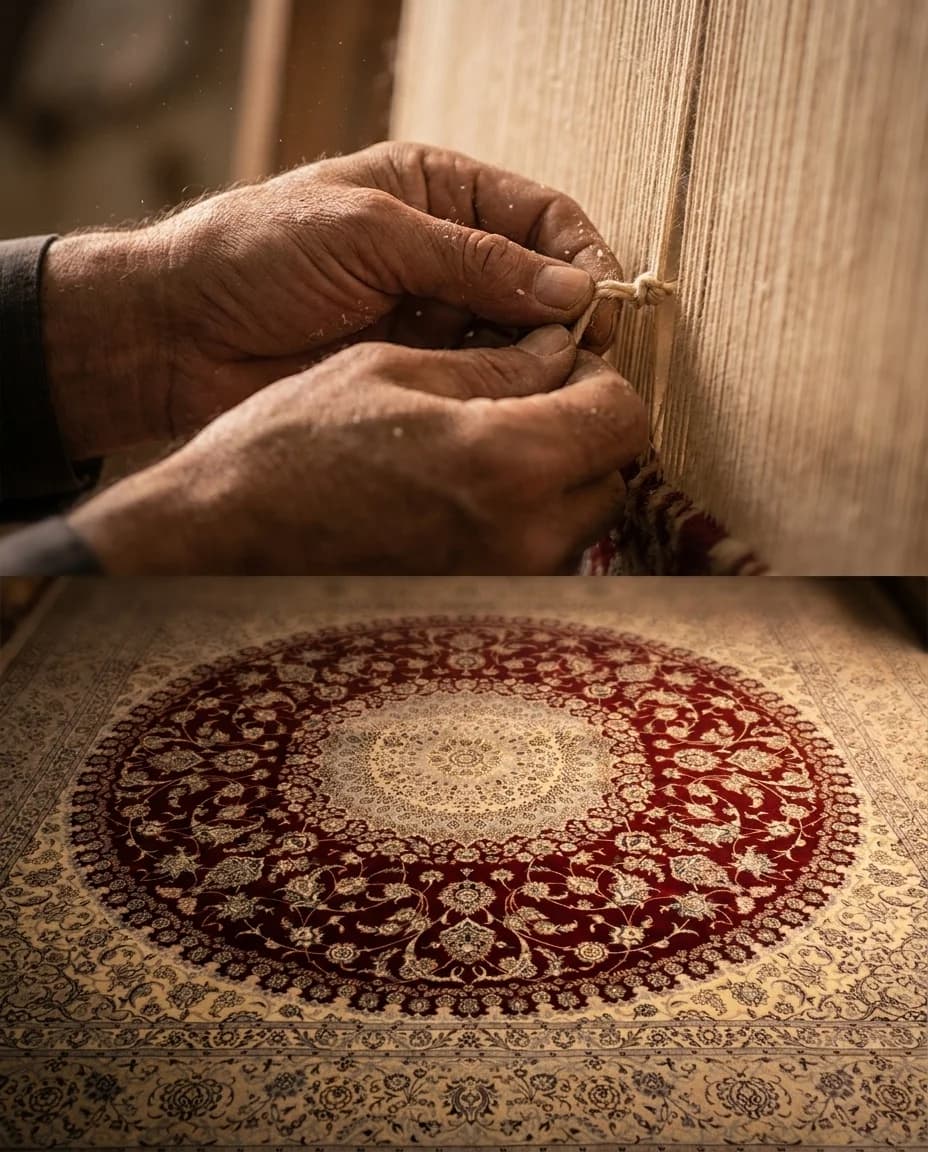
A genuine Persian carpet is not an ordinary floor covering — it is a hand-knotted textile that can hold tens of thousands of knots and last for generations. So when sand, spilled qahwa, or everyday foot traffic dulls its colours, the natural question is: can you safely clean a Persian carpet at home, or will you ruin it? The honest answer is that routine cleaning and most fresh spills can absolutely be handled at home with the right, gentle technique — while a few situations are best left to specialists.
This guide walks you through exactly how we at Al Malakia recommend cleaning a hand-knotted rug in a UAE home: the tools you need, a safe step-by-step wet-clean, the mistakes that cause permanent damage, and how to tell when a job has crossed the line into professional territory. Everything below is written for the realities of Sharjah and Dubai living — fine desert dust, high summer humidity, and homes that run the air conditioning hard.
First, Know What You Are Cleaning
Before you touch water, identify your carpet. The fibre and the construction decide how gently you must treat it. Most pieces in a UAE home fall into one of three groups:
- Wool pile — the most common and the most forgiving. Wool naturally resists dirt and minor staining, and tolerates careful damp cleaning well.
- Wool with cotton or silk highlights — wool field with silk accents in the pattern. Clean as wool, but treat the silk areas with extra care and less moisture.
- Full silk — fine Qum silk and similar pieces. These are delicate, water-sensitive, and should not be wet-cleaned at home at all.
If you are unsure what you own, the construction tells a story. A higher knot density and a finer, more lustrous pile usually signals a more delicate, more valuable piece — our short explainer on What Is KPSI (Knots Per Square Inch) helps you read your own rug. As a rule, the finer and older the carpet, the more conservative your home cleaning should be.
The Tools You Actually Need
You do not need a cupboard of chemicals. Harsh products are the single biggest cause of avoidable damage to hand-knotted rugs. Gather this short list instead:
- A vacuum cleaner with the beater bar / rotating brush switched off (suction only).
- A soft-bristled brush or a clean microfibre cloth.
- A few clean white cotton cloths or white paper towels (white, so no dye transfers onto the carpet).
- A capful of pH-neutral, mild liquid — a tiny amount of wool-safe shampoo or even plain mild dish soap, well diluted.
- Cool or lukewarm water in a bucket or spray bottle.
- A clean sponge and a window squeegee (optional, for moving water along the pile).
Avoid bleach, ammonia, strong stain removers, steam cleaners on silk, and any "oxy" powder — these strip the natural dyes and lanolin that give a Persian carpet its glow.
Step 1: Dry-Clean and Vacuum First
Most of the dirt in a rug is dry grit sitting deep in the pile — and in the UAE that means fine desert dust. Always remove it before any water touches the carpet, because wetting dust turns it into mud that drives deeper into the foundation.
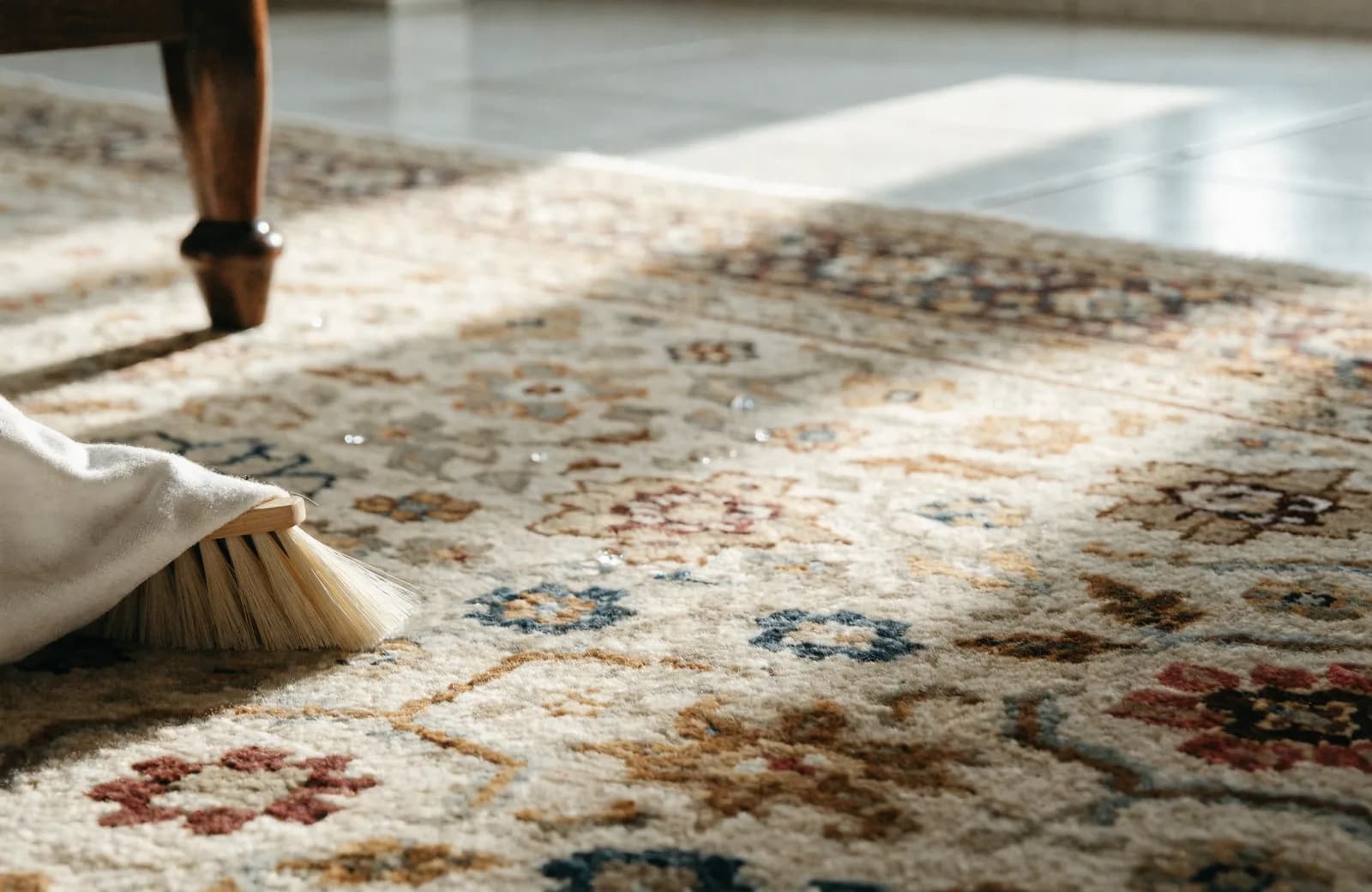
Take the rug outside or to a balcony if you can, flip it over, and gently beat the back or vacuum the reverse side to dislodge embedded grit. Then vacuum the front slowly, in the direction of the pile, suction only. For a small or medium piece, lifting and shaking it out does wonders. Do this part thoroughly; a proper dry clean removes the majority of what dulls a carpet.
Step 2: Test Before You Wet
This single step prevents most disasters. Mix a few drops of your mild soap into cool water until barely sudsy. Dip a white cloth, wring it almost dry, and dab a hidden corner — under furniture or a folded-back edge. Press a dry white cloth on top.
If colour transfers onto either cloth, the dyes are not colourfast and you must stop — this carpet needs professional washing, not a home wash. If the cloths stay clean, you are clear to continue on the rest of the rug.
Step 3: The Gentle Wet-Clean
Work in sections so the carpet never becomes soaked. Lightly dampen your cloth or sponge with the diluted solution — damp, not dripping — and wipe along the pile, always in the direction the fibres lie. Refresh your cloth often. Never scrub in circles; that frays and felts the wool.
Once a section is cleaned, go over it with a second cloth dampened in plain cool water to lift the soap, then blot with a dry towel to pull out as much moisture as possible. The goal is a freshened, lightly damp pile — not a waterlogged rug. A capful of soap for a whole medium rug is plenty.
Step 4: Dealing With Fresh Spills and Stains
Speed beats strength. The moment something spills, blot with a dry white cloth from the outside of the spill inward, lifting liquid out rather than pushing it deeper. Never rub a fresh stain — rubbing spreads it and damages the fibre.
Quick spill responses
- Coffee, tea or qahwa: blot, then dab with cool water and a touch of mild soap; rinse-blot and dry.
- Red wine or juice: blot immediately, dilute with a little cool water, blot again. Do not apply heat.
- Cooking oil or grease: sprinkle cornflour or talc to absorb, leave 15 minutes, vacuum, then treat the residue gently.
- Mud: let it dry fully, crumble and vacuum it away, then spot-clean what remains.
Set-in or stubborn stains on wool need a more careful approach — our detailed walkthrough on Removing Stains from Wool Rugs: Coffee, Wine & Oil covers each type in depth. When a stain has dried in or covers a large area, resist the urge to keep scrubbing; over-treating does more harm than the stain itself.
Step 5: Drying — The Step Most People Get Wrong
In Sharjah and Dubai, drying is where home cleaning succeeds or fails. Trapped moisture in a dense wool pile, combined with humidity, breeds mildew, odour, and dye migration within a day or two. Your aim is to get the carpet fully dry within 24 hours.
- Lay the rug flat — never hang a wet hand-knotted carpet, as the weight of the water can distort its shape.
- Raise it off the floor on a couple of clean towels or a drying rack so air reaches both sides.
- Run a fan across it and keep the air conditioning on; cool, moving, dry air is ideal.
- Keep it out of harsh direct sunlight, which can fade natural dyes unevenly over hours.
- Once dry, gently brush the pile back into its natural direction to restore the nap.
Because UAE homes run the AC so consistently, the wider relationship between cooled air, humidity, and your rug matters all year round — we cover it fully in our Humidity, AC & Persian Carpets: a UAE Care Guide.
What to Use vs. What to Avoid
A quick reference for the home cleaner — safe choices on the left, the products and habits that cause regret on the right.
| Situation | Safe at home | Avoid |
|---|---|---|
| Routine dirt | Suction-only vacuum, soft brush | Beater bar / rotating brush on fringes |
| Cleaning agent | Diluted pH-neutral, wool-safe soap | Bleach, ammonia, "oxy" powders |
| Water temperature | Cool or lukewarm | Hot water, steam on silk |
| Technique | Blot and wipe with the pile | Circular scrubbing, hard rubbing |
| Drying | Flat, fan, AC, within 24 hrs | Hanging wet, harsh direct sun |
| Silk & antiques | Professional washing only | Any home wet-clean |
Caring for the Fringes and Edges
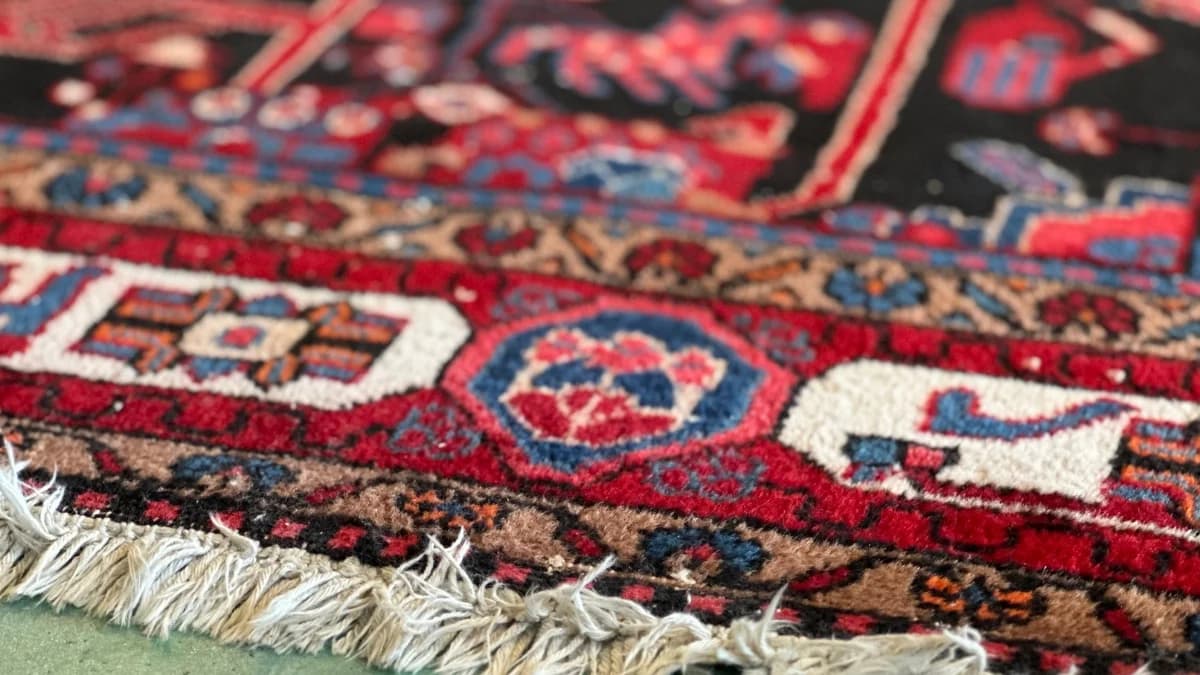
The fringes are not decoration — they are the warp threads that the entire carpet is knotted onto, so they are structurally important and easily damaged. Never let a rotating vacuum brush catch them, as it tears and unravels the foundation. To clean fringes, comb them gently with your fingers or a soft brush, working outward, and spot-clean discolouration with a damp cloth. If fringes are fraying or knotting badly, that is a repair best handled by a specialist rather than a DIY fix.
When NOT to Clean at Home
Knowing your limits protects your investment. Call a professional — and pause any home attempt — when you encounter:
- Silk carpets of any kind, including fine Qum silk pieces. Water and silk are a poor match outside a controlled wash.
- Antique or high-value rugs, where a mistake is costly and often irreversible.
- Dyes that failed the colourfastness test in Step 2.
- Large or deeply soaked areas, pet accidents, or persistent odours that home cleaning cannot reach.
- Mould, moth damage, or structural problems in the foundation or fringes.
A professional hand-wash submerges, flushes, and controls the dry-down in ways a home clean simply cannot — which is why we recommend a deep clean every few years even for carpets you maintain well. If you are in Dubai, our overview of Expert Persian Carpet Cleaning in Dubai explains what a proper professional service involves and how to choose one.
How Often Should You Clean a Persian Carpet?
For a typical UAE household, a simple rhythm keeps a hand-knotted rug looking its best:
- Weekly: suction-only vacuum, and rotate the rug occasionally so wear and sun-exposure stay even.
- As needed: blot spills immediately and spot-clean the moment they happen.
- Once or twice a year: a gentle full home wet-clean as described above, if the piece is wool and colourfast.
- Every 3–5 years: a professional deep wash, sooner for high-traffic majlis rugs.
Carpets in a busy majlis or entrance, or in a home with children and pets, naturally need attention more often than a piece in a formal sitting room.
Why This Matters for the Value of Your Carpet
Cleaning a Persian carpet correctly is not only about appearance — it preserves the wool's lanolin, the dyes' depth, and the foundation's strength, all of which hold the piece's long-term value. A well-kept hand-knotted rug can be enjoyed for decades and passed on; a piece damaged by harsh chemicals or repeated over-wetting loses both its beauty and its worth. That is exactly why gentle, patient, correct care pays for itself.
If you ever want a piece checked, refreshed, or simply identified, the team at Al Malakia is glad to help. You can learn more about Al Malakia, browse our collection of 500+ hand-knotted pieces, or contact us with a photo of your rug for tailored advice — whether or not you bought it from us.
Why Visit Al Malakia Persian Carpets?
- Direct sourcing: Purchased from weavers in Qum, Tabriz, Isfahan, Kashan, and Nain — no intermediaries, transparent provenance.
- Scale of stock: 500+ hand-knotted pieces in the showroom, across sizes from 60×90 cm to 4×6 m.
- Free Dubai transfer: Complimentary door-to-door pick-up from Dubai hotels and homes.
- Family expertise: Founded in 2008 by Eid Al Salam, a second-generation Persian carpet merchant.
- Blue Souk location: Shop 45–48, Central Souq Block 3, King Faisal Road, Sharjah. Open Saturday–Thursday 10:00–22:00, Friday 14:00–22:00.
Contact us or WhatsApp +971 50 537 2997 to arrange your visit or request a consultation.