Quick Facts
Ideal indoor humidity: Keep your home between 40% and 55% relative humidity to protect wool and silk.
The real UAE risk: Outdoor humidity often exceeds 80% in summer, while AC creates dry, cold pockets indoors — carpets sit between these extremes.
Mould threshold: Sustained humidity above 65% for several days lets mould and mildew take hold in wool foundations.
AC danger zone: Vents and split-unit drips can create damp patches and brittle, over-dried fibres in the same room.
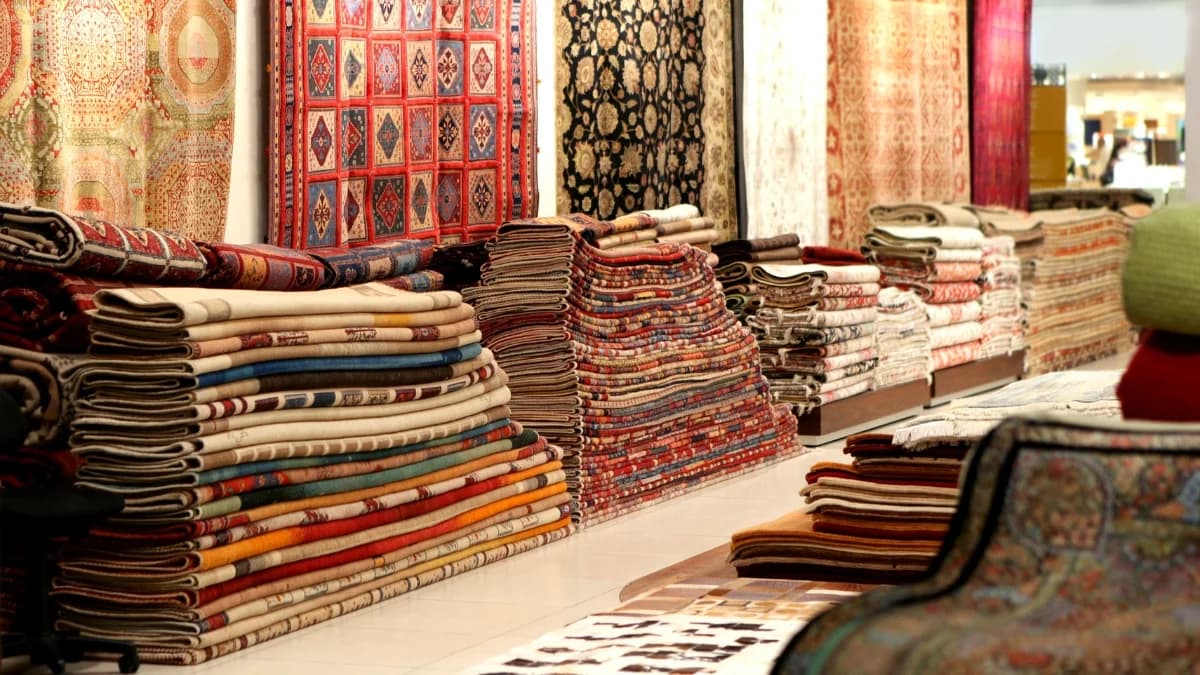
Al Malakia stock: 500+ hand-knotted pieces from Qum, Tabriz, Isfahan, Kashan and Nain, sizes 60×90 cm to 4×6 m, at the Blue Souk in Sharjah.
Free help: Complimentary door-to-door transfer for Dubai clients and on-site care advice from our team.
A hand-knotted Persian carpet is a living object made of natural fibres — wool, silk, cotton and natural dyes — and like every natural material it reacts to the air around it. In the UAE that air is unusually demanding: months of coastal humidity above 80%, followed by air conditioning that runs almost continuously and can leave a room cold and bone-dry. The question we hear most often at our Sharjah showroom is simple: does the UAE climate damage Persian carpets, and what should I actually do about it?
The honest answer is that the climate is manageable — carpets have survived in this region for generations — but only if you understand how moisture and dryness work on natural fibres. This guide explains what humidity and AC do to wool and silk, the indoor levels you should aim for, the seasonal habits that prevent damage, and the warning signs that mean you should act quickly. None of it is complicated, but a little knowledge protects a piece that can last a century.
Why humidity matters to a hand-knotted carpet
Wool is hygroscopic, meaning it constantly absorbs and releases moisture from the surrounding air. In moderate conditions this is a strength: wool naturally regulates humidity and feels comfortable underfoot. The problem begins at the extremes. When the air around a carpet stays very humid for days at a time, the wool foundation holds onto that moisture, and the warm UAE temperatures turn a damp carpet into an ideal environment for mould, mildew and a musty smell that is difficult to remove.
Silk — used in the finest pieces from Qum and the highlights of many Isfahan and Nain carpets — is even more sensitive. It is stronger than wool by weight but reacts faster to humidity swings, and prolonged damp can dull its signature sheen. At the opposite extreme, air that is too dry pulls moisture out of every fibre. Over months this makes wool and especially silk brittle, so the knots and foundation threads become more prone to cracking when the carpet is folded or walked on heavily. The goal, then, is not to chase a single perfect number but to avoid the long stretches at either extreme that the UAE climate naturally produces.
The ideal indoor humidity range
For a Persian carpet in a UAE home, aim to keep indoor relative humidity between 40% and 55%. Within that band wool stays supple, silk keeps its lustre, the natural dyes are stable, and there is far too little moisture for mould to develop. A cheap digital hygrometer — the same kind sold for monitoring nurseries or wine — costs very little and lets you actually see what your rooms are doing rather than guessing.
Here is how the main risk zones compare, and why the 40–55% band is the target:
| Relative humidity | Effect on wool & silk | Risk level |
|---|---|---|
| Below 30% | Fibres dry out and become brittle; silk loses flexibility over time | Moderate — common near AC vents |
| 40–55% | Wool supple, silk lustrous, dyes stable, no mould | Ideal — your target range |
| 55–65% | Generally safe short-term; watch closely in unventilated rooms | Low to moderate |
| Above 65% sustained | Mould and mildew develop in the foundation; musty odour sets in | High — act promptly |
Most UAE homes drift below the ideal band in heavily air-conditioned living rooms and above it in closed, unused rooms during summer. The aim is to nudge both back toward the middle.
How air conditioning affects your carpet
Air conditioning is your single best tool against humidity in the UAE — a working AC system removes moisture from the air as it cools, which is exactly what protects a carpet through the summer. But the same system creates two specific problems if you are not careful.
Cold, dry air at the vents
Directly beneath an AC vent or in front of a split unit, the air is colder and significantly drier than the rest of the room. A carpet placed there can be over-dried for months while the rest of your home sits at a comfortable level. Over time this is where you will first see fibres stiffen and a silk pile lose flexibility. The fix is simple: avoid positioning a fine carpet directly in the path of a vent, and if the layout forces it, rotate the piece every few months so no single edge takes the constant cold draught.
Condensation and drips
Split units and ducted systems produce condensation, and a blocked drain line or a unit working hard in peak summer can drip onto whatever is below. A carpet that catches even slow, repeated drips develops a damp patch that never fully dries in the cold air — a perfect site for mould. Check the wall and floor beneath your indoor units at the start of every summer, and never place a valuable carpet directly under one.
Summer: the high-risk season
From roughly May to September the UAE combines extreme outdoor humidity with the temptation to close up rooms you are not using to save on cooling. That combination — a warm, closed, humid room — is the most common cause of carpet mould we encounter. A guest room, a holiday apartment left empty for weeks, or a majlis used only occasionally can quietly cross the danger threshold.
A few summer habits prevent almost all of it:
- Never seal a room completely. Run the AC periodically even in unused rooms, or at least keep air moving, so humidity cannot build up around a carpet.
- Lift and check. Once a month, fold back a corner of each carpet and feel the back and the floor beneath it. Cold and slightly damp is a warning; bone-dry is what you want.
- Keep carpets off cold floors near windows. Where humid outdoor air meets a cold tiled floor, condensation forms underneath the pile.
- Use a dehumidifier in problem rooms. In a closed majlis or basement-level storage, a small dehumidifier holds the room safely in range when AC alone is not enough.
If you are leaving the country for the summer, the same logic applies on a larger scale, which brings us to storage.
Storing a carpet during long absences
Many UAE residents travel for weeks in summer, and a carpet left in a closed, un-cooled home is genuinely at risk. If a room will sit sealed and warm for an extended period, it is safer to lift and store the carpet properly than to leave it flat on the floor gathering humidity.
Roll the carpet — never fold it, as folds crease the foundation — with the pile facing inward, and wrap it in a breathable cotton sheet or unbleached muslin. Avoid plastic sheeting entirely: plastic traps any moisture already in the fibres and turns the wrap into a humidity chamber. Store the roll flat and raised off the floor, in the coolest, driest part of the home, ideally a room that keeps some air circulation. For longer-term protection against the other great UAE threat, our guide on Protecting Persian Carpets from Moths & Pests in the UAE covers how to store wool safely against insects at the same time.
Spotting trouble early
Damage from humidity and dryness develops slowly, so the residents who avoid it are simply the ones who check. Run through this list every few weeks during summer and once a season otherwise:
- Smell: A musty or earthy odour, especially when you lift a corner, is the earliest sign of mould in the foundation.
- The back of the carpet: Discolouration, dark spots or a clammy feel on the reverse signals trapped moisture.
- Stiffness: A pile or fringe that feels brittle and crackly rather than soft suggests over-drying, often near a vent.
- Fading on one side: Uneven dryness combined with strong light can shift colours unevenly; rotating the carpet evens this out.
- Surface fuzz or white bloom: Any powdery growth on the pile needs immediate attention before it spreads through the knots.
If you catch dampness early, getting air moving and bringing humidity back into range often resolves it before any lasting harm. If you find active mould or a set-in musty smell, that is the point to stop and get professional help rather than soaking the piece yourself.
Cleaning and drying without causing harm
Moisture is exactly why careful drying matters so much when you clean a Persian carpet in this climate. A carpet that is washed or spot-cleaned and then left damp in a humid room can develop mould faster than one that was never cleaned at all. Whenever a carpet gets wet — from cleaning, a spill, or a leak — the priority is to dry it thoroughly and quickly, with good airflow and, ideally, the AC running to pull moisture from the air.
For everyday spills and routine maintenance, our step-by-step guide on How to Clean a Persian Carpet at Home Safely walks through the gentle methods that suit UAE conditions, including how to blot rather than rub and how to dry a wet patch correctly. For a full wash of a fine silk or large room-sized piece, or for any carpet showing mould, a specialist who can wash and machine-dry the carpet in controlled conditions is the safer choice — and one we are always happy to advise on. You can read more about Al Malakia and the way we look after the pieces we sell.
Climate care by carpet type
Not every carpet needs the same level of caution. A robust Afghan or village wool piece is far more forgiving than a fine silk Qum, and matching your care to the carpet saves unnecessary worry.
Coarse wool (Afghan, tribal, village). These hard-wearing pieces — the entry point of our range, with Afghan carpets starting from AED 800 — tolerate humidity swings well and suit busy family rooms and high-traffic areas. Normal AC and the seasonal checks above are usually all they need.
Fine wool (Tabriz, Kashan, Nain). Tighter knots and finer wool reward a steadier environment. Keep them out of direct vent draughts and on stable floors, and they will hold their structure and colour for decades.
Silk and silk-highlight (Qum, fine Isfahan). The most sensitive and the most valuable — fine Qum silk pieces start from AED 8,000 and the rarest room-sized examples reach AED 200,000 or more. These deserve a controlled spot in the home, away from vents and humid corners, with humidity kept firmly in the 40–55% band. If you are considering a silk piece, it is worth seeing how different qualities feel in person; you are welcome to explore our collection at the showroom. For the wider picture of buying and living with these carpets, The Complete Guide to Persian Carpets in the UAE brings the whole subject together.
A simple year-round routine
Put together, climate care for a Persian carpet in the UAE comes down to a short, repeatable rhythm. Keep indoor humidity between 40% and 55% and own a hygrometer so you actually know. Let your AC do its job of drying the air, but keep fine carpets out of direct vent draughts and away from any unit that might drip. Through summer, never fully seal a room with a carpet in it, check the back of each piece monthly, and store carpets properly — rolled, in cotton, never plastic — if you are away for weeks. Dry any carpet quickly and completely whenever it gets wet. Do those few things and the UAE climate becomes a non-issue for a piece built to last generations.
If you would like a second opinion on where a carpet should sit in your home, how to store one for the summer, or whether a damp patch is something to worry about, our team in Sharjah is glad to help — in person or by WhatsApp. Feel free to contact us any time.
Why Visit Al Malakia Persian Carpets?
- Direct sourcing: Purchased from weavers in Qum, Tabriz, Isfahan, Kashan, and Nain — no intermediaries, transparent provenance.
- Scale of stock: 500+ hand-knotted pieces in the showroom, across sizes from 60×90 cm to 4×6 m.
- Free Dubai transfer: Complimentary door-to-door pick-up from Dubai hotels and homes.
- Family expertise: Founded in 2008 by Eid Al Salam, a second-generation Persian carpet merchant.
- Blue Souk location: Shop 45–48, Central Souq Block 3, King Faisal Road, Sharjah. Open Saturday–Thursday 10:00–22:00, Friday 14:00–22:00.
Contact us or WhatsApp +971 50 537 2997 to arrange your visit or request a consultation.