Quick Facts
Main threat: The carpet (clothes) moth and the carpet beetle — their larvae eat the wool and silk pile, not the adults.
Where they hide: Dark, undisturbed areas — under furniture, in storage, along the foundation and fringes where dust and lint collect.
Best defence: Regular vacuuming, rotation, airing, and breaking up the still, dark conditions that larvae need.
UAE factor: Year-round air-conditioning, infrequently used majlis rugs and long summer travel create exactly the undisturbed conditions pests prefer.
Storage rule: Clean first, roll (never fold), wrap in breathable cotton or Tyvek — never sealed plastic.
Where to get help: Al Malakia Persian Carpets, Shop 45-48, Blue Souk, Sharjah, with 500+ hand-knotted pieces in stock and free Dubai pick-up. WhatsApp +971 50 537 2997.
A fine Persian carpet is a living textile of wool, silk and natural dyes, and that is precisely why insects find it appetising. The single most common cause of avoidable, irreversible damage we see at Al Malakia is not spills or sun fading — it is moths and carpet beetles quietly feeding on the pile while no one is watching. The good news is that protecting a hand-knotted rug from pests is almost entirely about habits, not chemicals.
This guide explains how to protect Persian carpets from moths and beetles in the specific conditions of UAE homes: how to recognise the early signs, how the climate and our living patterns play a role, how to prevent infestation, how to store rugs safely, and what to do if you discover damage. Everything here applies whether you own one entry-hall runner or a villa full of room-sized pieces.
What actually eats a Persian carpet
It helps to know your enemy precisely, because the popular image — a fluttering moth chewing holes — is wrong. The adult insects do no damage at all. It is the larvae that feed, and they feed on keratin, the protein in natural animal fibres. Wool is their favourite; silk, hair and felt are also vulnerable. Pure cotton and synthetic rugs are largely safe, which is one practical reason to know exactly what your carpet is made of.
Two culprits dominate in the UAE:
- The webbing clothes moth (and the case-bearing moth). Adults are small, buff-coloured and avoid light; you rarely see them flying. The damage appears as thinning, grazed-looking patches and small irregular holes, often on the underside or in hidden corners.
- The carpet (varied) beetle. Its larvae are tiny, bristly and carrot-shaped. They leave behind shed brown skins that look like dust but are a tell-tale sign. Beetles tend to do more scattered, surface grazing damage across a wider area.
Both share one preference: they want darkness, stillness and a little dirt. Food residue, skin cells, pet hair and dust trapped in the pile feed the larvae as much as the wool itself. That single fact drives almost every prevention strategy below.
Why the UAE climate makes carpets vulnerable
People often assume the Gulf's dry heat protects textiles. In reality, modern UAE living creates near-ideal conditions for carpet pests, for several specific reasons.
Air-conditioning and stable indoor warmth
Larvae thrive in warm, stable, climate-controlled interiors — exactly what your AC maintains twelve months a year. The harsh outdoor summer never reaches the wool under your sofa. Indoor humidity from cooling systems can also rise in pockets, and damp wool is more attractive and easier to digest. We cover the moisture side of this in detail in our Humidity, AC & Persian Carpets: a UAE Care Guide.
The seldom-used majlis
Many Emirati and expat homes have a formal majlis or guest salon that is beautifully dressed with fine rugs and then left undisturbed for weeks. Stillness is the pest's best friend. A rug that is walked on, vacuumed and turned simply does not give larvae the uninterrupted time they need to establish.
Long summer absences
Families frequently travel for six to ten weeks in summer, closing up the house. A rolled or covered rug in a warm, dark, sealed room for two months is a textbook incubator. The infestation you discover in September often began the day you left in July.
Furniture and built-ins
Heavy majlis seating, built-in sofas and storage units create permanently dark, never-vacuumed zones along the carpet edges — the first place we inspect when a client reports a problem.
Early warning signs you should never ignore
Caught in the first weeks, a pest problem is trivial to stop. Left for months, it can cost a significant portion of the carpet's value. Inspect for these signs every time you clean:
- Fine, sand-like grit on the floor beneath the rug — this is often frass (insect droppings) and shed casings, not ordinary dust.
- Bald or thin patches where the pile feels shorter or grazed, especially in low-traffic corners and under furniture.
- Small irregular holes that expose the foundation threads.
- Silky webbing or tiny tubular cases tucked into the pile or along the fringe.
- Loose pile fibres that lift away far too easily when you run your fingers against the nap.
- Small moths near windows or lamps at dusk, or shed beetle skins on skirting boards.
Make a habit of lifting one corner of each rug monthly and checking the back and the underside — pests work where it is darkest, so the visible top surface is the last place damage shows.
How to prevent moths and beetles — the habits that matter
Prevention is overwhelmingly about disturbance, light and cleanliness. None of it is difficult.
1. Vacuum regularly and properly
Vacuum both sides of the rug at least weekly in lived-in areas, and monthly for show pieces. Pay special attention to the edges, fringes and the area under furniture and rugs, where larvae feed undisturbed. For hand-knotted pieces, use suction without an aggressive rotating beater bar, and never vacuum the fringes directly.
2. Rotate and move your rugs
Rotate each carpet 180 degrees every few months. This evens out wear and sun exposure, but just as importantly it disturbs any larvae trying to settle. Occasionally pull the rug right back and clean the floor beneath it.
3. Air and sunlight
Once or twice a year, take rugs outside (or onto a shaded balcony) and air them. Moth larvae dislike light and movement; a few hours of airing and a gentle beating over a line dislodges eggs and larvae. Avoid prolonged harsh midday UAE sun, which fades natural dyes.
4. Keep the pile clean
Because larvae feed on trapped food, skin and oils as much as on wool, a clean carpet is a far less attractive one. Address spills promptly and have fine rugs professionally cleaned periodically. We explain the right method in our guide to expert Persian carpet cleaning in Dubai.
5. Treat the seldom-used rooms
The majlis and guest rooms need the most discipline precisely because they are used least. Schedule them into your cleaning routine even when no guests are expected, and lift the rugs before a long summer trip.
6. Use natural deterrents wisely
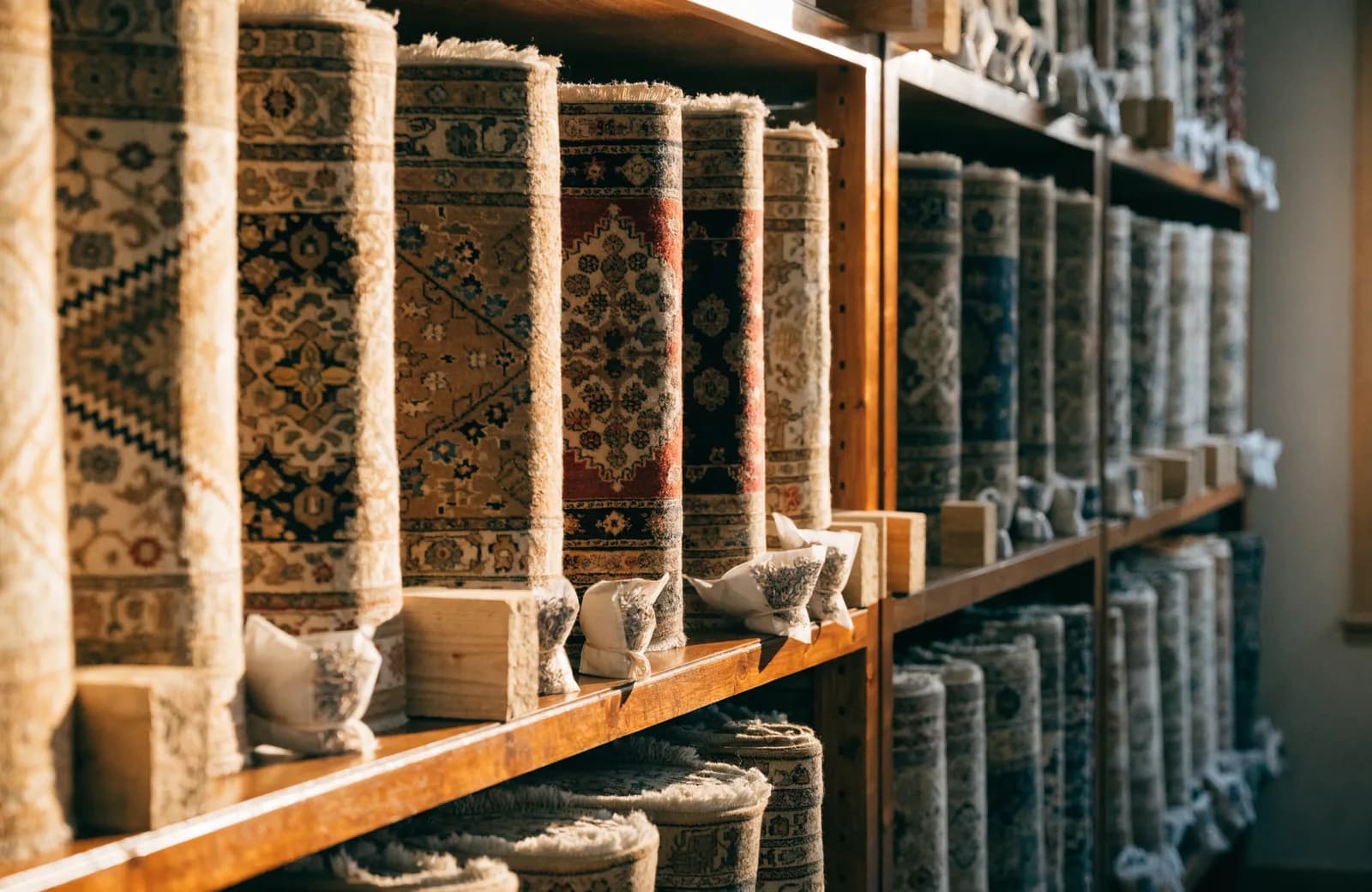
Cedar blocks and dried lavender genuinely repel adult moths and are safe near wool. They do not kill existing larvae, so treat them as a supplement to cleaning, not a substitute. Refresh cedar by lightly sanding it and replace lavender sachets each season.
Natural deterrents vs. chemical treatments
Owners often ask whether to reach for an insecticide spray. For a valuable hand-knotted rug, the honest answer is: prevention and professional treatment beat DIY chemicals almost every time. The table below compares the realistic options.
| Approach | How it works | Effectiveness | Best for |
|---|---|---|---|
| Vacuuming & airing | Physically removes eggs, larvae and food residue; disturbs the colony | High as ongoing prevention | Every carpet, every home |
| Cedar & lavender | Repels adult moths with natural scent | Moderate; deters, does not kill | Storage and quiet rooms |
| Freezing (for small rugs) | Sustained sub-zero cold kills all life stages | High for items that fit a freezer | Small runners and prayer rugs |
| Household insecticide spray | Contact pesticide on the pile | Low to moderate; risks dyes & fibres, misses hidden larvae | Generally not advised for fine rugs |
| Professional moth treatment | Deep clean plus targeted, fibre-safe treatment | High; addresses the whole infestation | Active infestations and valuable pieces |
For a piece that may have cost anywhere from AED 800 for an entry-level Afghan rug to AED 8,000 and well beyond for fine Qum silk, the small risk of bleaching or weakening fibres with a supermarket spray is simply not worth it.
Storing carpets safely — the highest-risk moment
More carpets are lost to pests in storage than anywhere else, because storage delivers exactly what larvae want: darkness and stillness. If you are putting a rug away for the summer, for a move, or while renovating, follow these rules.
- Clean it thoroughly first. Never store a rug with food residue, dust or eggs already in it. A dirty rug in storage is an infestation waiting to happen.
- Roll, never fold. Roll the rug tightly with the pile facing inward, along the length, around a cardboard or fabric tube. Folding creates permanent creases and cracks the foundation.
- Wrap in a breathable material. Use cotton sheeting, unbleached muslin or Tyvek — never sealed plastic, which traps moisture and can rot wool or grow mould.
- Store off the floor in a cool, dry, accessible spot. Avoid hot lofts and damp basements. Add cedar or lavender inside the wrap.
- Inspect every couple of months. Unroll, check, air briefly and re-wrap. This single habit prevents the most expensive surprises.
We go through every step in depth in how to store a Persian carpet properly, including the right materials and tube sizes.
What to do if you already have an infestation
If you find live larvae, webbing or fresh damage, act calmly but quickly — do not simply roll the rug up and hope.
- Isolate the rug so the pests cannot spread to other carpets or textiles nearby.
- Vacuum thoroughly, both sides and the floor and skirting beneath, then dispose of the vacuum contents outside the home immediately.
- For small rugs, sealing them in plastic and freezing for several days can kill all life stages; let them return to room temperature before unwrapping.
- For larger or valuable rugs, have them professionally inspected and treated. A surface vacuum rarely reaches larvae buried deep in the foundation.
- Treat the surroundings too. Larvae migrate to skirting, wardrobes and adjacent rugs, so clean the whole room, not just the affected piece.
Repair is very often possible. Skilled rafoo (reweaving) can rebuild damaged pile and reknot lost foundation so a carpet is whole again — another strong reason to catch the problem early, while the damaged area is still small.
When to bring in Al Malakia
If you are unsure what your rug is made of, whether marks are pest damage or ordinary wear, or how to treat and repair a piece you value, ask us before you experiment. As a family showroom founded in 2008, we handle wool, silk and mixed-fibre carpets from Qum, Tabriz, Isfahan, Kashan and Nain every day, and we can advise on cleaning, storage and reweaving honestly. You are welcome to contact us with photos, or visit the showroom to see how we care for the pieces in our collection. You can also read more about Al Malakia and our sourcing.
Why Visit Al Malakia Persian Carpets?
- Direct sourcing: Purchased from weavers in Qum, Tabriz, Isfahan, Kashan, and Nain — no intermediaries, transparent provenance.
- Scale of stock: 500+ hand-knotted pieces in the showroom, across sizes from 60×90 cm to 4×6 m.
- Free Dubai transfer: Complimentary door-to-door pick-up from Dubai hotels and homes.
- Family expertise: Founded in 2008 by Eid Al Salam, a second-generation Persian carpet merchant.
- Blue Souk location: Shop 45–48, Central Souq Block 3, King Faisal Road, Sharjah. Open Saturday–Thursday 10:00–22:00, Friday 14:00–22:00.
Contact us or WhatsApp +971 50 537 2997 to arrange your visit or request a consultation.