Quick Facts
What is a runner: a long, narrow hand-knotted carpet, typically 80–120 cm wide and 2–6 m long, made for hallways, stairs and entrances.
Best materials for traffic: dense hand-knotted wool (and wool-cotton) outlasts machine-made and pure silk in high-footfall areas.
Width rule: leave roughly 10–20 cm of bare floor on each side of the runner; never let it touch the skirting on both sides.
Stair runners: measured per tread and riser — a typical UAE flight of 13–15 steps needs about 4–5 m of runner length plus extra for the curve.
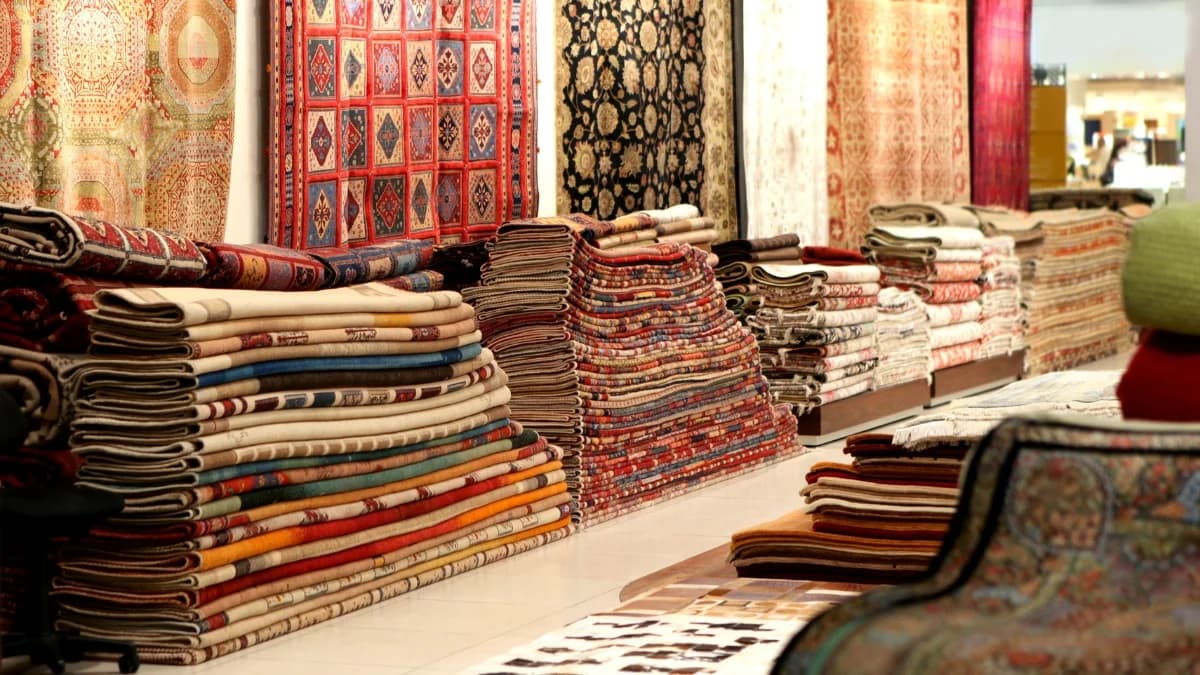
At Al Malakia: we hold 500+ hand-knotted pieces, with Afghan runners from AED 800 and fine Persian runners from Qum, Tabriz and Nain available at our Blue Souk showroom in Sharjah.
Free transfer: complimentary door-to-door pick-up and delivery between Dubai and our Sharjah showroom for measuring and selection.
A hallway is the first thing a guest sees and the last thing they walk over on the way out, yet it is the part of the home most often left bare. The right Persian runner turns a plain corridor or staircase into a considered, welcoming passage — and because hallways and stairs take more footfall than almost any other surface in a UAE villa or apartment, the choice of weave, material and size matters more here than it does in a quiet living room.
This guide answers the practical questions we hear most often at our Sharjah showroom: what size runner fits a hallway, how to measure a staircase, which materials survive heavy traffic, and how to keep a fine hand-knotted runner looking its best in the Gulf climate. Everything below is written for real UAE homes — long villa corridors in Al Barsha, narrow apartment entrances in Sharjah, and the marble staircases common across the Emirates.
What Counts as a Runner — and Where It Belongs
A runner is simply a carpet that is much longer than it is wide. Most are between 80 and 120 cm wide and anywhere from 2 to 6 m long. That elongated shape is purpose-built for passage spaces rather than seating areas, and it appears in several places throughout a home:
- Hallways and corridors — the classic use, guiding the eye and the foot down the length of a passage.
- Staircases — runners fitted to the centre of the treads, softening the walk and protecting marble or wooden steps.
- Entrances and foyers — a welcoming strip just inside the main door, where it also catches dust before it travels deeper into the home.
- Galley kitchens — a washable wool runner in front of the counter, easing long periods of standing.
- Bedside — a short runner along the side of a bed, warm underfoot first thing in the morning.
Persian and Afghan weavers have produced runners for centuries, often woven to fit the long, narrow rooms of traditional houses. Many of the most striking examples come from tribal and village looms, where the elongated format suited the loom itself. If you are weighing a runner against a more conventional rectangular piece, our broader The Right Persian Carpet Size for Every Room: a UAE Guide walks through proportions room by room.
How to Measure a Hallway for a Runner
The single most common mistake is buying a runner that is too short. A runner that stops well before the end of a corridor makes the space feel interrupted; one that runs almost the full length makes it feel intentional and generous.
Use these steps:
- Measure the full length of the hallway floor you want covered, in centimetres.
- Subtract 20–40 cm from each end so the runner stops short of doorways and walls, leaving a clean border of floor.
- Check the width: leave roughly 10–20 cm of bare floor on each side. In a 120 cm-wide hallway, an 80–100 cm runner is ideal.
- Account for doors that swing inward — the runner pile must clear the bottom of the door, especially with thicker hand-knotted weaves.
For very long villa corridors that exceed 6 m, two runners laid end to end — ideally a matched pair — often look better than one outsized piece, and they are far easier to source and to lift for cleaning. At Al Malakia we can frequently supply matching pairs from the same weaving region, and where stock allows, from the same dye lot.
Measuring and Fitting a Stair Runner
Stairs are where measuring becomes genuinely technical, because the runner has to wrap the front edge of every step. To estimate the length you need, measure one step — the tread (the horizontal part you stand on) plus the riser (the vertical face) — then multiply by the number of steps and add a margin.
A typical UAE flight of 13–15 steps, with treads around 28 cm and risers around 18 cm, works out to roughly 4–5 m of runner. Add an extra 15–20% if the staircase curves or has a landing, and always over-order rather than under-order: a stair runner cut short cannot be extended.
A few practical notes for Gulf homes:
- Marble and polished stone are slippery, and a wool runner adds real grip and safety — a genuine benefit in homes with children or elderly family members.
- Width on stairs is usually 60–80 cm, centred on the step so a margin of bare stone shows on each side.
- Fixing is best done with a professional using stair rods or hidden grippers rather than adhesive, so the runner can be lifted and rotated to even out wear.
Because staircase wear is concentrated on the nose of each tread, we always recommend a tightly knotted, robust weave here rather than a delicate fine piece.
Choosing the Right Material for Heavy Traffic
This is where the difference between a runner and a living-room carpet really shows. A runner is walked on, not sat beside, so density and fibre choice decide how it will look in five years' time.
Wool: the default for passages
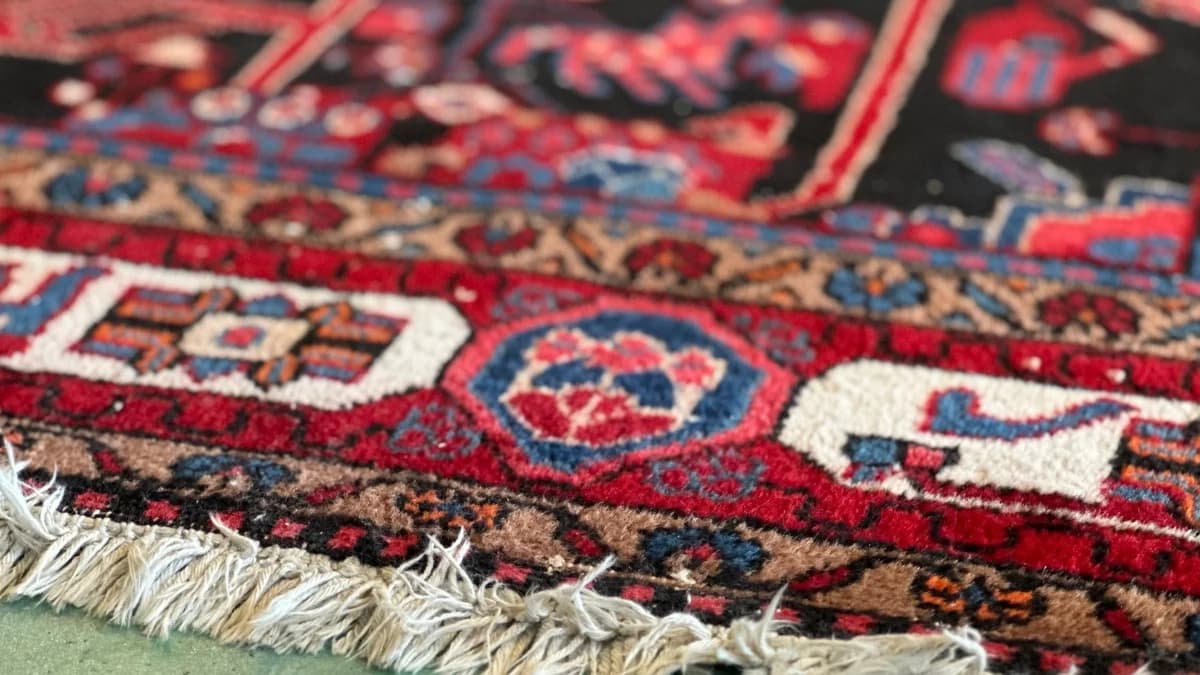
Hand-knotted wool is the right answer for the great majority of hallway and stair runners. Wool is naturally springy, hides soil well, resists crushing underfoot, and is far more forgiving of spills than people expect. Afghan and tribal Persian wool runners are particularly suited to this role — hard-wearing, richly coloured and reasonably priced. You will find many of these in our collection, with entry-level Afghan runners starting from AED 800.
Wool with cotton or silk highlights
A wool pile on a cotton foundation gives a crisp, stable runner that holds its shape in a corridor. Small silk highlights within a wool field add a subtle sheen without sacrificing durability — a sensible middle ground for an entrance you want to feel a little more refined.
Pure silk: beautiful, but not for stairs
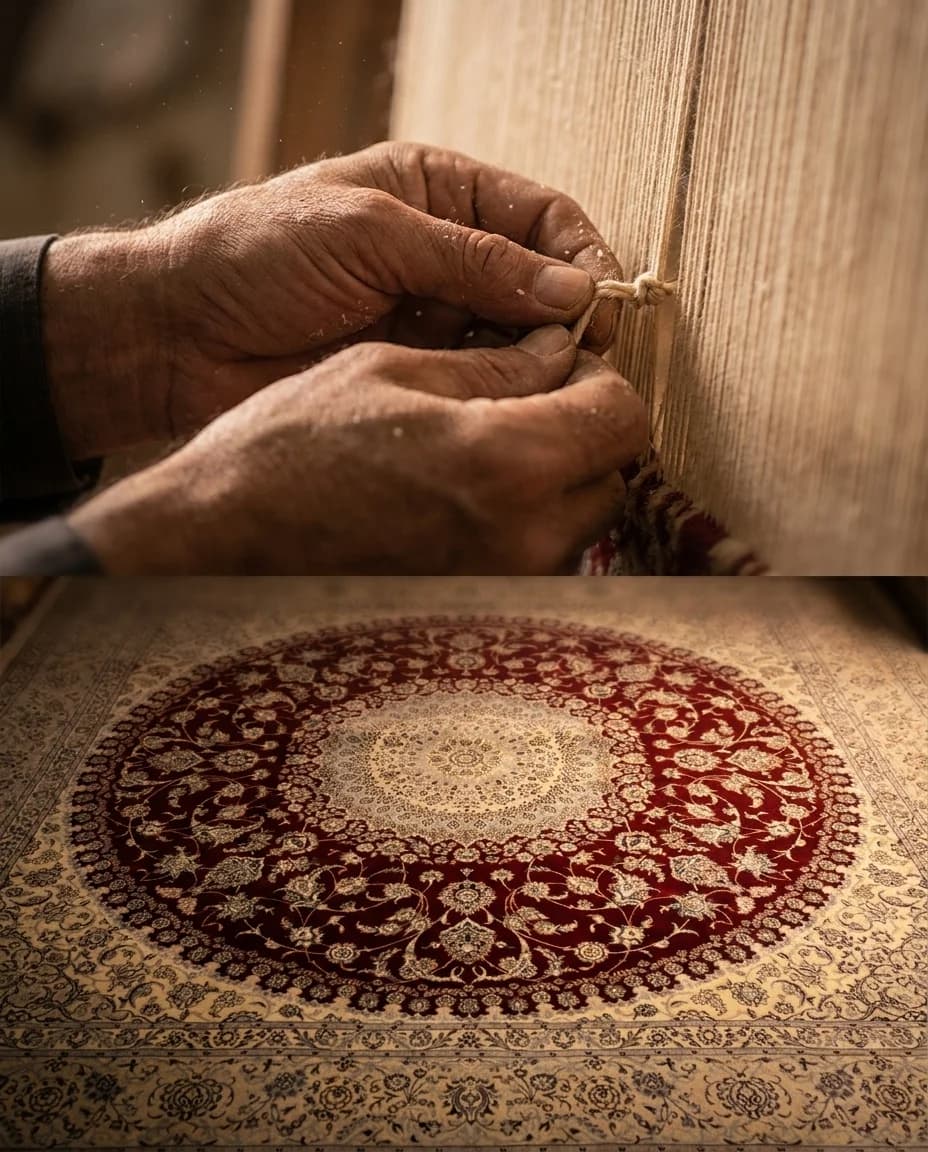
Fine Qum silk runners are exquisite, with a luminous sheen and astonishing knot density, and they start from around AED 8,000. But pure silk is best reserved for a low-traffic foyer or a display position, not a daily staircase. Silk shows footprints and crushes under constant footfall in a way wool does not.
| Material | Durability in traffic | Best placement | Indicative price (Al Malakia) |
|---|---|---|---|
| Afghan / tribal wool | Excellent | Hallways, stairs, entrances | From AED 800 |
| Persian wool (Tabriz, Nain) | Very good | Formal corridors, foyers | Mid-range |
| Wool with silk highlights | Good | Refined entrances | Upper mid-range |
| Pure Qum silk | Delicate | Low-traffic foyers, display | From AED 8,000+ |
Colour, Pattern and the UAE Home
Hallways are usually shorter on natural light than living rooms, so colour does a lot of work. A few principles we share with clients at the showroom:
- Deeper grounds hide traffic. A runner with a madder-red, indigo or charcoal ground disguises dust and footmarks between cleans far better than a pale, open field.
- Busy patterns are forgiving. An all-over Herati or boteh design hides the inevitable small marks of a working corridor; a large open medallion shows every speck.
- Repeat the home's palette. Pick up one accent already present elsewhere — a blue from a majlis cushion, a terracotta from floor tiles — so the runner reads as connected rather than dropped in.
If your interior leans contemporary, a runner need not look traditional or heavy. Many tribal and Gabbeh runners are bold, geometric and surprisingly modern. Our guide to Mixing Persian Carpets with Modern & Minimalist Furniture shows how a hand-knotted runner sits comfortably alongside clean-lined, minimalist interiors.
Living with a Runner in the Gulf Climate
The UAE climate is kind to wool in some ways and demanding in others. Indoors, air conditioning keeps humidity low and stable, which suits hand-knotted carpets well. The main considerations are dust, the heavy traffic a passage attracts, and the occasional spill near an entrance.
Everyday care
- Vacuum in the direction of the pile once or twice a week, and avoid a rotating beater bar on fine pieces.
- Rotate the runner end-to-end every few months so foot traffic wears it evenly — especially important on stairs and near doors.
- Use a quality underlay beneath hallway runners. It stops slipping on polished floors, cushions footfall, and dramatically extends the life of the pile.
- Blot spills immediately with a clean cloth and cool water; never rub, and never use harsh detergent on a hand-knotted piece.
Periodic care
A genuine hand-knotted runner should be professionally hand-washed every few years, not steam-cleaned like a machine-made rug. Done correctly, a quality wool runner will comfortably outlast a generation of cheaper alternatives — one of the quiet economies of buying hand-knotted in the first place. To understand the family expertise behind every piece we sell, read more about Al Malakia.
Buying a Runner in the UAE: Sharjah, Dubai and Beyond
Runners are one of the few carpet categories where it genuinely pays to see the piece in person before buying. Length, drape, pile height and how a colour reads under real light all matter, and a runner that looks right on a screen can sit wrong in a narrow corridor.
At our Blue Souk showroom in Sharjah, we keep a deep selection of runners across regions, sizes and price points, and our team can advise on exactly what will suit your hallway or staircase. For clients in Dubai, we offer free door-to-door transfer: we can collect you, or bring a selection of runners to measure against your space, and deliver the final piece to your home. Customers in Abu Dhabi and Al Ain can choose from photos and video we send on WhatsApp, and we deliver free anywhere in the UAE. If you would like to plan a visit or talk through a staircase project, contact us and we will arrange it around your schedule.
For larger homes where the hallway is only one of several spaces being furnished, it is worth coordinating the runner with the carpets in adjoining rooms. Our guide to Persian Carpets for Dubai Villas: Sizing Guide covers how to scale and harmonise pieces across a whole villa.
Why Visit Al Malakia Persian Carpets?
- Direct sourcing: Purchased from weavers in Qum, Tabriz, Isfahan, Kashan, and Nain — no intermediaries, transparent provenance.
- Scale of stock: 500+ hand-knotted pieces in the showroom, across sizes from 60×90 cm to 4×6 m.
- Free Dubai transfer: Complimentary door-to-door pick-up from Dubai hotels and homes.
- Family expertise: Founded in 2008 by Eid Al Salam, a second-generation Persian carpet merchant.
- Blue Souk location: Shop 45–48, Central Souq Block 3, King Faisal Road, Sharjah. Open Saturday–Thursday 10:00–22:00, Friday 14:00–22:00.
Contact us or WhatsApp +971 50 537 2997 to arrange your visit or request a consultation.