Locations compared: DIFC (Gate Village), Dubai Mall (Fashion Avenue), Blue Souk Sharjah (Central Souq, Block 3)
Al Malakia founding year: 2008 — family-owned, sourcing directly from weavers in Iran
Knot density range at Al Malakia: 120 KPSI (Tabriz wool) up to 900+ KPSI (Qum silk)
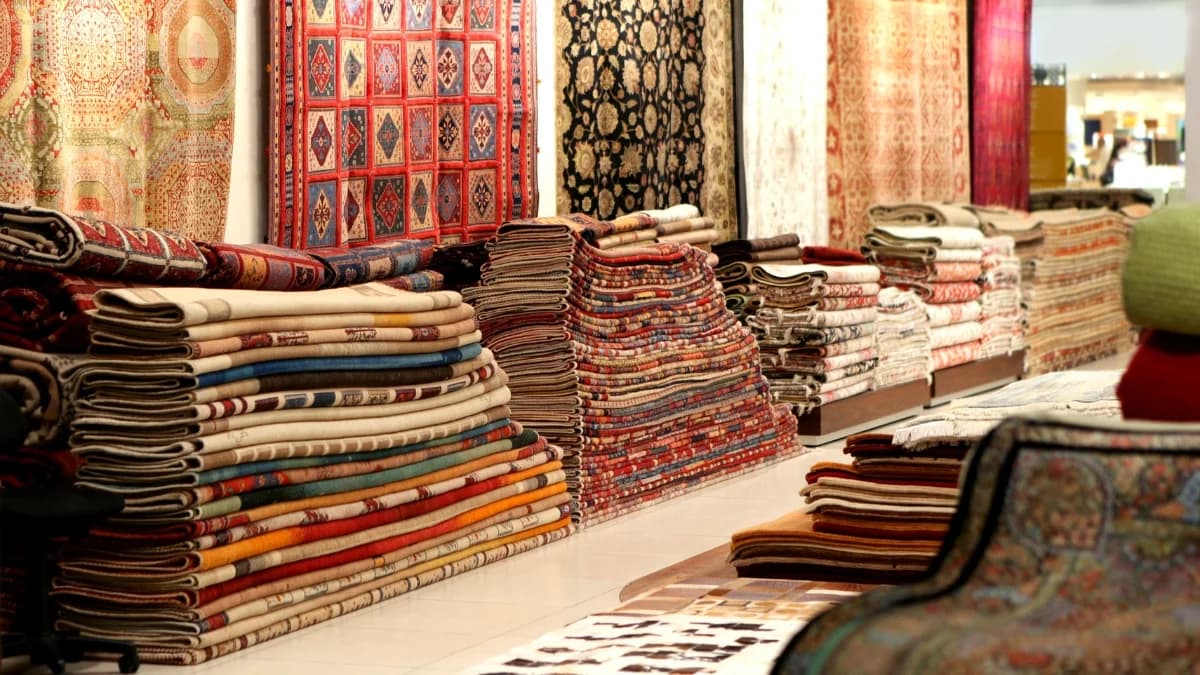
Showroom stock: 500+ hand-knotted Persian and Afghan carpets on display
Drive time from Downtown Dubai: approximately 25–35 minutes to Blue Souk Sharjah via E11
Free transfer service: door-to-door from Dubai hotels; Abu Dhabi and Al Ain customers can choose from photos and video on WhatsApp, with free delivery anywhere in the UAE
There are roughly a dozen venues in the UAE where you can walk in, handle a carpet, and leave with a genuine hand-knotted piece. Three of the most frequently searched are the galleries clustered around DIFC's Gate Village, the retail units inside Dubai Mall's Fashion Avenue, and the family-run showrooms inside Sharjah's Central Souq — known locally as the Blue Souk. Each location serves a different buyer profile, carries a different calibre of stock, and operates at a different price point. This comparison draws on direct experience of all three areas to give you a factual basis for choosing where to spend your time and money.
What "Persian Carpet" Actually Means — and Why It Matters Here
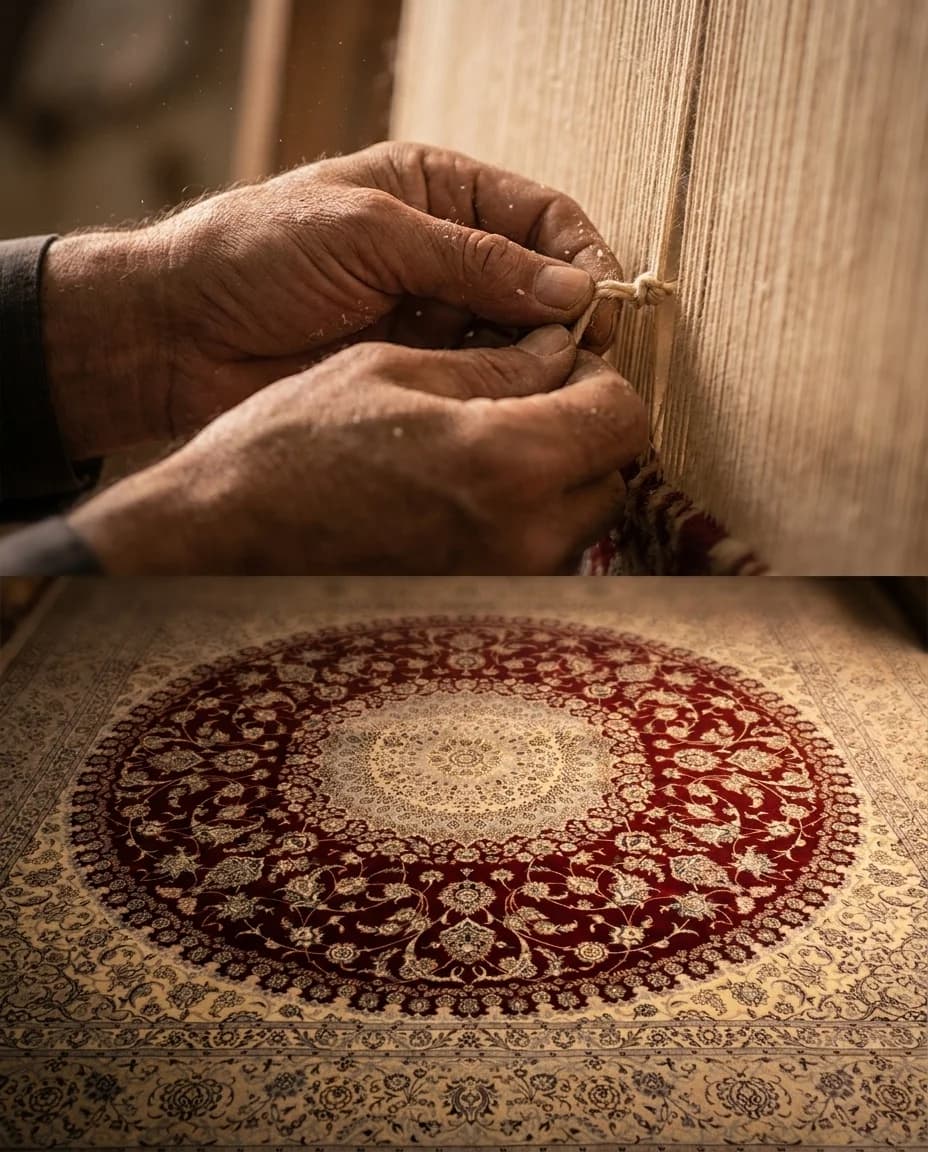
The term covers hand-knotted rugs produced in Iran using the Persian (Senneh) knot or Turkish (Ghiordes) knot, in weaving cities including Qum, Tabriz, Isfahan, Kashan, and Nain. Knot density — measured in knots per square inch (KPSI) — is the primary technical indicator of quality and time investment. A Tabriz wool carpet typically registers 120–200 KPSI; a Qum silk piece can exceed 900 KPSI. These numbers directly determine price, durability, and the fineness of design detail. Any retailer unable to quote KPSI or confirm city of origin deserves scepticism.
Persian Carpets in DIFC: Gallery Positioning and What to Expect
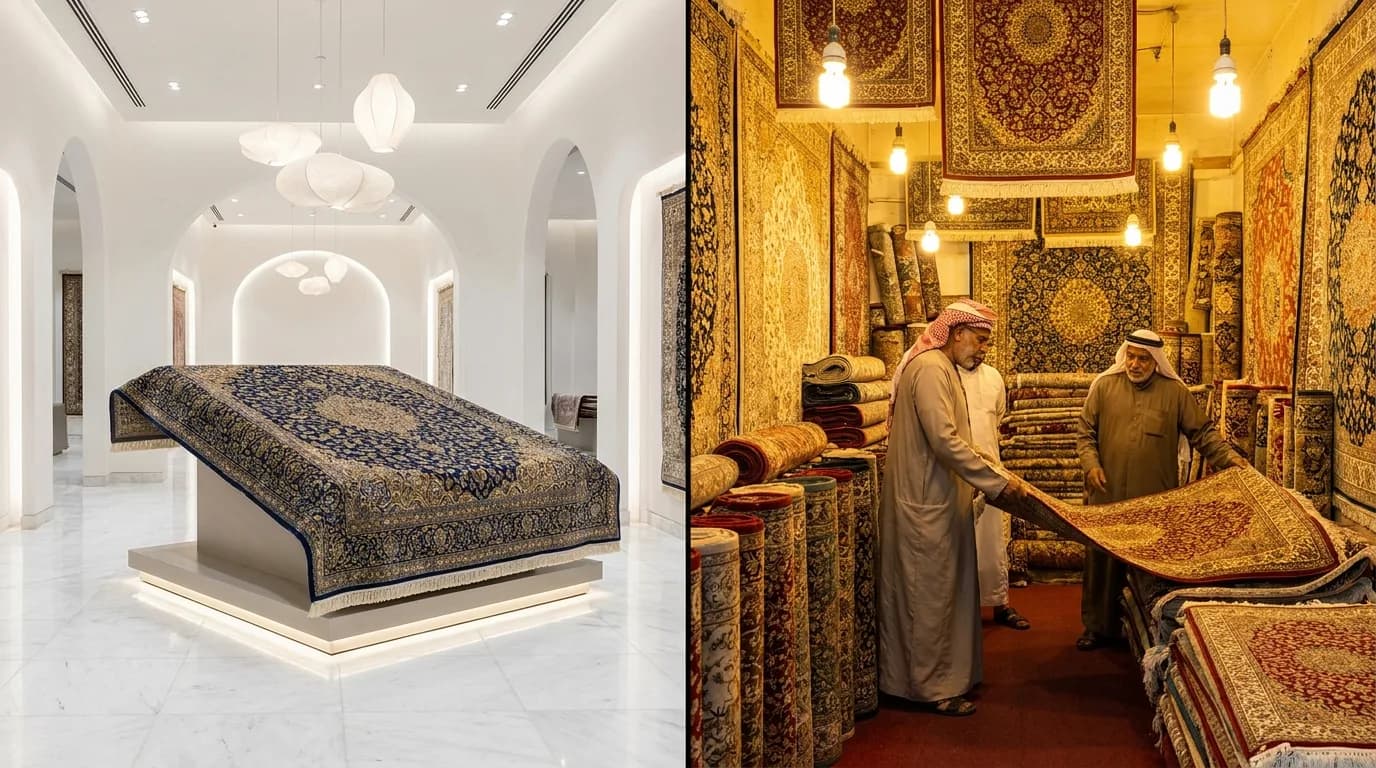
DIFC's Gate Village hosts a small number of high-end art and interior galleries, and a handful carry Persian carpets as part of a broader luxury furnishings offer. The positioning is deliberate: DIFC targets finance professionals, collectors, and hotel procurement teams. Foot traffic is low and prices reflect overhead costs in one of Dubai's most expensive commercial districts. You will find curated selections — often limited to 20–50 pieces — with an emphasis on rare or antique items. Provenance documentation is generally available at this level, which is a genuine positive. However, the restricted stock means you are unlikely to compare ten Kashan pieces side by side, or find a mid-range Tabriz at an accessible entry price. Persian carpets DIFC galleries are best suited to buyers with a defined brief and a high ceiling budget.
Persian Carpets in Dubai Mall: Retail Format and Volume
Dubai Mall's Fashion Avenue and surrounding retail corridors include several carpet and homeware concessions. The format here is closer to mainstream retail: standardised display, mixed stock that often combines hand-knotted, hand-tufted, and machine-made pieces within the same showroom, and sales staff whose knowledge depth can vary significantly. Foot traffic is very high, which creates a different negotiation dynamic than a specialist showroom. Pricing can be competitive on entry-level pieces, but the provenance trail on mid-range items is less consistently documented. If you are buying a carpet primarily as a decorative item and origin is secondary, the convenience factor is real. If origin, knot count, and weaver traceability matter to you, the environment works against careful evaluation.
Persian Carpets in Sharjah's Blue Souk: The Specialist Case
Sharjah's Central Souq — built in 1978 and commonly called the Blue Souk for its distinctive tiled façade — houses the UAE's highest concentration of specialist Persian carpet dealers. Block 3 in particular has been a trading hub for Iranian carpet families for decades. Al Malakia Persian Carpets has occupied Shops 45–48 in this block since 2008, run by the founding family who source directly from weavers in Qum, Tabriz, Isfahan, Kashan, and Nain. The showroom holds 500+ hand-knotted pieces at any one time, meaning you can physically compare a Qum silk against a Nain wool-on-silk, assess pile height, examine the back of the knot, and take your time. Overheads are lower than DIFC, and that difference is passed through to pricing. For serious buyers — first-time purchasers through to collectors adding a fifth piece — this environment supports the kind of informed decision that a curated gallery or a retail concession typically cannot.
Head-to-Head Comparison
| Factor | DIFC Galleries | Dubai Mall Retail | Blue Souk Sharjah (Al Malakia) |
|---|---|---|---|
| Stock volume on display | 20–50 pieces (curated) | 50–150 pieces (mixed types) | 500+ hand-knotted pieces |
| Knot density documentation | Usually available | Inconsistent | Provided on request |
| Origin traceability | High (antique/rare focus) | Variable | Direct from Iranian weavers |
| Price positioning | Premium to high | Entry to mid (some high) | Mid to high (lower overhead) |
| Free transfer from Dubai | No | No | Yes — door-to-door from Dubai hotels |
| Specialist knowledge depth | High (gallery staff) | Variable | Second-generation merchant |
| Drive time from Downtown Dubai | 10 min | 5–10 min | 25–35 min via E11 |
The Price Question: Is DIFC or Sharjah Cheaper?
Neither is categorically cheaper — they serve different tiers. An antique Qum silk in a DIFC gallery might be priced at AED 80,000–200,000 with corresponding provenance paperwork. A contemporary Qum silk of comparable technical quality at Al Malakia in Sharjah might fall in the AED 15,000–60,000 range depending on size and knot density, because the commercial rent differential between Gate Village and Block 3 of the Blue Souk is substantial. Dubai Mall pricing sits broadly in between, though the mix of hand-knotted and machine-made stock makes direct comparison difficult without careful scrutiny. The honest answer: if you know how to read the back of a carpet and ask the right questions, Sharjah delivers more purchasing power per dirham on hand-knotted originals.
Logistics: Getting to Each Location from Dubai
DIFC is straightforward — Metro Gate 1 or a five-minute taxi from Downtown Dubai. Dubai Mall connects directly to the Burj Khalifa/Dubai Mall Metro station. The Blue Souk in Sharjah requires approximately 25–35 minutes by car from Downtown Dubai via the E11 (depending on traffic), or around 20 minutes from Deira. Al Malakia addresses this directly: we offer free door-to-door transfer from Dubai hotels, removing the logistics barrier entirely. Customers in Abu Dhabi and Al Ain can choose from photos and video sent on WhatsApp +971 50 537 2997, with free delivery anywhere in the UAE. The Blue Souk is open Saturday–Thursday 10:00–22:00 and Friday 14:00–22:00.
What Experienced Buyers Look For — Regardless of Location
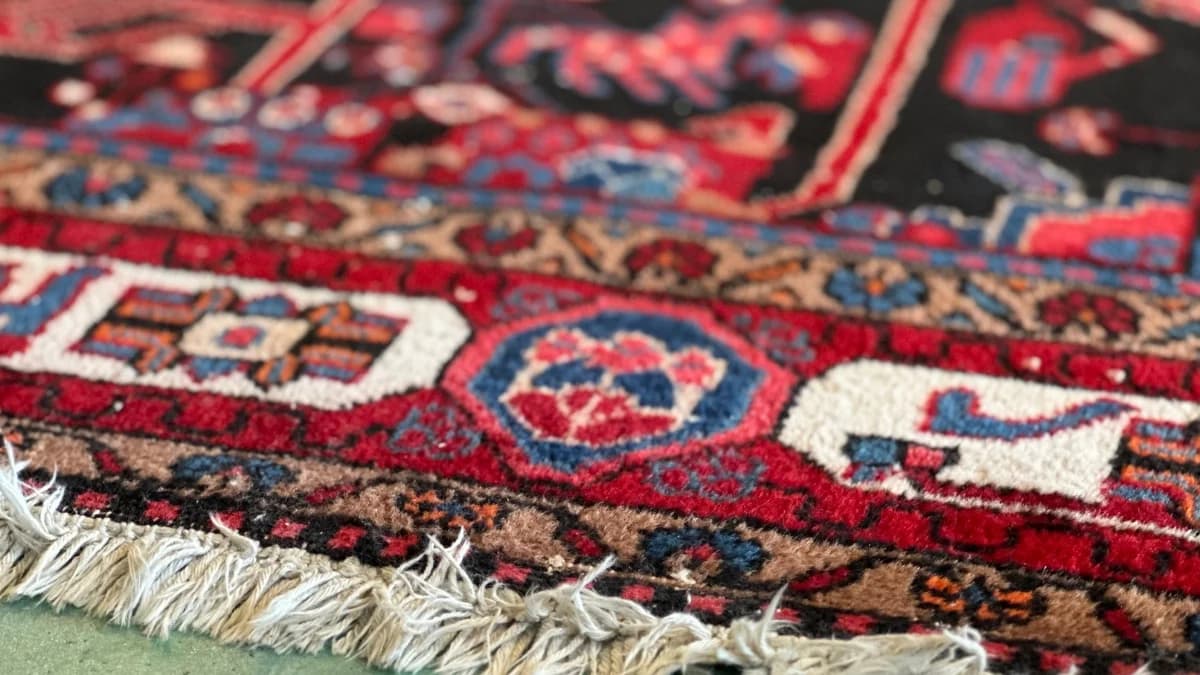
- Turn the carpet over. The back should show the knot structure clearly. On a genuine hand-knotted piece, individual knots are visible and consistent.
- Ask for KPSI. Any specialist should be able to give you a figure or calculate it with you on site.
- Confirm the city of origin. Qum, Tabriz, Kashan, Isfahan, and Nain each have distinct structural signatures. Vague answers ("Iranian carpet" without city) warrant follow-up questions.
- Check the pile material. Silk, wool, and wool-on-silk have different handle, sheen, and price profiles. Run your hand both with and against the pile.
- Ask about the dye. Vegetable dyes (madder, indigo, pomegranate rind) age gracefully. Synthetic chrome dyes are not inherently inferior but behave differently over decades.
For a full breakdown of what to look for before purchasing, our guide to buying Persian carpets in Dubai covers these criteria in detail alongside neighbourhood-by-neighbourhood sourcing advice.
Why Visit Al Malakia Persian Carpets in Sharjah
Al Malakia has operated from Shops 45–48, Central Souq Block 3, Sharjah since 2008 — a family business now in its second generation, sourcing directly from weavers in Qum, Tabriz, Isfahan, Kashan, and Nain. The showroom holds 500+ hand-knotted Persian and Afghan carpets, and every piece can be examined in full: turned over, compared side by side, and discussed with someone who has spent a lifetime in the trade. Free door-to-door transfer is available from Dubai hotels. Customers in Abu Dhabi and Al Ain can choose from photos and video sent on WhatsApp, with free delivery anywhere in the UAE.
- Address: Shop 45–48, Central Souq Block 3, King Faisal Road, Sharjah
- Phone: +971 6 573 1399 | +971 50 537 2997
- WhatsApp: +971 50 537 2997
- Hours: Sat–Thu 10:00–22:00, Fri 14:00–22:00
Browse our Persian carpet collection or get in touch before you visit.
Frequently Asked Questions
Are Persian carpets in DIFC galleries authentic hand-knotted pieces?
The established DIFC galleries generally carry authentic hand-knotted carpets, often with a focus on antique or rare pieces with provenance documentation. The stock volume is limited and the price positioning is high, reflecting both the quality tier and the commercial overhead of Gate Village. If authenticity is your primary concern and budget is not a constraint, DIFC galleries are a credible option. For buyers who want to compare a wider range of origins, sizes, and price points, a specialist showroom with larger stock — such as Al Malakia in Sharjah — allows more informed comparison.
How long does it take to get from Dubai to the Blue Souk in Sharjah?
From Downtown Dubai or DIFC, the drive to Sharjah's Central Souq (Blue Souk) takes approximately 25–35 minutes via the E11 highway during off-peak hours. During peak times — particularly weekday evenings — allow 45–60 minutes. Al Malakia offers free door-to-door transfer from Dubai hotels, which eliminates the need to arrange your own transport. Contact the showroom on WhatsApp +971 50 537 2997 to schedule a pickup time.
What is the difference between a Qum silk and a Tabriz carpet?
Qum (also spelled Qom or Ghom) carpets are produced in the city of Qum in central Iran and are typically woven entirely in silk, achieving knot densities of 400–900+ KPSI. They are characterised by fine floral or pictorial designs and a luminous sheen. Tabriz carpets, from the northwestern city of Tabriz, are woven in wool, silk, or wool-on-silk combinations, with densities typically ranging from 120–400 KPSI. Tabriz pieces tend to be larger and are available across a wider price range. Both are considered among the finest UNESCO-recognised Persian carpet weaving traditions.
Is it possible to visit Al Malakia from Abu Dhabi?
Yes. The drive from Abu Dhabi to the Blue Souk in Sharjah takes approximately 90–110 minutes depending on traffic. If you would rather not make the trip, Al Malakia can send photos and video on WhatsApp for you to choose from, with free delivery anywhere in the UAE. Contact the showroom on WhatsApp +971 50 537 2997 or by phone on +971 6 573 1399 to discuss options. You can also find more information on the Abu Dhabi visitor page.
Do Dubai Mall carpet retailers sell genuinely hand-knotted carpets?
Some do, but the retail environment in Dubai Mall does not make it straightforward to verify. Many showrooms display hand-knotted, hand-tufted, and machine-made carpets without clear visual distinction between them. Hand-tufted carpets — made with a tufting gun rather than individual tied knots — have a canvas backing (often covered with fabric) and lack the knot structure visible on the back of a genuine hand-knotted piece. Before purchasing anywhere, turn the carpet over and examine the back. If the knot structure is not clearly visible, ask direct questions about the construction method.
Where can I read more about buying Persian carpets in Dubai and the UAE?
Our detailed 2026 guide to buying Persian carpets in Dubai covers all major sourcing areas, what to look for in terms of quality indicators, and how to evaluate price relative to origin and knot density. It is written from the perspective of a second-generation merchant with direct sourcing relationships in Iran.
Choosing between Persian carpets DIFC, Dubai Mall, and Sharjah ultimately comes down to what you are buying and how much due diligence you want to be able to do before committing. If you want to handle 500+ pieces in a single visit, speak directly with someone who has sourced them from the weaving city, and make your decision without time pressure, the 30-minute drive to Al Malakia at the Blue Souk pays for itself. WhatsApp +971 50 537 2997 to arrange a free transfer from your Dubai hotel, or read more about the family and the sourcing process before you visit.