Drive time, Dubai Marina to Al Malakia: 25–35 minutes via Sheikh Mohammed Bin Zayed Road
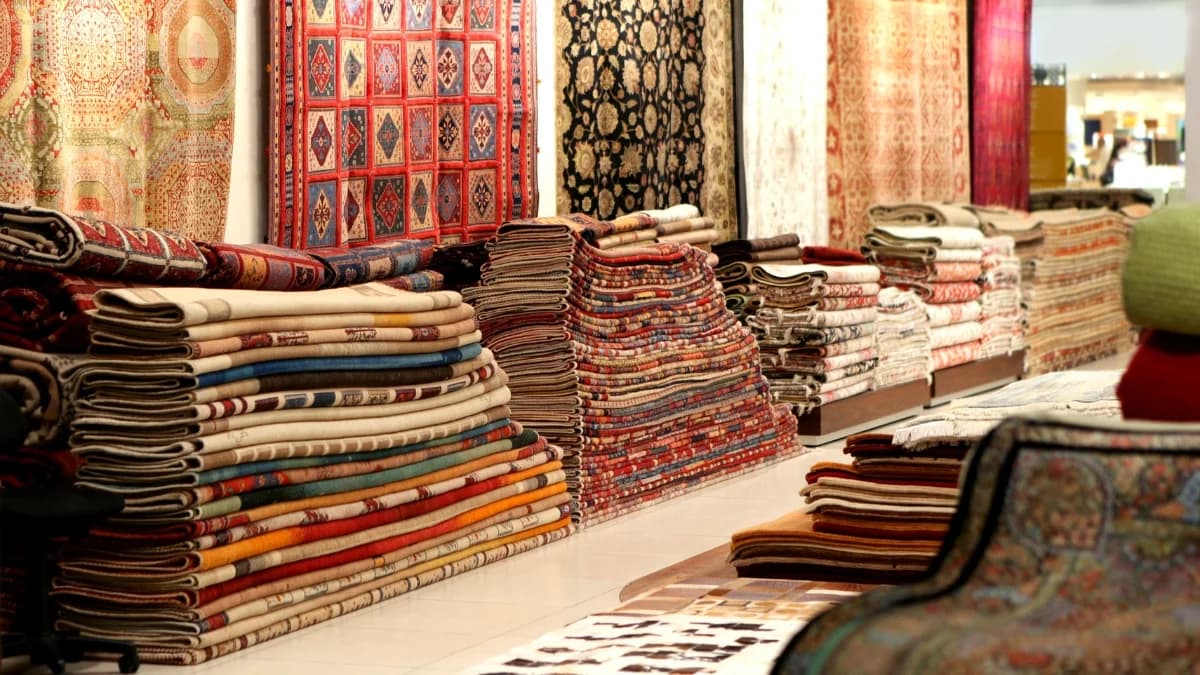
Showroom stock: 500+ hand-knotted Persian and Afghan carpets on display at any one time
Knot density range: 80 KPSI (tribal Afghan) to 900+ KPSI (Qum silk)
Price range: AED 800 (small tribal pieces) to AED 120,000+ (fine Qum silk, room-size)
Founding year: Al Malakia Persian Carpets established 2008, Blue Souk, Sharjah
Origins stocked: Qum, Tabriz, Isfahan, Kashan, Nain (Iran) + Afghan tribal weaves
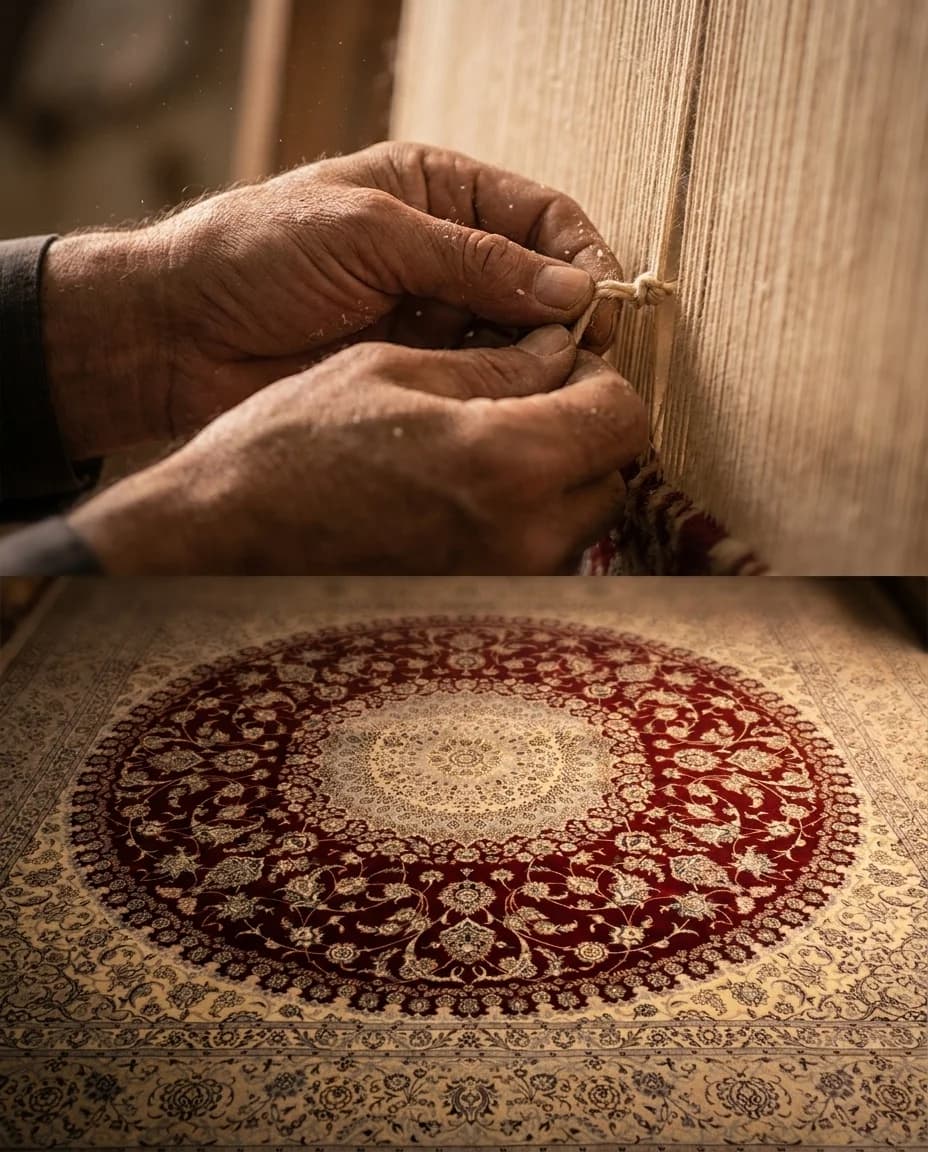
A hand-knotted carpet from Qum can contain more than 900 knots per square inch — a density that takes a master weaver two to three years to complete a single room-size piece. That technical reality is the most important thing to understand before you set foot in any rug shop, whether in Dubai or Sharjah. The market across both emirates includes everything from genuine antique pieces to machine-made reproductions sold at "hand-knotted" prices. This guide gives you a factual breakdown of what to expect in each location, what questions to ask, and why a 30-minute drive from Dubai to Sharjah's Blue Souk often produces better results than shopping closer to home.
The Dubai Persian Rug Market: What You Will Actually Find
Dubai's carpet retail scene is concentrated in a handful of areas: the Deira Old Souk corridor near the Gold Souk, the carpet shops along Al Fahidi Street, and the dedicated Carpet Souk in Al Quoz. The inventory in these locations varies enormously in quality. Some merchants carry authentic hand-knotted pieces sourced from Iranian and Afghan weavers; others stock hand-tufted or machine-made rugs that resemble hand-knotted work to the untrained eye. Pricing in Dubai's tourist-facing areas frequently includes a significant location premium — you are paying partly for the postcode.
The Al Quoz Carpet Souk, located in an industrial zone, offers more competitive pricing and a broader range of origins. However, provenance documentation — certificates stating the region, weave type, and approximate age — is inconsistent across retailers. If you are spending AED 10,000 or more, provenance matters for resale and insurance purposes.
For a broader overview of the Dubai carpet market, see our dedicated guide: Where to Buy Persian Carpets in Dubai (2026 Guide).
The Sharjah Persian Rug Market: Why It Operates Differently
Sharjah's carpet retail economy is structured differently from Dubai's. The emirate has a stronger tradition of family-owned trading houses with long-standing supplier relationships in Iran and Afghanistan. Lower commercial rents mean less pressure to mark up aggressively, and the customer base includes a large proportion of serious collectors and interior designers — buyers who prioritise authenticity over convenience.
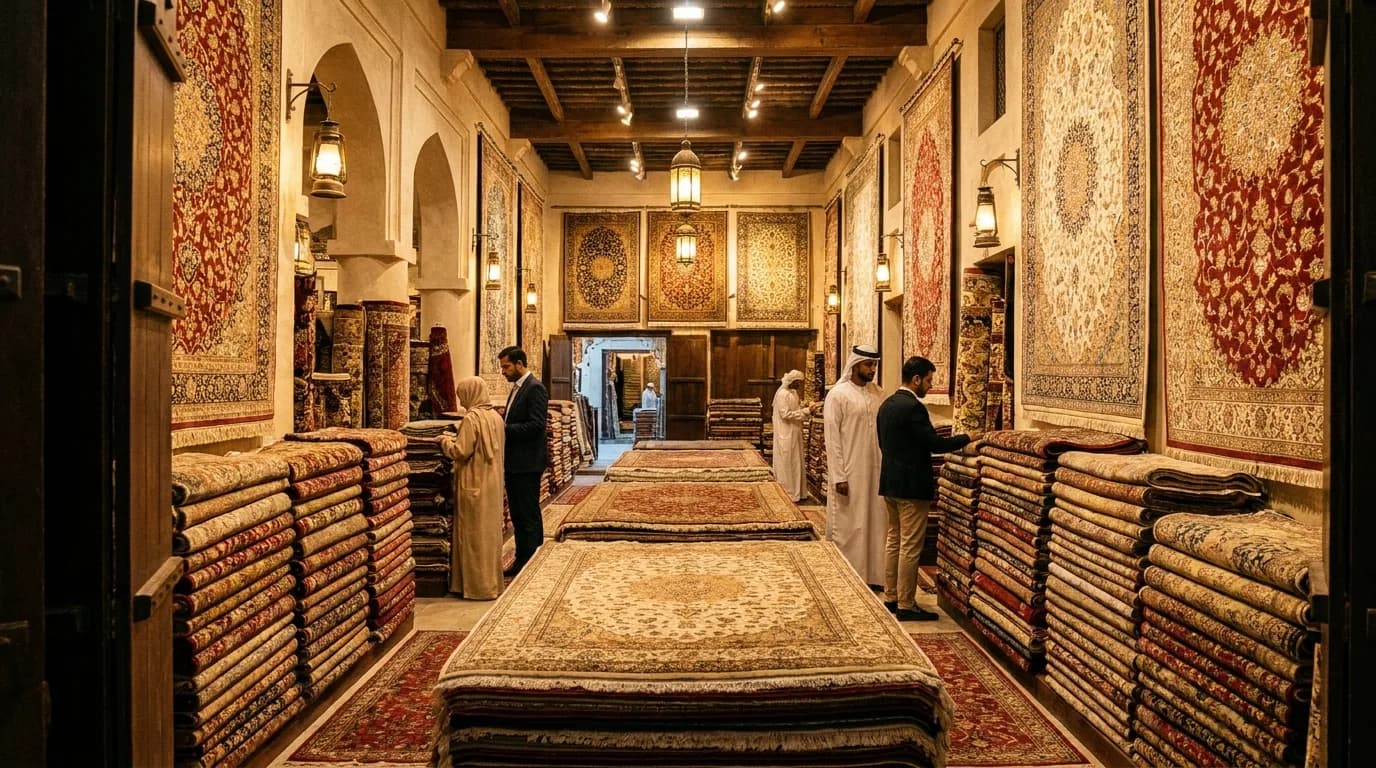
The Central Souq — known locally as the Blue Souk for its distinctive tiled façade — is Sharjah's primary destination for quality carpets. It houses multiple levels of retail across two main buildings, with carpet merchants occupying a significant portion of Block 3. The atmosphere is more relaxed than Dubai's tourist-facing souks; bargaining is expected, but pressure selling is rare.
Dubai vs Sharjah: Side-by-Side Comparison
| Factor | Dubai (general market) | Sharjah — Blue Souk area |
|---|---|---|
| Typical price premium | 15–35% above Sharjah for equivalent pieces | Lower overhead, more competitive pricing |
| Provenance documentation | Inconsistent; varies by retailer | More common among established merchants |
| Range of origins | Wide but uneven quality | Deep stock from specific weaving cities |
| Knot density transparency | Rarely stated upfront | Stated by specialist merchants |
| Drive from Dubai Marina | 0 minutes | 25–35 minutes |
| Drive from Abu Dhabi | 90 minutes | 75 minutes |
| Free hotel transfer | N/A | Available from Dubai hotels (Al Malakia) |
What to Look for in Any Persian Rug Shop
Before choosing where to buy, understand what separates a genuine hand-knotted Persian carpet from a hand-tufted or machine-made alternative. The key indicators are:
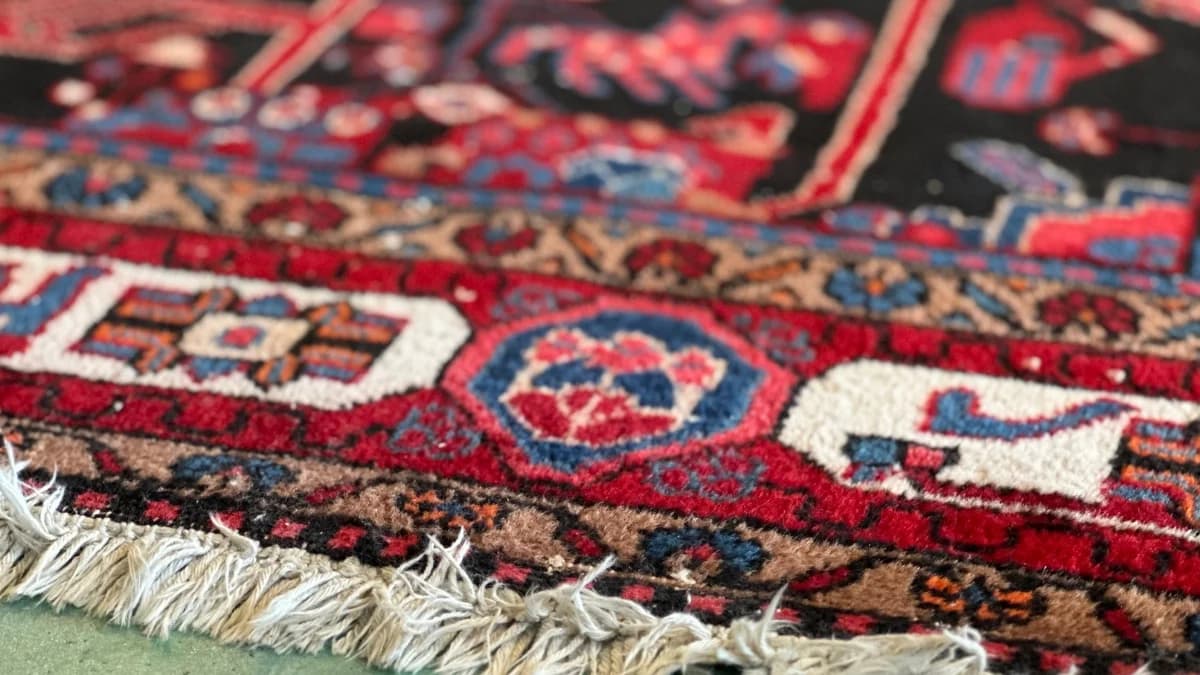
- The back of the rug: On a hand-knotted piece, the pattern on the reverse is nearly as clear as the front, with individual knots visible. Hand-tufted rugs have a canvas or latex backing glued on to hide the construction.
- Knot count (KPSI): Knots per square inch is the standard measure of fineness. A Qum silk carpet may reach 900 KPSI; a good Tabriz wool piece typically ranges from 200–400 KPSI. Ask any reputable merchant to state this figure.
- Material transparency: Silk, wool, and wool-on-silk foundations each have different characteristics and price points. Ask the merchant to confirm fibre content — this should not be a difficult question to answer.
- Origin specificity: "Persian carpet" is not a weaving city. Ask whether the piece is from Qum, Tabriz, Isfahan, Kashan, or Nain. Each city has distinct knotting styles and design conventions recognised by UNESCO, which inscribed Persian carpet craftsmanship on its Intangible Cultural Heritage list in 2010.
- Age and condition report: For pieces described as antique (100+ years) or semi-antique (50–99 years), ask for any available documentation and inspect the pile depth and fringe integrity carefully.
Origins and Weaving Styles: A Technical Reference
The weaving city shapes nearly everything about a carpet — its pile height, colour palette, knotting technique, and typical design motifs. Here is a working reference for the main origins you will encounter:
- Qum (Qom): Iran's finest silk-producing centre. Carpets are all-silk or silk-on-silk, with KPSI regularly exceeding 600. Floral and medallion designs dominate. These are the most investment-grade pieces in the market.
- Tabriz: Iran's largest carpet-producing city. Wool, silk, and wool-on-silk constructions. Tabriz uses the Turkish (Ghiordes) knot rather than the Persian (Senneh) knot used in most other Iranian cities — a structural difference that affects the pile angle.
- Isfahan: Known for balanced, symmetrical designs and high-quality wool pile on a cotton foundation. Mid-range KPSI (200–350) with very durable construction.
- Kashan: Classic curvilinear medallion designs; robust wool pile. Kashan carpets were among the first Iranian pieces to be exported systematically to Europe in the 19th century.
- Nain: Very fine wool with silk highlights. Typically ivory or cream ground with intricate arabesques. Among the most refined wool-based carpets produced in Iran.
How Al Malakia Sources Its Stock
Al Malakia Persian Carpets was founded in 2008 by my father and is now run as a family business from our showroom at Shop 45–48, Central Souq Block 3, Blue Souk, Sharjah. We source directly from weaving families and established workshops in Qum, Tabriz, Isfahan, Kashan, and Nain, as well as tribal Afghan producers. Direct sourcing eliminates one or two intermediary layers, which affects both the price you pay and the accuracy of the provenance information we can provide.
At any given time, we carry more than 500 hand-knotted pieces across all major origins and sizes. Our full carpet collection spans entry-level tribal pieces at around AED 800 through to room-size Qum silk carpets above AED 120,000. Every piece in the showroom has a stated origin, fibre type, and approximate KPSI.
Logistics: Getting from Dubai or Abu Dhabi to the Blue Souk
The distance between Dubai Marina and the Blue Souk in Sharjah is approximately 35 kilometres. Outside peak traffic hours, the drive takes 25–35 minutes via Sheikh Mohammed Bin Zayed Road (E311). During morning and evening rush hours, add 20–30 minutes.
For visitors staying in Dubai hotels, Al Malakia offers a free door-to-door transfer service — we arrange collection from your hotel and return after your visit. To arrange this, contact us via our contact page or WhatsApp +971 50 537 2997 at least 24 hours in advance. Customers in Abu Dhabi and Al Ain can choose from photos and video we send on WhatsApp, and we deliver free anywhere in the UAE; details are available on our Abu Dhabi visitor page.
For more context on navigating the carpet market across both emirates, refer to our hub guide: Where to Buy Persian Carpets in Dubai (2026 Guide).
Pricing Expectations: What AED Buys You in 2026
Persian carpet pricing is driven by four variables: knot density, fibre type, size, and age. The following is a realistic guide for the UAE market in 2026:
- AED 800–2,500: Small tribal Afghan pieces (60×90 cm to 100×150 cm), wool pile, 80–120 KPSI
- AED 3,000–8,000: Medium Kashan or Isfahan wool carpets (150×200 cm to 200×300 cm)
- AED 8,000–25,000: Fine Tabriz wool-on-silk or Nain (200×300 cm); good Isfahan room-size
- AED 25,000–60,000: Qum silk (medium to large); very fine Tabriz or Nain room-size
- AED 60,000–120,000+: Large-format Qum silk with 600–900+ KPSI; signed master-weaver pieces
Prices in Dubai's tourist-facing retail areas typically run 15–35% above these figures for equivalent pieces, reflecting higher rental costs. The Al Quoz Carpet Souk is more competitive but less consistent in terms of stock quality and documentation.
Why Visit Al Malakia Persian Carpets
Al Malakia has operated from the Blue Souk in Sharjah since 2008. We stock 500+ hand-knotted Persian and Afghan carpets sourced directly from weaving families in Qum, Tabriz, Isfahan, Kashan, and Nain. Every piece carries stated provenance, fibre type, and knot density. We offer a free door-to-door transfer from Dubai hotels, making the 30-minute journey from Dubai straightforward for serious buyers. Customers in Abu Dhabi and Al Ain can choose from photos and video we send on WhatsApp, and we deliver free anywhere in the UAE.
Address: Shop 45–48, Central Souq Block 3 (Blue Souk), King Faisal Road, Sharjah, UAE
Hours: Saturday–Thursday 10:00–22:00 | Friday 14:00–22:00
Phone: +971 6 573 1399 | WhatsApp: +971 50 537 2997
Frequently Asked Questions
Is it worth travelling from Dubai to Sharjah to buy a Persian carpet?
For most serious purchases, yes. The drive from central Dubai to the Blue Souk in Sharjah takes 25–35 minutes outside peak traffic. Sharjah's carpet merchants typically carry deeper, more specialised stock than Dubai's tourist-facing retailers, and pricing is generally 15–35% lower for equivalent pieces due to lower commercial rents. Al Malakia also offers a free hotel transfer service from Dubai, which removes the logistics concern entirely.
How do I tell if a Persian carpet is genuinely hand-knotted?
Turn the carpet over and examine the back. On a hand-knotted piece, the pattern is clearly visible on the reverse, with individual knots discernible. The back should feel textured and slightly rough. Hand-tufted rugs — which are not hand-knotted — have a flat, canvas-like or latex-coated backing applied to conceal the construction. Machine-made rugs have a perfectly uniform, mechanical appearance on both faces. Any reputable merchant should welcome this inspection without hesitation.
What is a reasonable price for a Persian carpet in the UAE in 2026?
Pricing depends on origin, size, fibre, and knot density. Small tribal Afghan pieces start from around AED 800. A medium-size Kashan or Isfahan wool carpet (150×200 cm) typically falls in the AED 3,000–8,000 range. Fine Qum silk pieces in room sizes (e.g., 200×300 cm) range from AED 25,000 to AED 120,000 or above for master-weaver work. Be cautious of prices that seem very low for stated origins — knot density and fibre type should always be verifiable.
What is the difference between Qum, Tabriz, and Kashan carpets?
These are three distinct weaving cities in Iran, each with different traditions. Qum produces exclusively silk or silk-on-silk carpets with the highest knot densities (600–900+ KPSI) — the most technically demanding and investment-oriented pieces. Tabriz is Iran's largest production city, offering wool, silk, and mixed constructions across a wide price range; it uses the Turkish knot rather than the Persian knot used elsewhere. Kashan is known for robust wool pile, classic medallion designs, and reliable quality at mid-range price points. Each city's output is recognisable by design vocabulary, colour palette, and construction method.
Does Al Malakia offer delivery or shipping?
For UAE-based customers, we can arrange delivery to your home or hotel after purchase. For international shipping, we work with specialist carpet freight handlers experienced in customs documentation for textile goods. Contact us via WhatsApp on +971 50 537 2997 or through our contact page to discuss your requirements before visiting.
Can I visit Al Malakia from Abu Dhabi?
Yes. The Blue Souk in Sharjah is approximately 130 kilometres from central Abu Dhabi — around 75–90 minutes by road via E11. You are welcome to drive over, or you can choose from photos and video we send on WhatsApp, with free delivery anywhere in the UAE. Details are available on our Abu Dhabi visitor page. We recommend calling ahead on +971 6 573 1399 to confirm your preferred arrival time so we can ensure the right staff member is available to assist you.
The Practical Conclusion
Dubai has a functioning Persian carpet market, but it is uneven in quality, inconsistent in provenance documentation, and carries a location premium that adds meaningfully to the final price. Sharjah's Blue Souk — a 25–35 minute drive from central Dubai — offers deeper specialist stock, more transparent trading practices, and lower prices for equivalent pieces. If you are spending AED 5,000 or more on a hand-knotted carpet, the drive is justified. Al Malakia Persian Carpets has been at Shop 45–48, Block 3 of the Blue Souk since 2008. Visit us Saturday through Thursday between 10:00 and 22:00, or Friday from 14:00. To arrange a free transfer from your Dubai hotel, send a WhatsApp message to +971 50 537 2997 or reach us by phone on +971 6 573 1399. We will take care of the logistics — you focus on finding the right carpet.