Quick Facts
Natural (vegetable) dyes: Plant, insect and mineral sources — madder root, indigo, walnut husk, pomegranate skin, cochineal.
Synthetic dyes: Aniline (1860s) then chrome dyes (modern) — chemically produced, vivid and uniform.
Best clue: Abrash — gentle tonal striping across the field — is a hallmark of natural dyes, not a flaw.
Ageing: Natural dyes mellow and gain patina over decades; cheap synthetics can fade flat or run when wet.
Value: Vegetable-dyed fine pieces from Qum, Tabriz and Nain hold and grow value; fast synthetics rarely do.
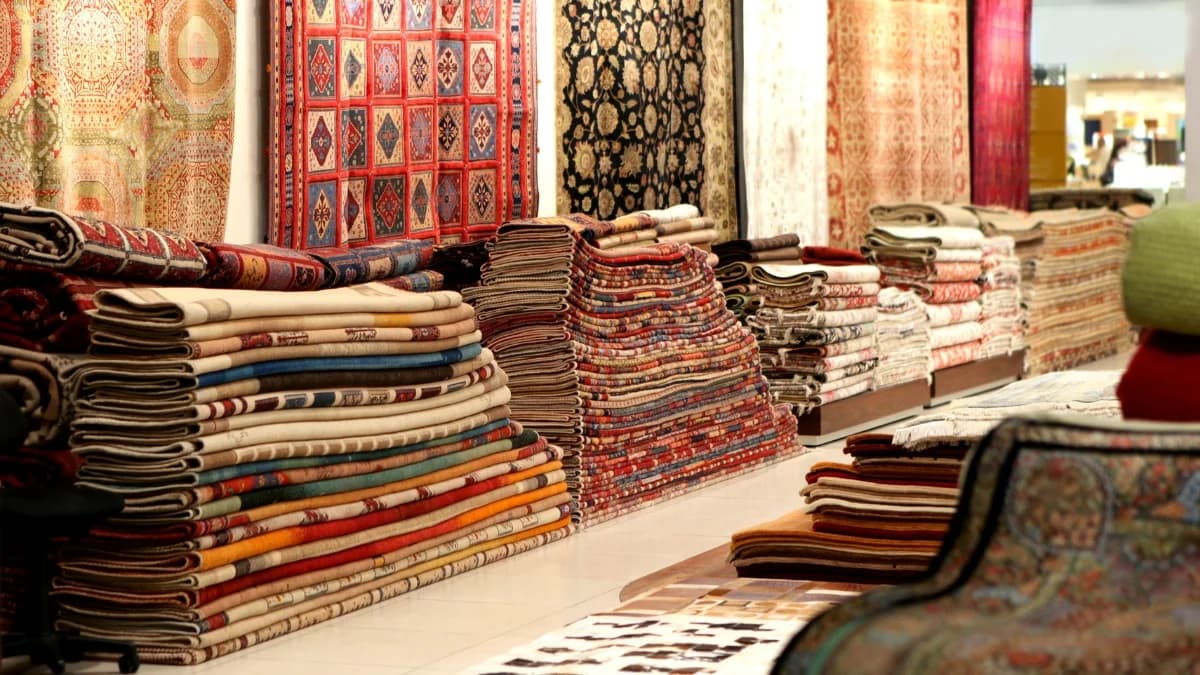
At Al Malakia: 500+ hand-knotted pieces in Sharjah's Blue Souk, with naturally dyed Qum silk from AED 8,000+.
Walk into any carpet showroom and one question decides far more than colour: are the dyes natural or synthetic? It is the difference between a rug that deepens and glows for fifty years and one that looks tired after five. For buyers across Dubai, Sharjah and Abu Dhabi, where a carpet is both a daily-use floor covering and a long-term asset, understanding dyes is the single most useful piece of knowledge you can carry into a purchase.
This guide explains how natural vegetable dyes and modern synthetic dyes are made, how to tell them apart with your own eyes and hands, how each ages in a UAE home, and how dye type feeds directly into price and resale value. By the end you will be able to read a rug's colour story the way a merchant does.
What "natural" and "synthetic" actually mean
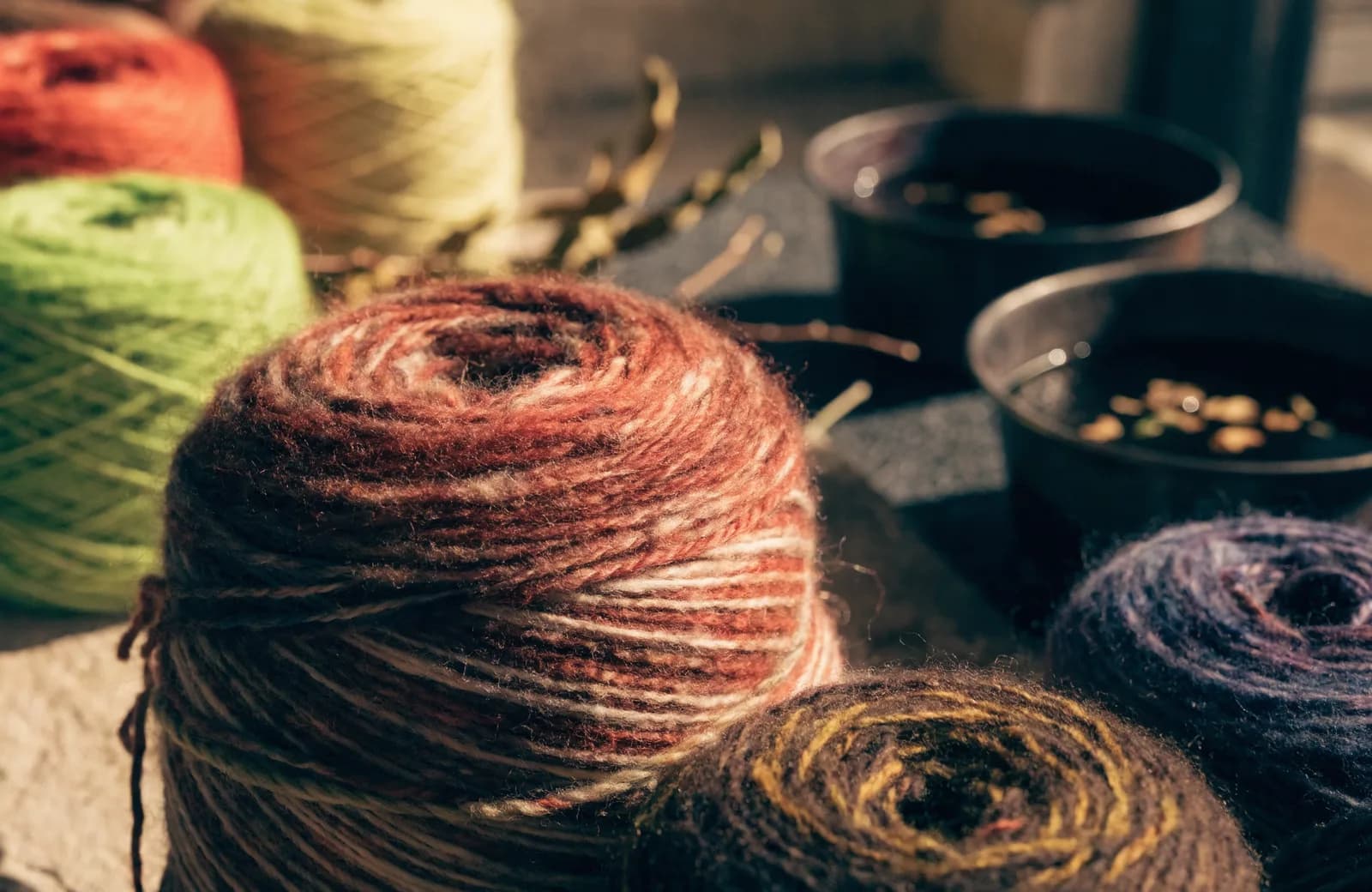
Before the 1860s, every Persian carpet was coloured with what the land provided. Dyers in Qum, Kashan and the villages around Tabriz boiled roots, leaves, husks, insects and minerals into a palette that was limited but extraordinarily harmonious. These are natural dyes, often called vegetable dyes even though some come from insects (cochineal) or minerals.
The most important natural sources are worth knowing by name:
- Madder root (roonas) — the great red of Persian weaving, ranging from brick to deep rust depending on mordant and water.
- Indigo — the only reliable blue, fermented in a vat; the same plant the world over.
- Walnut husk and oak gall — browns, tans and the soft blacks used for outlines.
- Pomegranate skin, vine leaf and weld — the yellows and golds, often combined with indigo to make greens.
- Cochineal — a crimson from dried insects, prized for fine silk reds.
From the 1860s onward, chemistry changed everything. Synthetic dyes arrived in two broad waves. The first, aniline dyes, were cheap and brilliantly bright but notoriously unstable — they faded badly and bled when wet, and antique pieces dyed with early aniline are still penalised today. The second wave, modern chrome dyes, are a genuine improvement: colour-fast, washable, available in any shade. A well-made chrome-dyed rug is not a "fake" — it is simply a different product with different economics.
How natural dyes are made — and why it matters
Natural dyeing is slow, skilled and weather-dependent. The wool is first treated with a mordant — usually alum — which fixes the colour to the fibre. Skeins are then simmered in dye baths, sometimes for days, and the exact result depends on the mineral content of the local water, the age of the plant material, and the dyer's judgement. No two batches are identical.
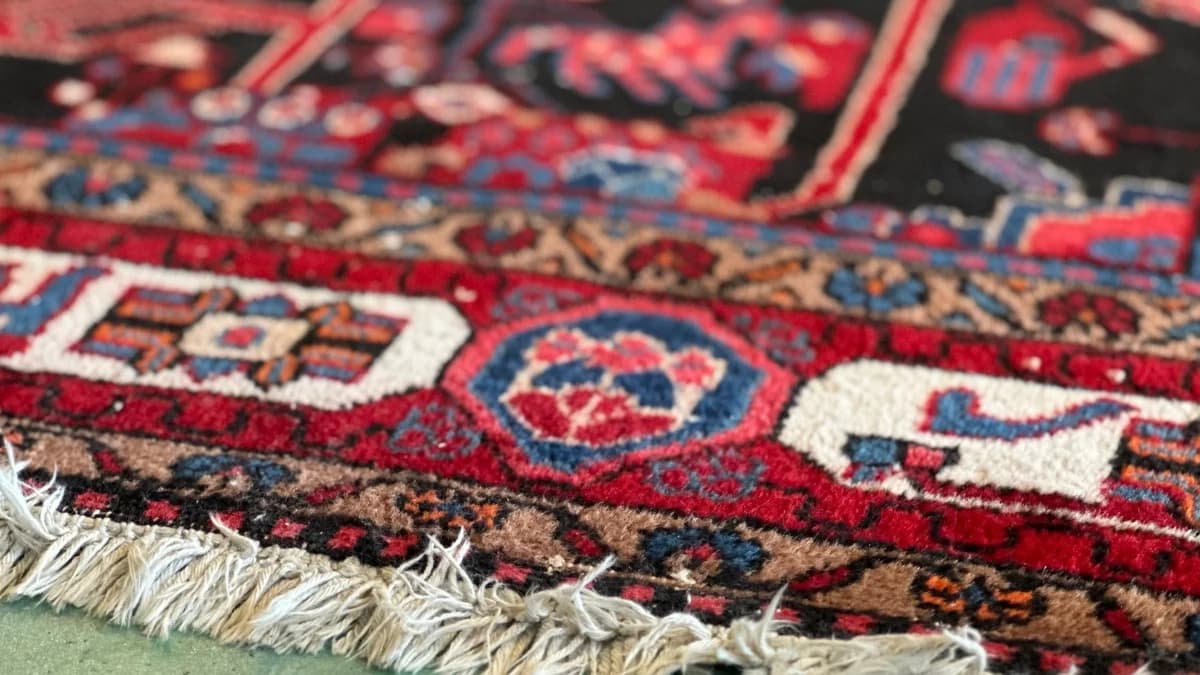
That variability is the whole point. Because each batch of wool takes the dye slightly differently, a naturally dyed rug carries subtle, living variation in tone. This is the origin of abrash — the gentle horizontal striping you sometimes see across a field of red or blue. Far from being a defect, abrash is one of the clearest fingerprints of authentic natural dyeing and hand-craft. We explain the full making process in our guide to How a Hand-Knotted Persian Carpet Is Made, Step by Step.
How to tell natural from synthetic dyes
You do not need a laboratory. With practice, your eyes and hands will tell you most of what you need. Here is what we check on every piece that enters our showroom:
1. Look for abrash and tonal life
Hold the rug to natural light and look across a large field of a single colour. Natural dyes shimmer with faint tonal shifts; the red is never one flat note. Cheap synthetic colour tends to be uniform, almost printed-looking, with no internal movement.
2. Part the pile and read the knot base
Bend the rug back and look at the base of the knots, where light rarely reaches. Natural dyes are usually consistent from tip to base, or fade very gradually. A sharp line — bright at the surface, pale at the root — can indicate a chemical wash applied to fake an antique look, or an unstable synthetic.
3. The damp-cloth test
Press a clean, slightly damp white cloth firmly onto a coloured area for a few seconds. A quality dye — natural or good chrome — leaves the cloth clean. Colour transfer is a red flag for an unstable synthetic that may run when the rug is washed.
4. Judge the harmony of the palette
Natural dyes share an underlying earthiness that makes even a busy design feel calm and coherent. Synthetic palettes can include shades — electric orange, harsh purple, fluorescent pink — that simply do not exist in the natural dyer's range. These are detailed further in our companion piece, How to Spot a Fake Persian Carpet.
Dye is one strand of a wider authentication process. For the complete method — knots, foundation, fringe and provenance together — see How to Verify a Persian Carpet's Authenticity.
Natural vs synthetic dyes compared
| Factor | Natural (vegetable) dyes | Synthetic dyes |
|---|---|---|
| Source | Plants, insects, minerals (madder, indigo, walnut, cochineal) | Chemical (aniline, then chrome) |
| Colour character | Soft, harmonious, alive with abrash | Bright, uniform, very wide range |
| Ageing | Mellows, gains patina, often improves | Stable chrome holds; cheap aniline fades flat |
| Lightfastness | Excellent over generations | Excellent (chrome) to poor (early aniline) |
| Cost to produce | High — slow, skilled, labour-intensive | Low — fast and consistent |
| Long-term value | Holds and often grows | Rarely appreciates; chrome holds better than aniline |
How each type ages in a UAE home
The Gulf climate is demanding on textiles. Strong sunlight through villa and apartment windows, air-conditioning that swings humidity, and the simple reality of a carpet that is walked on, sat on and used in the majlis every day — all of it tests a dye over years.
This is where natural dyes quietly prove their worth. Good vegetable dyes are remarkably lightfast; rather than fading, they mellow, softening into a deeper, warmer version of themselves. A madder red that was vivid when new becomes a glowing, antique rust after twenty years of UAE sun — and collectors pay more for exactly that mature patina. Indigo blues soften the same way, gaining depth rather than losing it.
Quality chrome synthetics also cope well — they are engineered to be colour-fast, and a reputable chrome-dyed rug will hold its colour for decades. The danger lies only with cheap, old-style aniline dyeing, which under strong Gulf light can fade unevenly and, in the worst cases, bleed during cleaning. This is exactly why we caution buyers against unbranded "bargain" rugs sold without provenance.
Does dye change which region you should buy?
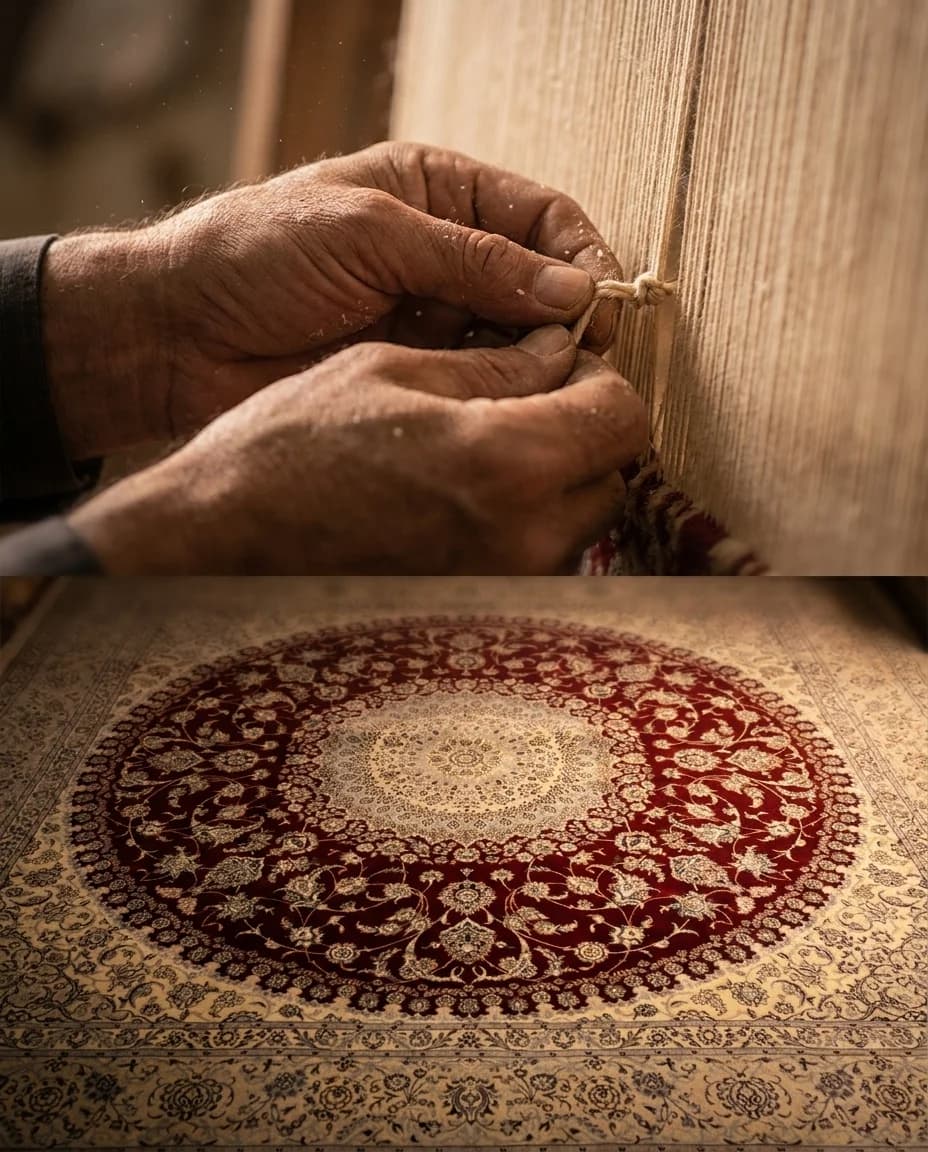
To a degree, yes — because dye tradition is tied to place. The five great weaving centres each have their own colour signature, and natural dyeing remains central to the finest of them. Qum silk pieces, the most refined we stock, rely on cochineal and madder for their luminous reds. Tabriz is known for disciplined, naturally dyed classical palettes. Isfahan and Nain favour the soft ivories, indigos and pale blues that only natural dyeing renders so gracefully. Kashan built its reputation on deep madder reds.
Understanding these signatures helps you read a rug's origin before anyone tells you where it is from. We break each one down in The 5 Main Persian Carpet Regions, and you can see naturally dyed examples from all five across our collection.
What dye type means for price and value
Dye is one of the clearest dividing lines between an everyday rug and an heirloom. Natural dyeing is slow and skilled, so it is reserved for finer wool and silk; you will rarely find true vegetable dyes on the cheapest machine-spun pieces. That is why dye and overall quality usually travel together.
In practical UAE terms: entry-level Afghan pieces in our showroom start from AED 800 and frequently use good, stable synthetic colour — perfectly suitable for a child's room, an office or a high-traffic hallway. Move up to fine, naturally dyed work and the equation changes. Qum silk from AED 8,000+ uses natural reds and golds that will deepen for generations, and room-sized fine pieces — naturally dyed throughout — can reach AED 200,000+ and behave as genuine assets. Synthetic-dyed rugs serve their purpose beautifully but rarely appreciate; naturally dyed fine pieces are the ones that hold and grow value.
Our honest advice as a family of merchants
At Al Malakia we sell both, without apology, because both have a place. If you want a hardwearing, brightly coloured rug for a busy family room or a first apartment in Dubai, a well-made synthetic-dyed piece is the sensible choice — and we will tell you so. If you are buying something to keep, to pass on, and to enjoy watching mature, then a naturally dyed Qum, Tabriz or Nain is worth the difference.
What we will never do is sell a fast synthetic as a vegetable-dyed antique. Founded in 2008 by Eid Al Salam, a second-generation Persian carpet merchant, we source directly from the weavers in Qum, Tabriz, Isfahan, Kashan and Nain — so we can tell you exactly how every colour in a rug was made. You can read more about Al Malakia, or simply come and put the tests in this guide to work in person. If you are in Dubai, our free door-to-door transfer brings you to the showroom; just contact us to arrange it.
Why Visit Al Malakia Persian Carpets?
- Direct sourcing: Purchased from weavers in Qum, Tabriz, Isfahan, Kashan, and Nain — no intermediaries, transparent provenance.
- Scale of stock: 500+ hand-knotted pieces in the showroom, across sizes from 60×90 cm to 4×6 m.
- Free Dubai transfer: Complimentary door-to-door pick-up from Dubai hotels and homes.
- Family expertise: Founded in 2008 by Eid Al Salam, a second-generation Persian carpet merchant.
- Blue Souk location: Shop 45–48, Central Souq Block 3, King Faisal Road, Sharjah. Open Saturday–Thursday 10:00–22:00, Friday 14:00–22:00.
Contact us or WhatsApp +971 50 537 2997 to arrange your visit or request a consultation.