Quick Facts
Best routine: Vacuum gently with the beater bar off once or twice a week, and rotate the rug 180° every three to six months.
Biggest UAE threats: Fine desert dust, direct sun through villa windows, and high coastal humidity — not normal foot traffic.
Spills: Blot immediately with a white cloth; never rub or soak a hand-knotted wool rug.
Professional wash: Every 2–3 years for a busy majlis; hand-washing only — never machine or steam.
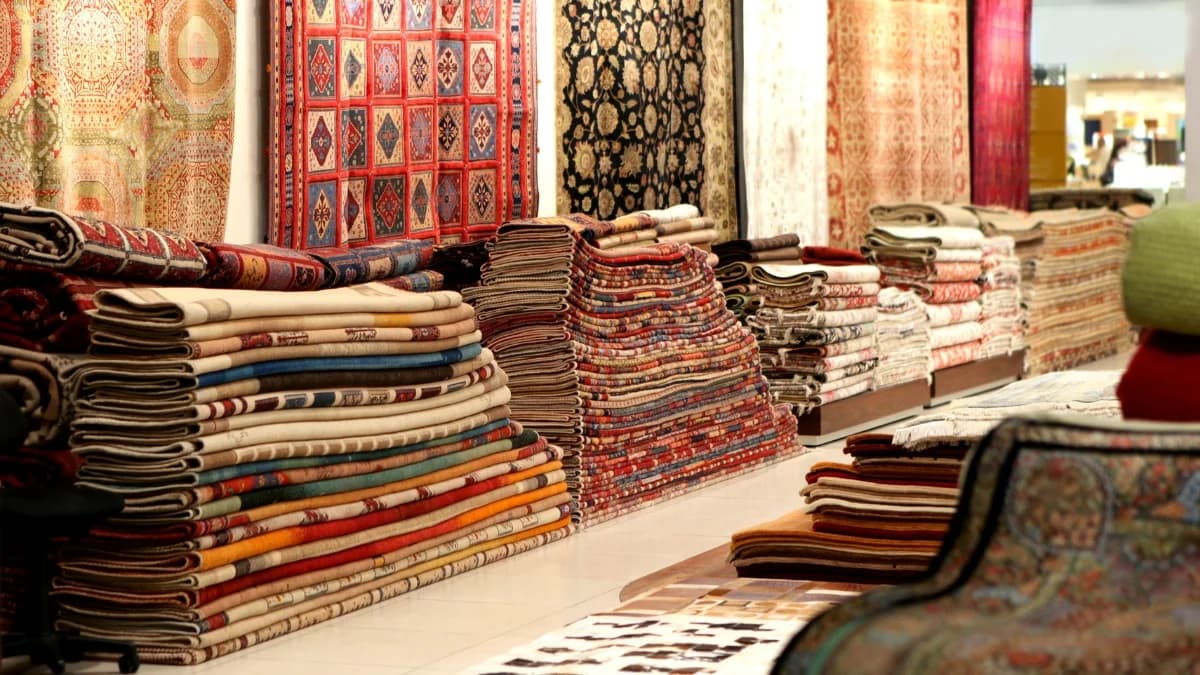
Where to get help: Al Malakia Persian Carpets, Shop 45–48, Blue Souk, Sharjah — entry-level Afghan pieces start from AED 800.
Lifespan: A well-kept Afghan wool rug can last 30–50+ years and often improves with age.
An Afghan wool rug is one of the most forgiving floor coverings you can own — but “forgiving” is not the same as “maintenance-free,” especially in the UAE. The same hand-spun wool and natural dyes that make these rugs so durable also respond to how you treat them, and the Gulf environment adds a few challenges you will not read about in a generic care leaflet: relentless fine dust, fierce sun through floor-to-ceiling villa glass, salty coastal humidity, and the heavy, shoes-off, tea-and-guests rhythm of a UAE majlis.
This guide answers the question we hear most often at our Sharjah showroom: how do I actually look after an Afghan wool rug in a home here? We will cover everyday cleaning, dealing with our particular dust and humidity, handling spills, protecting against sun fade, storage during travel, and when to call a professional — all written for real Emirati and expat homes, not a European climate.
Why Afghan Wool Is Easy to Live With
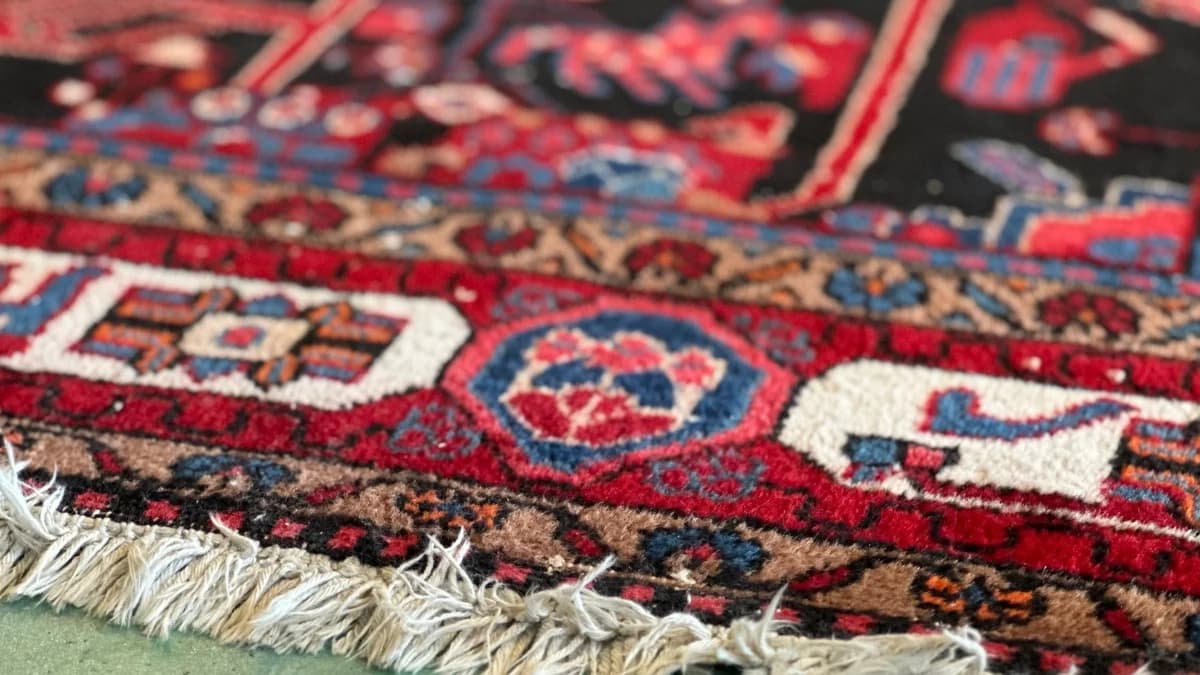
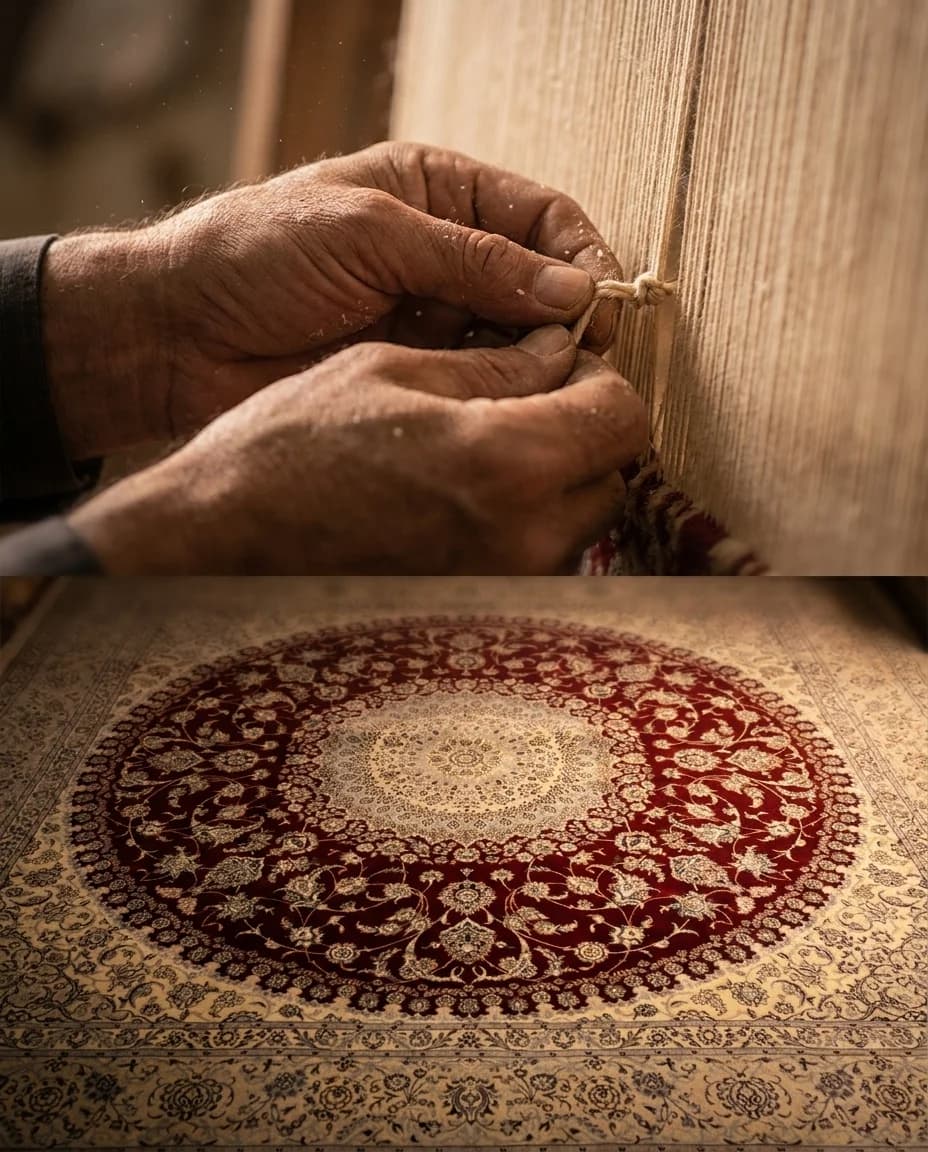
Before the routine, it helps to understand what you are caring for. Afghan rugs are hand-knotted from hardy, high-lanolin highland sheep wool. Lanolin is a natural oil in the fibre that quietly repels dust and water and gives the wool a soft sheen. This is why a quality Afghan rug can shrug off a dropped cup of karak that would stain a synthetic carpet. If you want a fuller picture of the materials, knots and patterns behind these pieces, our companion guide on What Makes Afghan Carpets Unique: Wool, Knots & Patterns is the best place to start.
The practical takeaway: your job is mostly to protect the wool and its lanolin, not to scrub it. Over-cleaning, harsh chemicals and excessive water do far more damage to a hand-knotted rug than years of normal use. Gentle, consistent habits beat occasional heavy intervention every time.
Everyday Cleaning: Vacuuming the Right Way
Regular, gentle vacuuming is the single most important thing you can do. In the UAE, fine dust settles constantly — it works its way down to the base of the pile where it acts like sandpaper, slowly cutting the foundation fibres every time someone walks across the rug. Removing it before it embeds is what keeps an Afghan rug alive for decades.
Do
- Vacuum once or twice a week in the direction of the pile (run your hand across the surface — the smooth direction is correct).
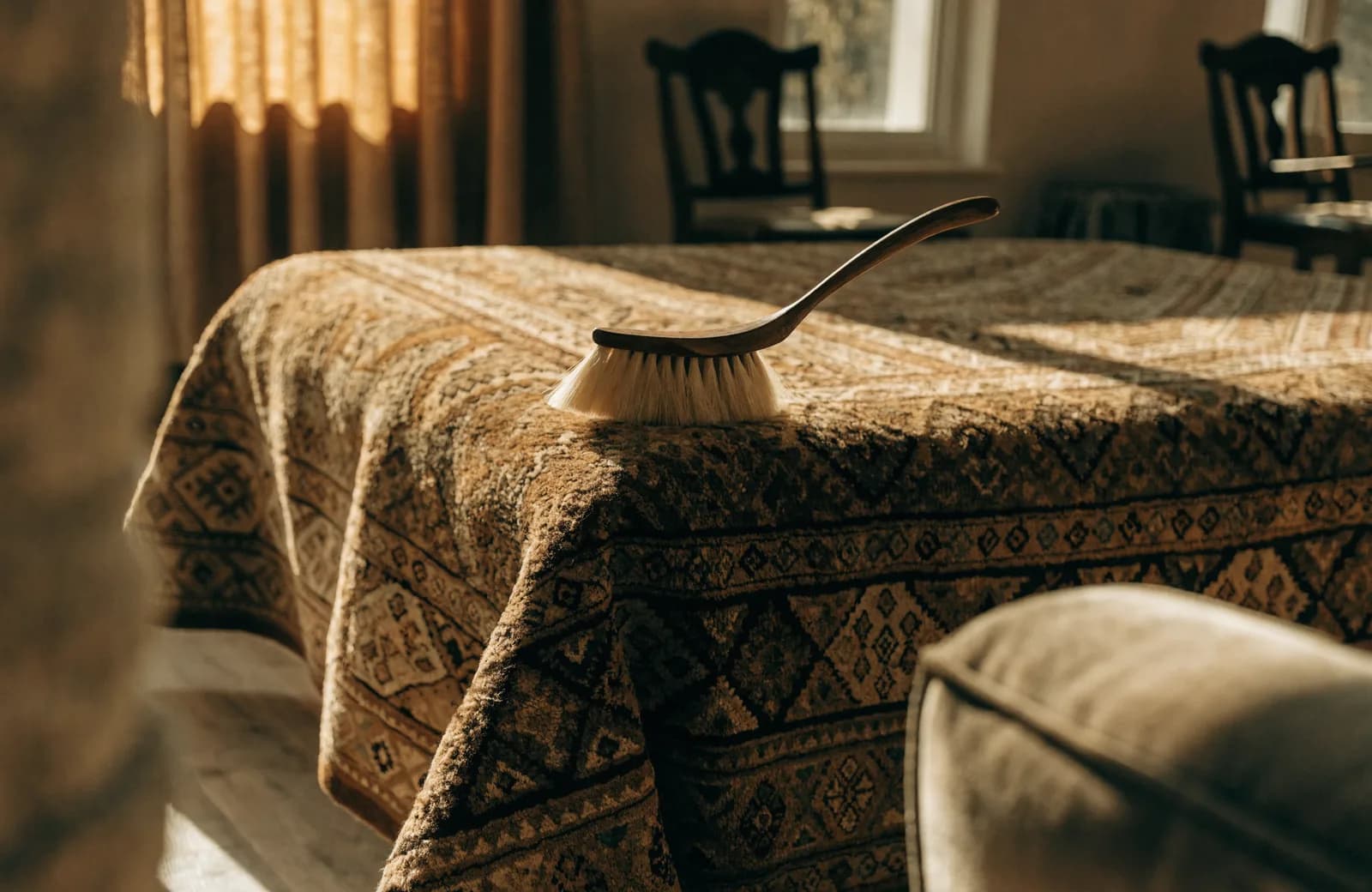
- Turn the beater bar / rotating brush off, or use the flat upholstery tool. A spinning brush pulls and frays hand-knotted wool.
- Vacuum the back of the rug a few times a year to shake loose deep dust — this alone removes a surprising amount of grit.
Don't
- Don't vacuum the fringes with a powerful machine — they catch, twist and tear. Brush them straight by hand instead.
- Don't use the maximum suction setting on a thin or antique piece.
Managing Desert Dust and Sand
Dust is the defining UAE challenge. Even in a closed, air-conditioned apartment, fine particles drift in through balcony doors and AC returns and settle into the pile. Beyond weekly vacuuming, two old habits help enormously.
First, shake or beat smaller rugs outdoors every few weeks — drape a 60×90 cm or runner over a balcony rail and tap the back with a soft beater or broom handle. You will see a cloud of dust leave that no vacuum reaches. Second, a good shoes-off rule at the door keeps the worst of the street sand off the rug entirely; it is already the norm in most UAE homes and it is the cheapest rug-care tool you own.
For larger room-sized pieces that cannot be lifted easily, an annual outdoor airing on a clean, shaded surface — face down, then gently swept on the back — does the same job. If a haboob or heavy dusty wind has coated everything in your home, vacuum the rug a day or two later once the fine dust has fully settled, rather than immediately while it is still airborne.
Humidity, Damp and the Coastal Climate
Sharjah, Dubai and Abu Dhabi all sit on the coast, and summer humidity is the quiet enemy of wool. Damp trapped under a rug — from a leaking AC unit, an over-watered plant pot, or a freshly mopped marble floor sealed under the rug before it dried — can lead to musty smells, weakened foundation threads, and in bad cases mildew.
- Let floors dry fully before laying a rug back down after cleaning.
- Use a breathable underlay (felt-and-rubber rug pad), not a solid plastic sheet that traps moisture against the back.
- Lift and air the rug occasionally in humid months, especially in ground-floor villas and near pools.
- If a rug ever gets genuinely wet, dry it flat and fast — fans and airflow, never folded away damp.
Wool naturally absorbs and releases some moisture, which is part of why it feels comfortable underfoot in a hot climate — but standing damp is different from ambient humidity, and it is the standing damp you must avoid.
Dealing With Spills and Stains
Spills happen — especially around a majlis with tea, coffee, dates and children. The good news is that lanolin buys you time; the bad news is that panic, hot water and scrubbing cause most of the permanent damage we see. Speed and gentleness win.
- Blot, don't rub. Press a clean white cloth or paper towel straight down to lift the liquid. Rubbing pushes it deeper and distorts the pile.
- Work from the outside in so you don't spread the stain.
- Use cool water only for most spills. Hot water can set protein and tannin stains (tea, coffee, blood) permanently.
- For a stubborn spot, mix a few drops of mild wool-safe detergent (or a little white vinegar) into cool water, dab gently, then blot dry. Test on a hidden corner first.
- Never use bleach, oxygen “splash” cleaners, or strong stain sprays — they strip dye and lanolin and leave a permanent pale patch.
If a stain resists gentle treatment, stop and call a specialist rather than escalating. For a deeper walkthrough of safe at-home methods, see our guide on How to Clean a Persian Carpet at Home Safely — the principles apply equally to Afghan wool.
Protecting Against Sun Fade
The Gulf sun is intense, and UAE homes love glass — tall villa windows, balcony sliders, skylights. Direct, unfiltered sunlight over months will gently fade natural dyes, and it fades unevenly: the exposed strip nearest the window lightens while the shaded part stays rich, leaving a visible line.
You don't need to hide the rug in the dark. Simple steps keep colours even:
- Rotate the rug 180° every 3–6 months so any sun exposure and foot traffic spread evenly across the whole piece.
- Use sheer curtains or UV-filtering window film on the sunniest aspects — worthwhile for the whole room, not just the rug.
- Keep the most light-sensitive or finely dyed pieces away from the single harshest window, or in interior rooms.
Natural dyes that fade slowly and evenly actually develop the soft, mellow tone collectors prize — it is the sharp, one-sided fade line you are preventing.
Rotation, Padding and Furniture
Two pieces of furniture-related advice save more rugs than any cleaner. First, a quality underlay pad stops the rug sliding on polished marble or porcelain floors (the UAE norm), cushions the knots from the hard floor, and improves airflow underneath. Second, move heavy furniture occasionally. Sofa and table legs crush the pile flat and, left for years, can permanently dent it. Shifting pieces a few centimetres now and then, or placing felt coasters under the legs, lets the wool recover.
Storage During Summer Travel
Many UAE families leave for cooler countries over the peak summer. If you are closing up a home, don't just leave rugs lying under furniture in a sealed, AC-off house — that combination of heat, humidity and stillness invites moths and mildew. To store an Afghan rug properly:
- Vacuum it thoroughly front and back first — moths feed on dust and debris in the pile.
- Roll it (never fold — folding creases and cracks the foundation), with the pile facing inward.
- Wrap in breathable cotton or Tyvek, never sealed plastic, which traps moisture.
- Store flat and raised off the floor, in a dry spot. Avoid mothballs directly on the wool.
When to Call a Professional
Home care handles 95% of the work, but a hand-knotted rug also benefits from a proper professional wash periodically — a deep, full-immersion hand wash that flushes out the embedded dust no vacuum can reach and restores the wool's softness and lustre. As a rule of thumb:
| Situation | What to do | How often |
|---|---|---|
| Routine dust & light use | Gentle vacuum, rotate, air outdoors | Weekly / every 3–6 months |
| Busy family majlis | Professional hand wash | Every 2–3 years |
| Low-traffic formal room | Professional hand wash | Every 4–5 years |
| Spill or pet accident | Blot now, professional spot-clean if it resists | As needed |
| Visible moth damage or odour | Specialist treatment immediately | Urgent |
Crucially, insist on hand-washing, not machine or steam cleaning. Steam and hot extraction can set dyes running, shrink the foundation and strip lanolin; high-street “carpet cleaning” aimed at wall-to-wall synthetics is the wrong service for a hand-knotted heirloom. For a sense of what correct professional care looks like, see Expert Persian Carpet Cleaning in Dubai. The same hand-wash standards apply to Afghan wool as to fine Persian pieces.
A Rug That Improves With Age
Looked after with these simple, consistent habits, an Afghan wool rug is not a fragile object you tiptoe around — it is a hard-wearing, genuinely improving piece that can pass through a family for decades. The wool softens, the patina deepens, and the colours mellow into something a new rug can never imitate. The whole of rug care, distilled, is this: keep the dust out, keep the damp out, keep the harsh chemicals away, and act fast on spills. Everything else is detail.
If you are choosing your first Afghan rug or want advice on a piece you already own, you are always welcome to browse our collection in person, contact us for a care consultation, or learn more about Al Malakia and our second-generation family expertise.
Why Visit Al Malakia Persian Carpets?
- Direct sourcing: Purchased from weavers in Qum, Tabriz, Isfahan, Kashan, and Nain — no intermediaries, transparent provenance.
- Scale of stock: 500+ hand-knotted pieces in the showroom, across sizes from 60×90 cm to 4×6 m.
- Free Dubai transfer: Complimentary door-to-door pick-up from Dubai hotels and homes.
- Family expertise: Founded in 2008 by Eid Al Salam, a second-generation Persian carpet merchant.
- Blue Souk location: Shop 45–48, Central Souq Block 3, King Faisal Road, Sharjah. Open Saturday–Thursday 10:00–22:00, Friday 14:00–22:00.
Contact us or WhatsApp +971 50 537 2997 to arrange your visit or request a consultation.