Knot density (Qum silk): 400–900 KPSI (knots per square inch) — among the highest produced anywhere in Iran
Typical price range at Al Malakia: AED 800 for small wool pieces up to AED 120,000+ for large Qum or Isfahan silk carpets
Drive time from Dubai: Approximately 30–40 minutes to Al Malakia's showroom at the Blue Souk, Sharjah
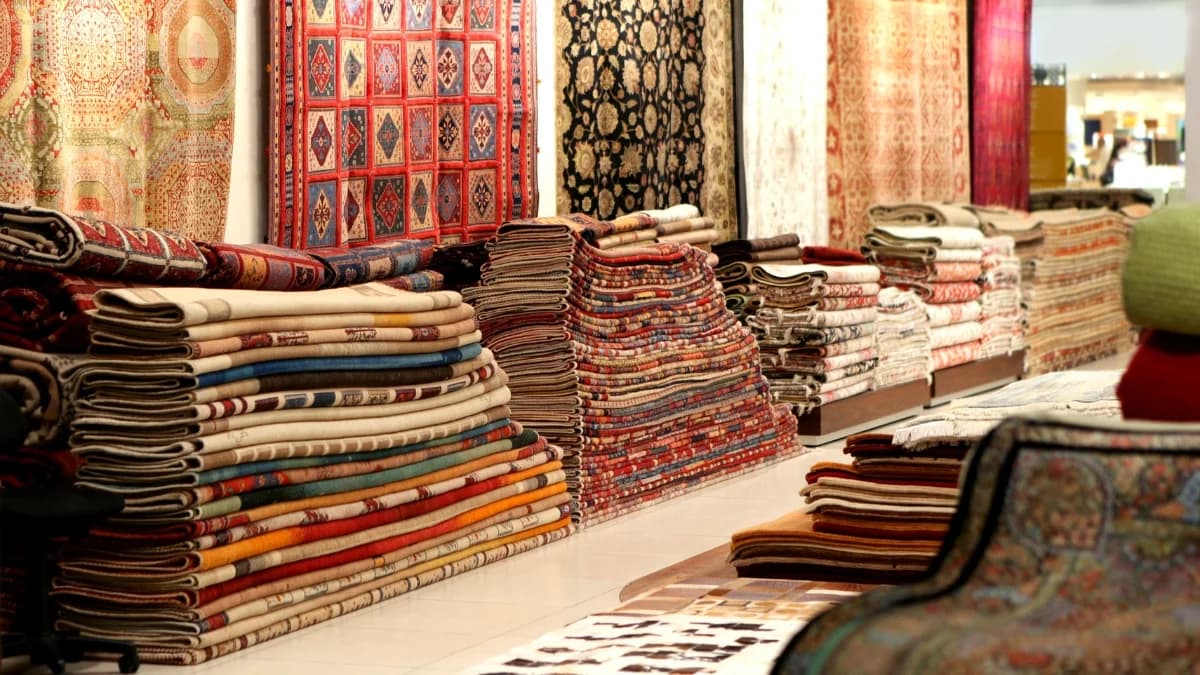
Showroom stock: 500+ hand-knotted Persian and Afghan carpets sourced directly from weavers in Iran
Founded: 2008 — family-owned, second-generation Persian carpet merchants
Origins stocked: Qum, Tabriz, Isfahan, Kashan, Nain
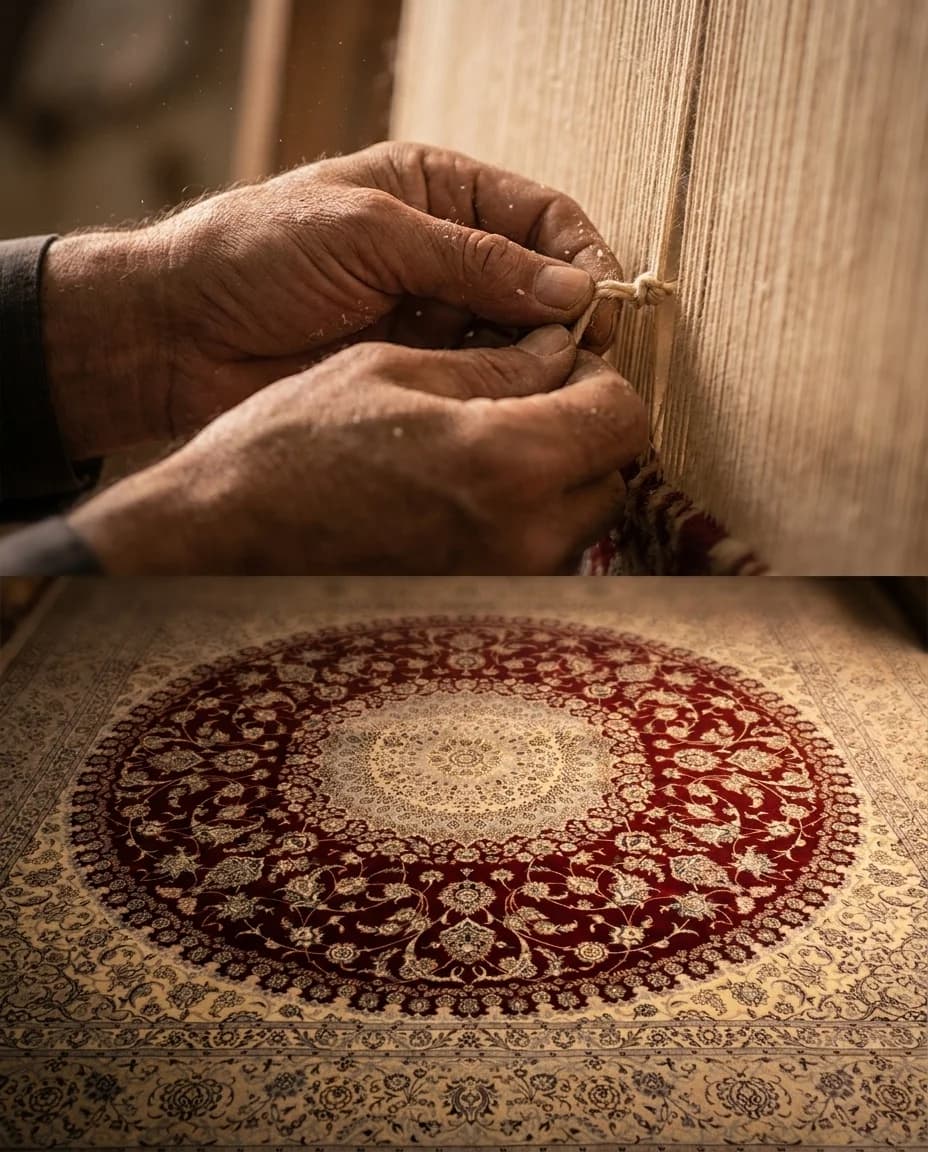
A hand-knotted Persian carpet from Kashan can take a single weaver between six months and three years to complete. That fact alone explains why buyers agonise over where to purchase one. The question of whether to buy a Persian carpet in Dubai or travel to Iran comes up constantly, and it deserves a straight answer — not a sales pitch. This guide lays out the practical realities of both options: costs, logistics, authenticity risks, and what you actually get for your money in each location.
What "Authentic" Really Means When Buying Persian Carpets
The word "authentic" is overused in the carpet trade. Technically, an authentic Persian carpet is any hand-knotted pile rug woven in Iran using traditional techniques that UNESCO inscribed on its Intangible Cultural Heritage list in 2010. The origin of the carpet — Qum, Tabriz, Isfahan, Kashan, Nain — matters as much as the country of production.
Authenticity is not exclusively tied to purchasing inside Iran. A carpet woven in Tabriz and shipped to a verified dealer in Sharjah is the same carpet. What changes is the chain of custody, the dealer's knowledge, and whether documentation accompanies the piece. At Al Malakia, every carpet is sourced directly from workshops and family weavers in Iran — the same supply chain that operates whether you walk into a bazaar in Isfahan or our showroom at the Blue Souk in Sharjah.
The Case for Buying in Iran: What Is Actually True
There are genuine advantages to purchasing inside Iran that should not be dismissed.
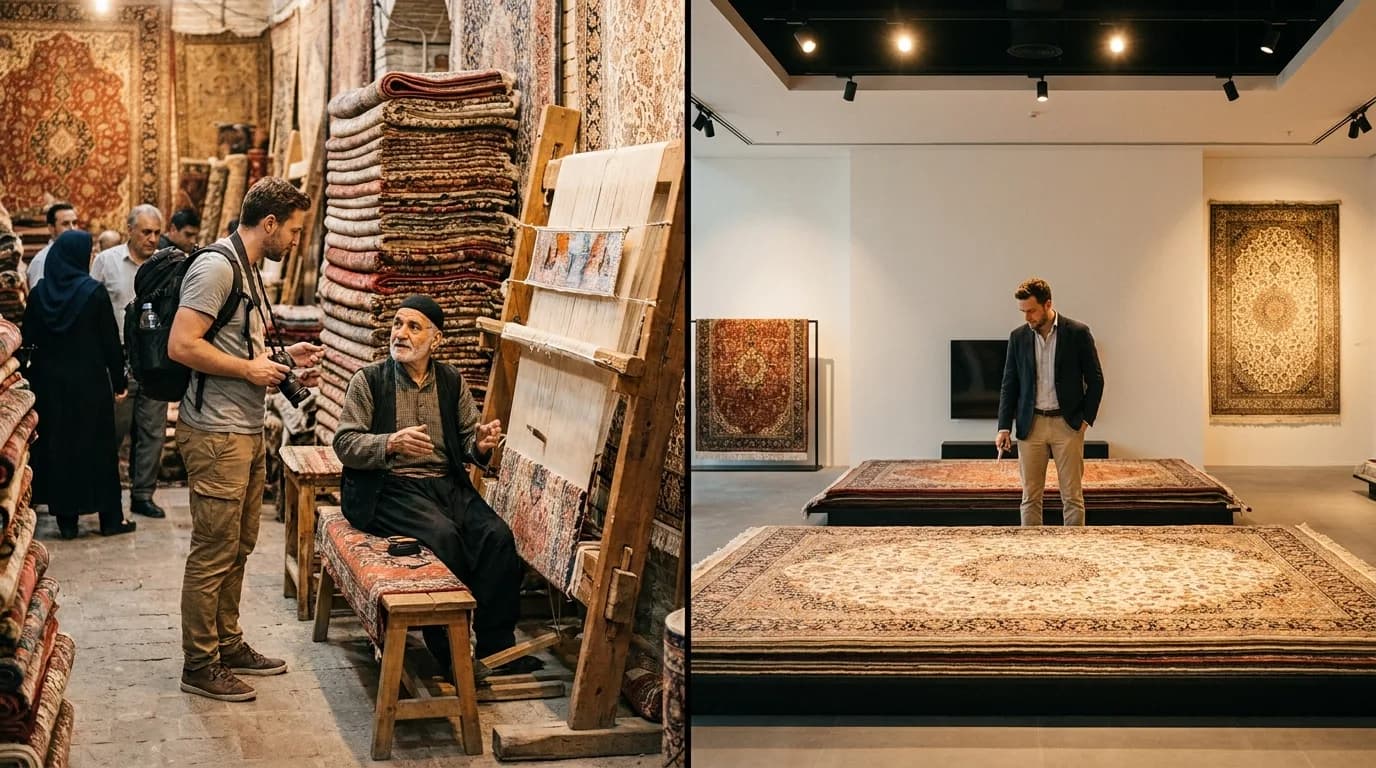
- Workshop access: In cities like Kashan or Qum, it is possible to visit workshops and watch weavers at work. This context is meaningful and educational.
- Lower retail margins in some segments: For mid-range commercial carpets (below 200 KPSI), bazaar prices in Iran can undercut UAE retail prices by 15–30%.
- Breadth of selection: Tehran's Grand Bazaar and Tabriz's carpet bazaar hold thousands of pieces across dozens of producing regions simultaneously.
However, these advantages come with equally real complications — particularly for UAE residents and visitors.
The Practical Complications of Buying in Iran
Several factors make a carpet-buying trip to Iran more complex than it might appear on paper.
- Export regulations: Iran restricts the export of carpets over a certain age. Antique carpets (generally considered 50+ years old) require an export licence from Iran's Cultural Heritage Organisation. Without it, customs can confiscate the piece.
- Payment logistics: International banking sanctions mean most travellers must carry significant amounts of cash in euros or US dollars and exchange locally. Wire transfers and credit cards are largely non-functional for foreign visitors.
- Shipping costs and customs duty: Shipping a large carpet from Iran to the UAE typically costs USD 150–400 for freight, plus UAE import duties. These costs partially or fully eliminate any price advantage on higher-end pieces.
- Authenticity verification on the ground: Bazaar vendors in tourist-heavy areas of Esfahan and Shiraz do sell machine-made or Indian-knotted carpets marketed as Persian. Without specialist knowledge, distinguishing them from genuine hand-knotted Iranian pieces requires either expertise or a trusted local guide.
- Visa and travel costs: A UAE resident travelling to Iran incurs return flights (AED 600–2,000 depending on season), accommodation, and several days of time. For a single carpet purchase, this rarely makes financial sense.
What You Pay in the UAE vs. What You Pay in Iran: A Comparison
The table below reflects general market ranges for hand-knotted Persian carpets. Prices vary significantly by origin, age, knot density, and condition.
| Carpet Type | Approx. Iran Bazaar Price (USD) | Approx. UAE Retail Price (AED) | Shipping + Duty if Buying in Iran (USD) |
|---|---|---|---|
| Tabriz wool, 2×3 m, 200 KPSI | $900–1,400 | AED 3,800–5,500 | $200–350 |
| Kashan wool, 2×3 m, 300 KPSI | $1,800–2,800 | AED 7,500–11,000 | $200–350 |
| Qum silk, 1×1.5 m, 600 KPSI | $3,500–6,000 | AED 14,000–22,000 | $150–250 |
| Nain wool-on-silk, 2×3 m | $2,500–4,000 | AED 10,000–16,000 | $200–350 |
When you add shipping, duty, and travel costs to Iranian bazaar prices, the net savings on most mid-to-high-end carpets are minimal — and the risk profile is higher.
Where Dubai and Sharjah Fit Into This Equation
The UAE has been a primary distribution hub for Persian carpets since the 1970s. Sharjah, in particular, became a centre for Iranian carpet traders because of its geographic proximity to Iran and its established trading culture. Al Malakia opened at the Blue Souk (Central Souq) in Sharjah in 2008, and the location is deliberate — the souk has housed Persian carpet merchants for decades.
For buyers based in Dubai, the showroom is a 30–40 minute drive via Sheikh Mohammed Bin Zayed Road. For those in Abu Dhabi and Al Ain, Al Malakia sends photos and video on WhatsApp to choose from, and delivery is free anywhere in the UAE. The free door-to-door transfer service from Dubai hotels removes the logistics question entirely for visitors staying in the city.
If you want to explore what the broader UAE market offers, our detailed breakdown in Where to Buy Persian Carpets in Dubai (2026 Guide) covers the full landscape of dealers and souks across the emirate.
What Direct Sourcing From Weavers Actually Changes
Al Malakia's supply chain runs directly to workshops and individual weavers in Iran — not through middlemen in Tehran or Tabriz. Eid Al Salam, the founder, has maintained these relationships since before the business formally opened in 2008. His father built many of the original connections.
This matters for three reasons. First, provenance documentation is more complete — we can often identify the workshop city, wool or silk type, and approximate weaving period for each piece. Second, the margin structure is leaner, which is reflected in pricing. Third, the selection process is curated rather than bulk-purchased, which means the 500+ pieces in the showroom represent a deliberate range across origins, sizes, and price points — not a warehouse clearance.
Browse our Persian carpet collection to see current pieces by origin and size.
When It Does Make Sense to Buy in Iran
This guide is not arguing that buying in Iran is always the wrong choice. It makes sense under specific conditions:
- You are already travelling to Iran for other reasons and have a trusted local contact (not a bazaar tout) who can verify authenticity.
- You are specifically seeking a very old or antique carpet and have arranged export documentation in advance with a specialist dealer.
- You want the experience of visiting a producing city — Kashan, Qum, or Tabriz — as part of the purchase, not just the carpet itself.
- You are purchasing a small, lightweight piece (a namaziyeh prayer mat, for example) that can be carried in luggage without customs complications.
For all other scenarios — particularly for UAE residents, GCC visitors, or tourists on a fixed itinerary — purchasing from a verified UAE dealer is the lower-risk, lower-cost route when total costs are properly accounted for.
How to Verify Authenticity Wherever You Buy
Whether you are standing in a bazaar in Isfahan or a showroom in Sharjah, the same verification principles apply:
- Examine the back of the carpet: Hand-knotted carpets show individual knot tails on the reverse. The pattern should be visible, though slightly softer, on the back.
- Count knots per square inch: Use a ruler and count knots in a 2.5 cm² section. Multiply to get KPSI. A Qum silk carpet should show 400+ KPSI; a Tabriz wool carpet 80–250 KPSI depending on grade.
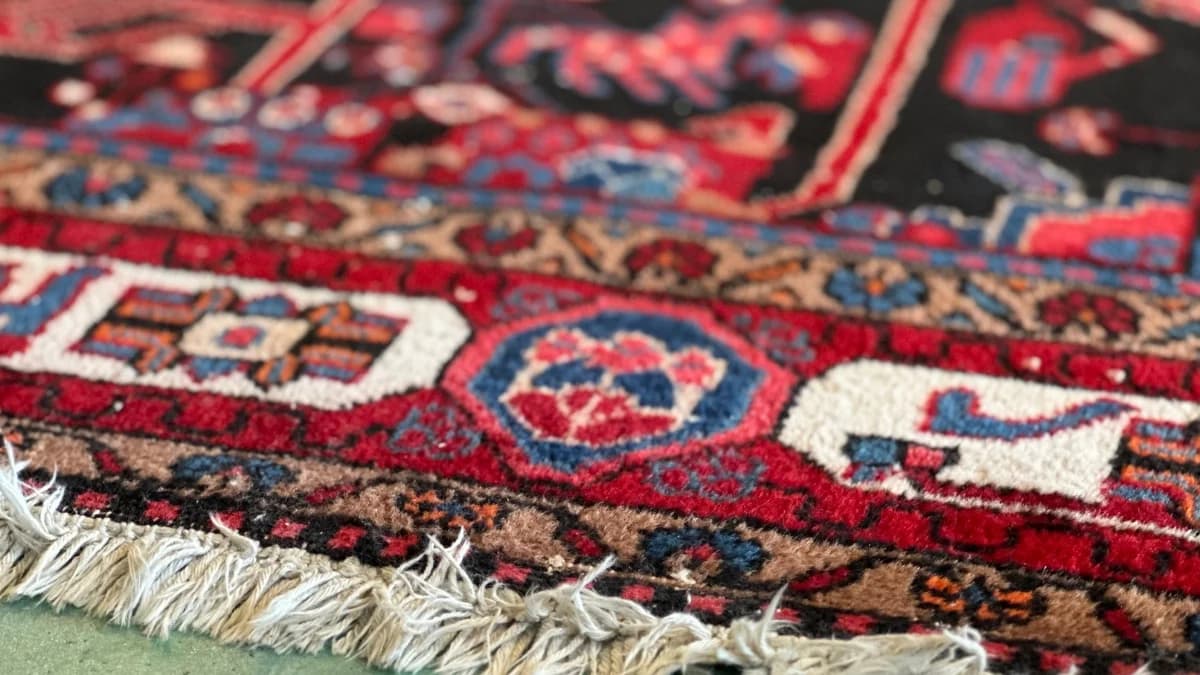
- Check fringe integrity: On genuine hand-knotted carpets, the fringe is an extension of the warp threads — not sewn on. Sewn-on fringe is a sign of machine production.
- Ask for a certificate of origin: Reputable dealers provide documentation. At Al Malakia, certificates are available for all pieces.
- Test the pile: Natural wool has a slight lanolin feel. Synthetic fibres feel uniform and slightly plastic.
Visit Al Malakia Persian Carpets in Sharjah
Al Malakia has operated from Shop 45–48, Central Souq Block 3 (Blue Souk), King Faisal Road, Sharjah since 2008. The showroom carries 500+ hand-knotted Persian and Afghan carpets, sourced directly from weavers in Qum, Tabriz, Isfahan, Kashan, and Nain. Free door-to-door transfers are available from Dubai hotels. Customers in Abu Dhabi and Al Ain can choose from photos and video sent on WhatsApp, with free delivery anywhere in the UAE.
Open: Saturday–Thursday 10:00–22:00 | Friday 14:00–22:00
WhatsApp: +971 50 537 2997 | Call: +971 6 573 1399
Contact us to arrange your visit or browse the current collection online.
Frequently Asked Questions
Is it cheaper to buy Persian carpets in Iran than in Dubai or Sharjah?
For lower-grade commercial carpets (below 200 KPSI), Iranian bazaar prices can be 15–30% lower than UAE retail before additional costs. However, once you add shipping (USD 150–400), UAE import duties, and the cost of travel itself, the financial advantage narrows significantly for mid-range pieces and disappears almost entirely for high-end Qum silk or fine Kashan carpets. For UAE residents, buying locally from a verified direct-source dealer is typically more cost-effective on a total-cost basis.
Can I bring a Persian carpet back from Iran to the UAE without paying customs duty?
UAE customs allows a personal exemption for goods brought in under AED 3,000. Carpets valued above this threshold are subject to a 5% UAE import duty. Additionally, Iranian export regulations prohibit the export of carpets classified as antique (generally 50+ years old) without an official export licence. Purchasing without verifying this in advance risks confiscation at either the Iranian or UAE border.
How do I know a Persian carpet sold in Dubai is genuine and not machine-made?
Inspect the back of the carpet — hand-knotted pieces show individual knot tails and a slightly irregular but clear pattern on the reverse. Check that the fringe is an extension of the warp threads rather than a sewn-on addition. Count knots per square inch in a small section using a ruler. Ask the dealer for a certificate of origin. A reputable dealer such as Al Malakia can explain the weaving origin and technique for every piece in stock.
Do Persian carpet dealers in the UAE source directly from Iran or through middlemen?
This varies significantly between dealers. Many UAE retailers purchase through Tabriz or Tehran wholesale markets, adding at least one intermediary margin. Al Malakia has maintained direct relationships with workshops and individual weavers in Iran — relationships built over two generations — which affects both pricing and provenance documentation. When evaluating a dealer, ask specifically where and how they source their stock.
What is the difference between Qum silk, Tabriz wool-on-silk, and Nain carpets?
Qum (or Qom) silk carpets are woven entirely from silk, typically at 400–900 KPSI, and are produced in the city of Qum in central Iran. They are among the most technically demanding Persian carpets to produce. Tabriz wool-on-silk uses a silk foundation (warp and weft) with wool pile, achieving higher knot density than pure wool on a cotton base. Nain carpets, from the city of Nain in Isfahan Province, typically use a wool pile with silk highlights (known as "harir") on a cotton or silk warp, producing fine detail at a somewhat lower price point than pure Qum silk.
Does Al Malakia offer transfers from Dubai for carpet viewing?
Yes. Al Malakia provides free door-to-door transfer from Dubai hotels to the showroom at the Blue Souk in Sharjah and back. Customers in Abu Dhabi can contact the showroom directly on WhatsApp (+971 50 537 2997) to choose from photos and video, with free delivery anywhere in the UAE. The showroom is approximately 30–40 minutes from central Dubai and around 90 minutes from Abu Dhabi. See our Dubai visitor page for full details.
The decision to buy a Persian carpet in Dubai or travel to Iran comes down to honest accounting of total costs and risk. For most buyers in the UAE — residents and visitors alike — a verified dealer with direct sourcing, clear provenance documentation, and 500+ pieces in stock offers equivalent authenticity with considerably less complexity. If you want to discuss a specific origin, size, or budget before visiting, WhatsApp Al Malakia directly on +971 50 537 2997. The showroom at the Blue Souk, Sharjah is open six days a week from 10:00, with extended Friday hours from 14:00. For a broader overview of where to buy across the UAE, read our comprehensive guide: Where to Buy Persian Carpets in Dubai (2026 Guide).