Quick Facts
Two main families: Afghan Kazak (bold geometric medallions, brighter palette) and Khal Mohammadi (deep madder-red field, repeating elephant-foot guls).
Material: hand-spun highland sheep wool on a wool or cotton foundation, knotted with the asymmetric (Persian/Senneh) knot.
Sizes at Al Malakia: from 60×90 cm scatter rugs to 4×6 m room-sized pieces.
Price guide: entry-level Afghan pieces from AED 800; finer, tightly knotted Khal Mohammadi runners and room sizes climb well above that.
Best for UAE homes: dense, hard-wearing wool that suits high-traffic majlis floors, villas and apartments alike.
Where to see them: Shop 45–48, Central Souq Block 3 (Blue Souk), King Faisal Road, Sharjah.
If you have started shopping for an Afghan rug, two names come up again and again: Kazak and Khal Mohammadi. They are not random labels — they describe two distinct weaving traditions, each with its own colours, patterns, wool and price logic. Knowing the difference is the single most useful thing a buyer can learn, because it tells you what you are paying for and which rug will actually suit your room.
This guide walks through both families the way we would explain them to a customer standing in front of the stacks at our Sharjah showroom: what each one is, how to read the design, how to judge quality with your hands and eyes, what sizes and prices to expect, and how the wool behaves in a UAE home. By the end you should be able to tell a genuine Khal Mohammadi from a lookalike — and choose with confidence.
What "Afghan Kazak" and "Khal Mohammadi" actually mean
Both rugs are woven in northern Afghanistan, mostly by Turkmen and Uzbek weavers, but the two names point to different things. Kazak originally described a bold, geometric Caucasian design — large stepped medallions, hooked motifs and a relatively open, lively palette. Afghan weavers adopted and reinterpreted that style, so an "Afghan Kazak" today is a geometric, medallion-led rug with strong reds, ivories, blues and the occasional gold or green.
Khal Mohammadi, by contrast, is named after the weaver-merchant credited with reviving it in the late twentieth century. It is defined less by a single medallion and more by an all-over field of repeating octagonal motifs — the famous elephant-foot gul — set against a deep, saturated madder red. Where a Kazak feels graphic and punchy, a classic Khal Mohammadi feels rich, dense and traditional. If you want the wider context on how these sit within the country's weaving heritage, our piece on What Makes Afghan Carpets Unique: Wool, Knots & Patterns is a good companion read.
How to read the design
Pattern is the quickest way to identify which family a rug belongs to. A few reliable signals:
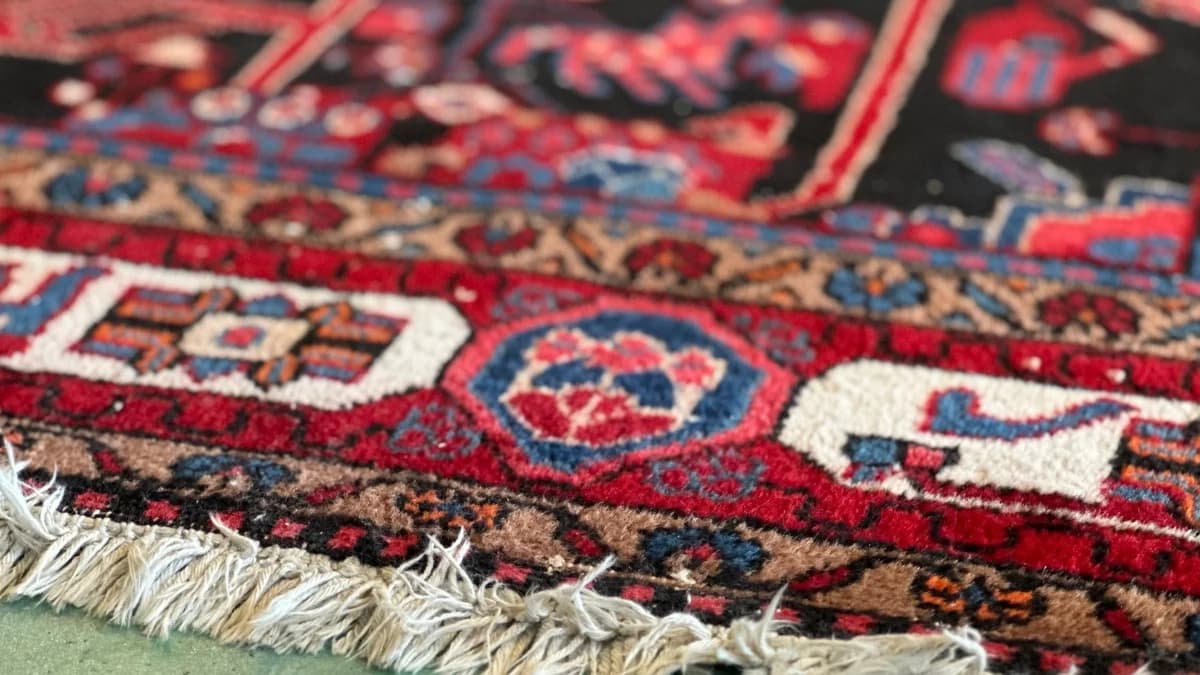
- The gul. Khal Mohammadi rugs repeat the octagonal elephant-foot gul in tidy rows across the whole field. Count them — even spacing and consistent shape indicate a careful weaver.
- Medallions vs all-over. Kazaks usually centre on one or more large geometric medallions with plenty of "breathing space" around them; Khal Mohammadi fills the field edge to edge.
- The border. Both use multiple guard borders, but Khal Mohammadi borders tend to be narrower and more rhythmic, framing the dense field without competing with it.
- Colour logic. A true Khal Mohammadi reads as deep red with ivory, navy and a touch of brown. A Kazak is brighter and more contrasted.
Because both are woven from memory rather than a printed cartoon, small asymmetries are normal and desirable — they are the fingerprint of a hand-knotted rug, not a flaw.
One more practical tip: look at the rug from both ends of the room before deciding. Hand-knotted pile lies in a direction, so the same Kazak or Khal Mohammadi can appear slightly lighter from one angle and deeper from the other. This is the natural play of light on wool, and it is part of why a real Afghan rug feels alive on the floor in a way that a printed one never does.
Wool, knots and foundation — where quality lives
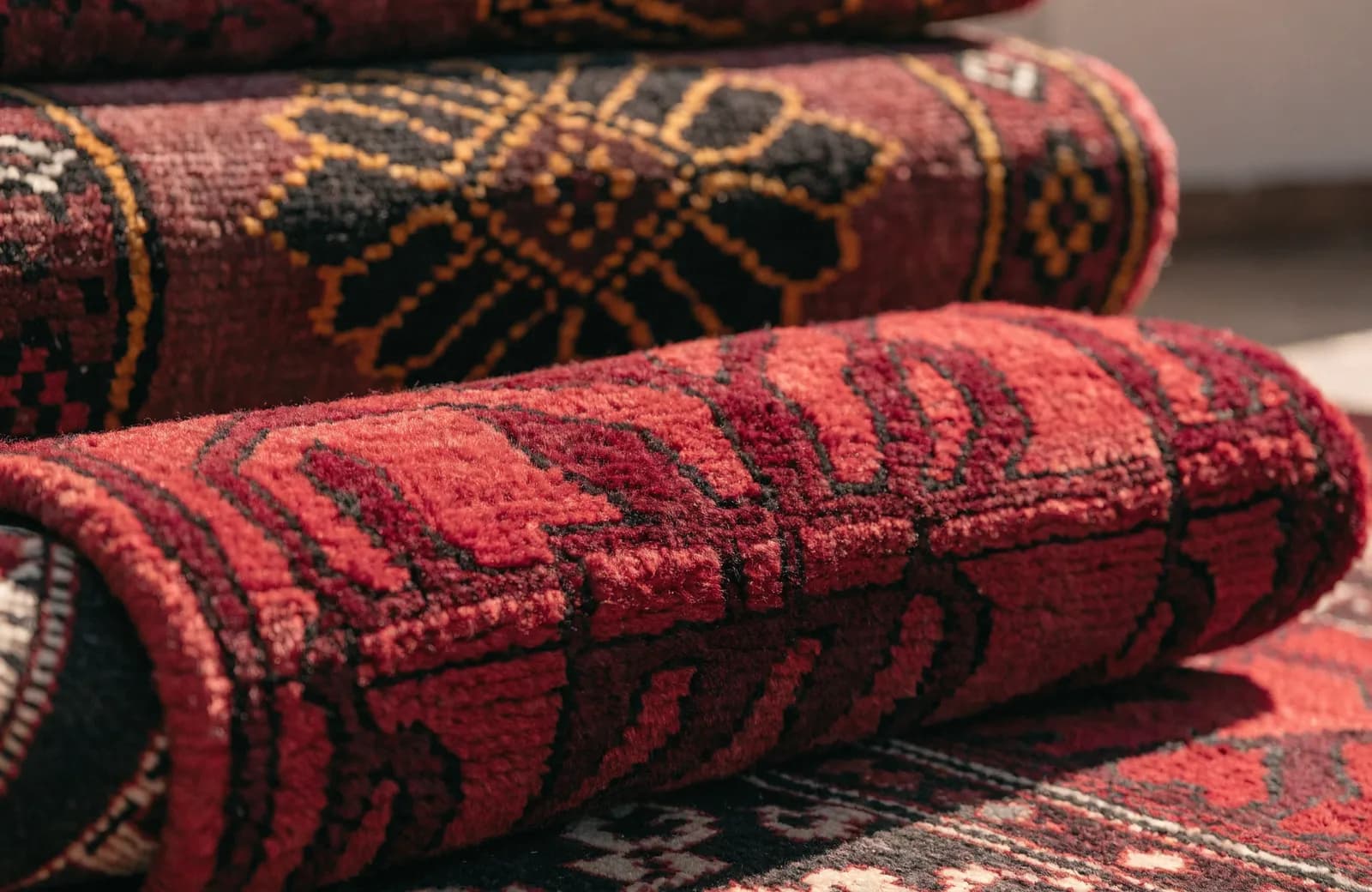
The thing that separates an AED 800 rug from one several times the price is rarely the picture; it is the construction. Afghan rugs are prized for their hand-spun highland wool, which carries more natural lanolin than machine-spun yarn. That lanolin makes the pile resilient, slightly lustrous, and naturally resistant to soiling — a real advantage in a busy home.
Look at three things:
- Knot type and density. Both families use the asymmetric knot. Fold the rug back and look at the base of the pile: more knots per square centimetre means a finer, crisper pattern and a longer life. A tightly knotted Khal Mohammadi will hold its gul shapes sharply even after years of use.
- Foundation. Warps and wefts may be wool or cotton. Cotton gives a flatter, more stable rug; an all-wool foundation gives a softer, more flexible piece that drapes well over a majlis platform.
- Dyes. The best pieces use natural madder for the reds and indigo for the blues. Natural dyes age beautifully and show a gentle abrash (subtle colour variation) across the field.
For a deeper comparison of construction across traditions, see Persian vs Afghan Carpets, which sets Afghan weaving against the fine Iranian workshops we also source from.
Kazak vs Khal Mohammadi at a glance
| Feature | Afghan Kazak | Khal Mohammadi |
|---|---|---|
| Design | Bold geometric medallions, open field | All-over repeating elephant-foot guls |
| Dominant colour | Brighter — reds, ivory, blue, gold | Deep madder red with ivory & navy |
| Feel | Graphic, lively, contemporary-friendly | Rich, dense, traditional |
| Typical pile | Medium, durable | Medium to dense, very hard-wearing |
| Best room | Living rooms, statement floors | Majlis, dining, high-traffic areas |
| Knot density | Moderate to fine | Often finer, tightly packed |
Choosing the right size for your room
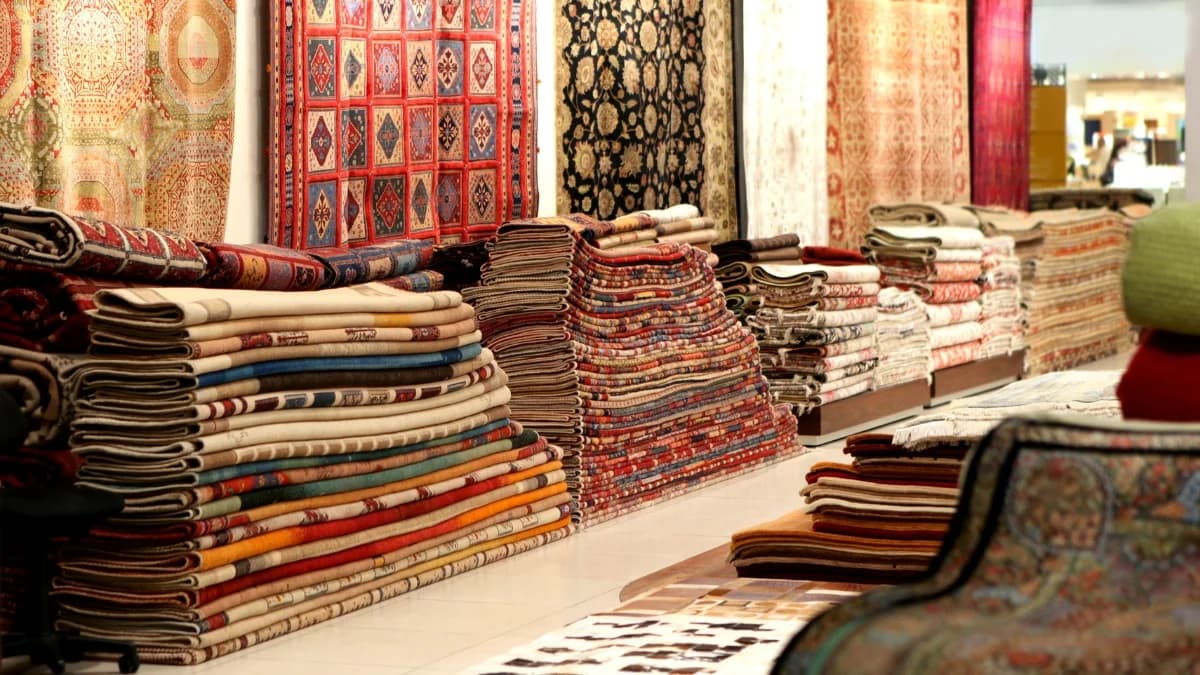
Both families are woven across a wide range of sizes, and Afghan looms are especially good at long runners. At Al Malakia we keep pieces from 60×90 cm scatter rugs up to 4×6 m room-sized carpets, so the question is rarely "is it available" but "what proportion suits the space."
A simple rule of thumb
- Majlis: go large. The rug should sit under the full seating arrangement so cushions and side tables rest on it, not at its edge. A 3×4 m or larger Khal Mohammadi anchors the room beautifully.
- Dining: the rug must extend at least 60 cm beyond the table on every side so chairs stay on the pile when pulled out.
- Apartment living rooms: a 2×3 m Kazak defines a seating zone without overwhelming a smaller floor.
- Hallways and corridors: Afghan runners — often 80 cm × 2.5–4 m — are a classic choice and wear superbly underfoot.
If you are unsure, measure the area and bring the numbers (or photos) to the showroom. You can also browse our collection first to get a feel for scale before you visit.
What you should expect to pay
Price follows construction, size and fineness more than fashion. As a guide, entry-level Afghan pieces start from AED 800 — typically smaller scatter rugs or simpler Kazaks. From there, price rises with knot density, size and the quality of the wool and dyes. A large, finely knotted Khal Mohammadi with natural dyes sits well above the entry point, and the very best room-sized examples are an investment that lasts generations.
It also helps to think about cost per year rather than headline price. A good wool Kazak or Khal Mohammadi comfortably outlasts a decade of daily use, and a fine one will be passed down rather than replaced. A cheap machine-made rug, by contrast, often needs replacing within a few years once the pile crushes. Seen that way, a hand-knotted Afghan rug is frequently the more economical choice over time, not the more expensive one.
Because we buy directly from weavers with no intermediaries, what you pay reflects the rug itself rather than a chain of mark-ups. That transparent provenance is part of about Al Malakia and why our pricing tends to surprise customers who have shopped elsewhere. For the full range of Afghan stock specifically, see our overview of Afghani Handmade Carpets and Rugs.
How these rugs perform in a UAE home
The Gulf climate — heat outside, air-conditioning inside, fine dust everywhere — is exactly where good Afghan wool shines. The high lanolin content repels dust rather than absorbing it, so a quick regular vacuum keeps the pile fresh. Dense Kazak and Khal Mohammadi piles also handle the foot traffic of a busy majlis far better than thin machine-made rugs, which crush and flatten within a year or two.
A few practical notes for villas and apartments alike: rotate the rug every few months so wear and any sun-fade stay even, use a thin underlay on hard marble or tile floors, and deal with spills promptly with a clean cloth and water. Wool is naturally forgiving, but a little care goes a long way. We cover this in detail in Caring for Afghan Wool Rugs in a UAE Home.
How to avoid a lookalike
Because Khal Mohammadi is popular, machine-made and lower-grade imitations exist. Three checks protect you:
- Look at the back. A genuine hand-knotted rug shows the pattern clearly on the reverse, with individual knots visible and slight irregularity. A printed or machine rug looks too perfect and the back is blank or gridded.
- Feel the wool. Hand-spun highland wool has a slightly uneven thickness and a soft natural lustre. Synthetic or machine yarn feels uniform and a little plasticky.
- Check the fringe. On a handmade rug the fringe is the actual warp of the foundation, not a strip sewn on afterwards.
When in doubt, ask to see the rug folded and turned over, and ask where it was woven. An honest merchant will happily show you. If you would like us to talk you through a specific piece, simply contact us.
Bringing one home
The best way to choose between a Kazak and a Khal Mohammadi is to see them side by side, in natural light, in the size you need. Colours, scale and texture all read differently in person than on a screen. Our team can pull several options for your room, explain the wool and knotting of each, and help you compare honestly — no pressure to buy on the day.
For customers in Dubai, we also offer free door-to-door transfer to the showroom, so visiting is easy even without a car. Bring your measurements and a photo or two of the room, and we will do the rest.
Why Visit Al Malakia Persian Carpets?
- Direct sourcing: Purchased from weavers in Qum, Tabriz, Isfahan, Kashan, and Nain — no intermediaries, transparent provenance.
- Scale of stock: 500+ hand-knotted pieces in the showroom, across sizes from 60×90 cm to 4×6 m.
- Free Dubai transfer: Complimentary door-to-door pick-up from Dubai hotels and homes.
- Family expertise: Founded in 2008 by Eid Al Salam, a second-generation Persian carpet merchant.
- Blue Souk location: Shop 45–48, Central Souq Block 3, King Faisal Road, Sharjah. Open Saturday–Thursday 10:00–22:00, Friday 14:00–22:00.
Contact us or WhatsApp +971 50 537 2997 to arrange your visit or request a consultation.